Bouncing Ball Analog Computer

bounce

[Eric Archer] constructed an analog computer to model the physics of a bouncing ball. The core is a TL074 opamp that does all the integral math. He had no trouble finding descriptions of analog computers, but how to set the initial conditions was rarely covered. The controls include potentiometers to set the initial velocity, force of gravity, and coefficient of restitution (how much energy is lost in the bounce). The output is displayed on an oscilloscope. He mentions that this output could be used in electronic music, citing Aphex Twin’s Bucephalus Bouncing Ball. Watch the video below for a demo of all the features.
Continue reading “Bouncing Ball Analog Computer”

EMS Synthi AKS Teardown


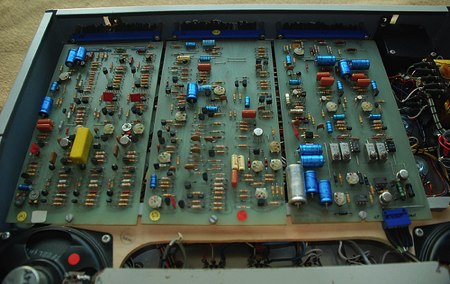
Here’s another bit of analog synth pr0n for you: Initially sold in 1972, the EMS Synthi AKS was a portable modular analog synthesizer with a built in keyboard and sequencer. The VCS 3 portion of the device had a unique routing matrix pegboard used to connect components together. [firegroove] has opened up his precious machine so that you can see all of the fine little bits that make it tick… and chirp.

[via Matrixsynth]

Build Your Own GPS And GLONASS Receiver

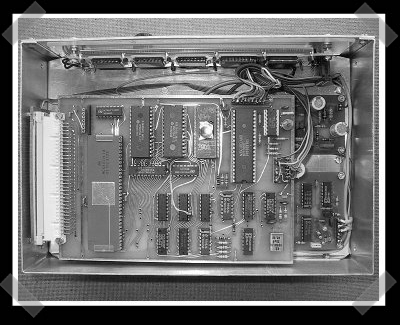
[superlopez] sent in this detailed article (mirrored here and here) which describes how to build a GPS and GLONASS (the Russian version of GPS) receiver. The resulting device is gigantic compared to one of those tiny bluetooth USB GPS units, but the ability to build one’s own receiver is one of those post-apocalyptic skills I sure would like to have. The creator of the article [Matjaz Vidmar] aka [S53MV] also has pages on Packet-Radio (PKT) transceiver improvements (PKT gets my vote for the best post-apocalyptic technology, and the only believable technology featured in the Transformers movie), and a more sophisticated homemade frequency counter than the one featured earlier this summer.

In 2005 we featured a from-scratch GPS receiver as well, thought the project site seems to be down. If your GPS unit just needs a better antenna, check out [Will]’s how-to from last year.