X1Plus: Open Source Bambu Lab X1 Firmware

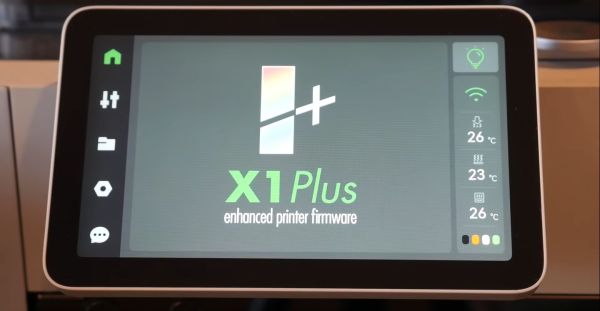
Recently [Michael] over at the [Teaching Tech] YouTube channel got access to the X1Plus firmware, and takes us through what it may mean for Bambu Lab X1 owners. X1Plus is alternative firmware for the Bambu Lab X1 FDM 3D printer that was developed by X1 owners who felt that there were some features that they were missing, such as a detailed report on automatic bed leveling, input shaping calibration response graphs and more.

Perhaps most interesting is that this firmware does not replace the Bambu Lab firmware, but rather runs completely from a microSD card that’s inserted into the display’s SD card reader. This means that only the bootloader of the printer’s boot medium is changed, and the printer thus retains the ability boot to the OEM firmware as needed. Whether you want to try it on your own X1 depends on a few factors, first of all being that it only works with the OEM firmware up to and including version 1.7.0.

Since the bootloader modification relies on an exploit that was patched in newer firmware, a lot depends on whether Bambu Lab allows such tinkering, much like Prusa does with the Mini printer, or allows flashing of older firmware which would enable the exploit on newer X1 printers. Depending on Bambu Lab’s response, the imminent public release of this open source firmware may as a result run into some pretty big hurdles.

Continue reading “X1Plus: Open Source Bambu Lab X1 Firmware”
Reducing Poop On Multicolor Prints

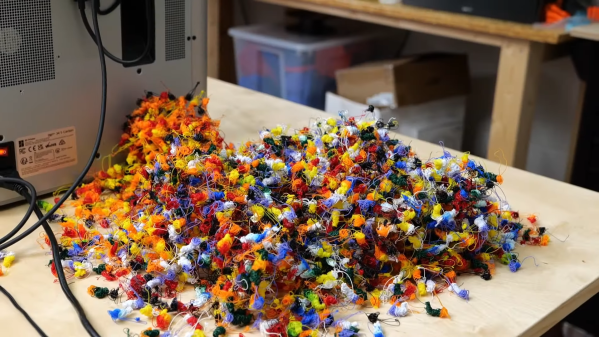
While multicolor printing eliminates painting steps and produces vibrant objects, there are two significant downsides; filament consumption and print time. A single-nozzle filament printer needs to switch from one color to another, and doing so involves switching to the other filament and then purging the transition filament that contains a mixture of both colors, before resuming the print with the clean new color.

[teachingtech] tests out a variety of methods for reducing print time and waste. One surprising result was that purging into the infill didn’t result in significant savings, even when the infill was as high as 50%. Things that did have a positive effect included reducing the amount of purge per transition based on light to dark color changes, and printing multiple copies at once so that even though the total amount of waste was the same as a single part, the waste per part was reduced.

All of the tests were with the same model, which had 229 color changes within a small part, so your mileage may vary, but it’s an interesting investigation into some of the deeper settings within the slicer. Reducing filament waste and print time is an admirable goal, and if you make your own extruder, you can turn all of that purge waste into various shades of greenish brownish filament. Continue reading “Reducing Poop On Multicolor Prints”

Lessons In Printer Poop Recycling

The fundamental problem with multi-color 3D printing using a single hotend is that they poop an awful lot. Every time they change filaments, they’ve got to purge the single nozzle, which results in a huge number of technicolor “purge poops” which on some machines are even ejected out a chute at the back of the printer. The jokes practically write themselves.

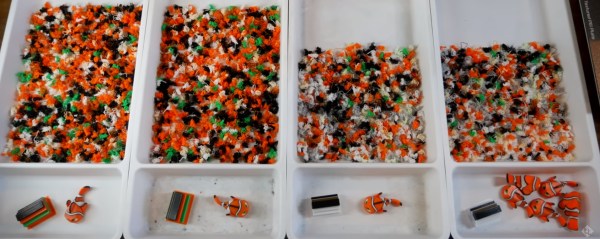
What’s not a joke, though, is the sheer mass of plastic waste this can produce. [Stefan] from CNC Kitchen managed to generate over a kilo of printer poop for a 500-gram multi-color print. So he set about looking for ways to turn printer poops back into filament, with interesting results. The tests are based around a commercial lab-scale filament extruder, a 3Devo Composer, but should apply to almost any filament extruder, even the homebrew ones. A few process tips quickly became evident. First, purge poops are too big and stringy (ick) to feed directly into a filament extruder, so shredding was necessary.

Second, everything needs to be very clean — no cross-contamination with plastics other than PLA, no metal bits in the chopped-up plastic bits, and most importantly, no water contamination. [Stefan]’s first batch of recycled filament came from purge poops that had been sitting around a while, and sucked a lot of water vapor from the air. A treatment in a heated vacuum chamber seems to help, but what worked best was using purge poops hot and fresh from a print run. Again, ick.

[Stefan] eventually got a process down that produced decent, usable filament that would jam the printer or result in poor print quality. It even had a pretty nice color, which of course is totally dependent on the mix of colors you start with. Granted, not everyone has access to a fancy filament extruder like his, so this may not be practical for everyone, but it at least shows that there’s a path to reducing the waste stream from any printer, especially multi-material ones.

Continue reading “Lessons In Printer Poop Recycling”