Modified RX7 Dimmer Control

SANY00191

We were a little surprised when we learned the Mazda RX7’s high beams were controlled by ECU, compared to typical cars using just a toggle switch. Ubermodder [Trent Bruce] realized how much of a pain in the rear end this can be if the ECU ever burns out, meaning no brights. By using a D-Flip Flop setup in a toggle configuration, he is able to control his once lost high beams. He also points out that if you plan to do any other electronic modifications to the RX7, you should be sure to pay attention to the unusual ground switching and the other crazy wiring under the hood.

Motors And Microcontrollers 101

[youtube=http://www.youtube.com/watch?v=WnWJki-zwsE]

[Humberto] from NerdKits sends in the newest addition to their excellent collection of videos. This video goes over the basics of DC motor control with microcontrollers. They begin by showing nine experiments and observations that can be done by the average hacker with a multimeter, motor, LED, and jumperwire. Using the results from these they show how to model and calculate the properties of a motor. Lastly, it shows how to control a motor using PWM. They have supplemental text and demonstration code for an ATmega168 on their website.

Katamari Controller

[blip.tv ?posts_id=2164793&dest=-1]

Remember those days, back in the arcade, where games with a unique control scheme also had a controller best suited for them? There were rolling balls, joysticks, dials, all sorts of inputs. Consoles have maily relied on their standard controllers, relegating alternative inputs to be strange collectors items. Some games just need a specialized controller though. For example, Katamari Damacy. [Kellbot] has made one that we think suits the game very well.

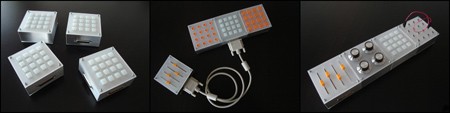
Custom Modular Control Interfaces


Machinecollective.org is bringing rapid prototyping to every day artists and hackers. We’ve covered similar interfaces like the monome, MIDIbox, and Stribe. Machinecollective allows you to make your own input system using multiple blocks to get exactly what you want. The setup allows you to fit pretty much anything in a block that you can think of. They’re developing potentiometers, slide potentiometers, button grids, toggle switches, LCD’s, FSR/LDR’s, velocity sensitive pads, and touch screens.

Currently, they support software enviroments like: Processing, Max/MSP, VVVV, and Adobe Flash. That list will undoubtedly grow as the community plays with it. They envision the hardware connecting via MIDI, OSC, RS232, TCP/UDP, DMX, or USB.

They encourage others to design their own inputs. Community members can share modifications and designs, though there isn’t a forum or store yet. If you design a setup that you really like, they can even fabricate a single unit for you. Keep your eyes on this one, it could be a real hit.

A similar idea for general gadgetry can be seen over at Bug Labs. Starting with a base unit, you can add different input and output modules to create various useful functions. They currently offer GPS, a camera, a display, and motion sensing. Mix and match to make your dream gadget.










