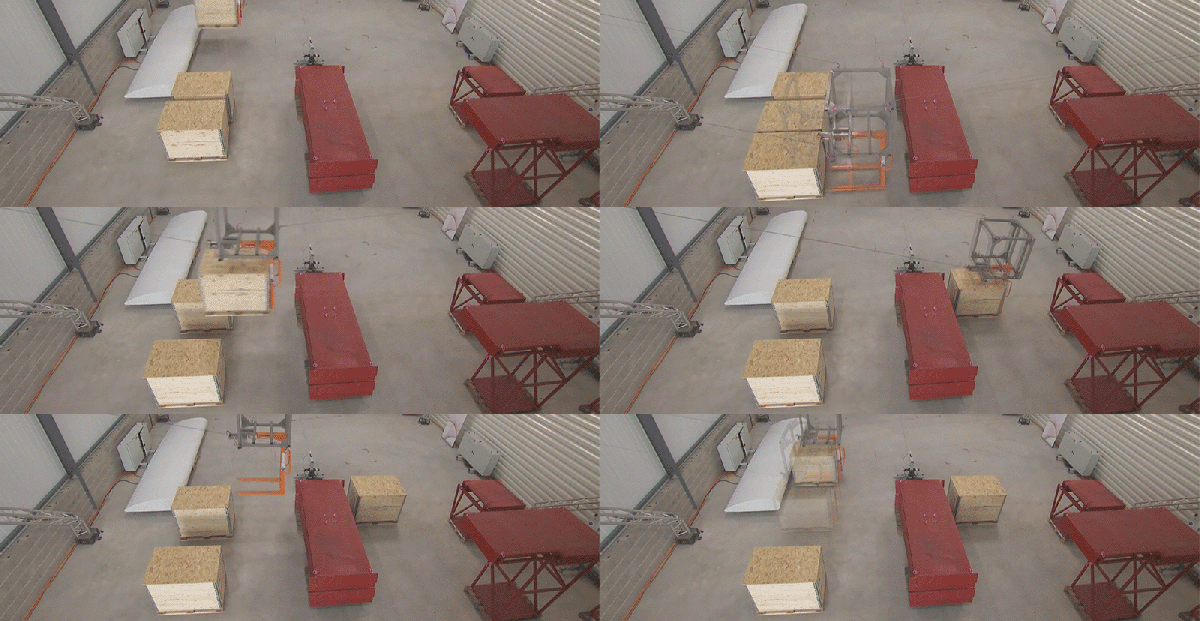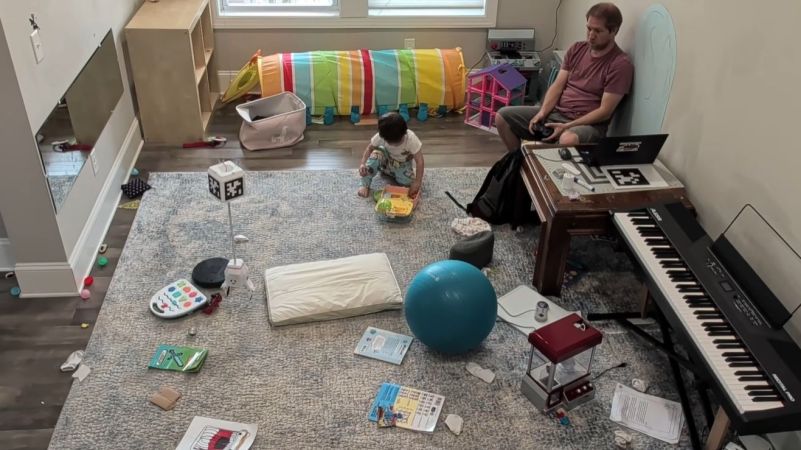
 One of the joys you get to experience whether as a proud parent or pet owner is that a lot of things get left around haphazardly. You could of course pick every piece of discarded clothing, half-destroyed toy and detritus yourself, but as a parent of three children himself [Nathaniel Nifong] opted to use his engineering background to potentially over engineer a wires-suspended robotic claw to do this picking up for him.
What he calls Stringman robots requires an anchoring point at four corners of a room, after which the robotic crane can then scour across the ceiling, identify targets to pick up and move these to predesignated drop-off points. It’s an open source project with the LeRobot-based firmware available on GitHub in addition to build instructions for the physical hardware. There’s also a pilot run of ready to use hardware and kits for those who want to trial it, but aren’t interested in building it themselves via [Nathaniel]’s company website.
The basic idea is that this crane can run for an hour or so and deal with the mess in its room without having to do anything yourself. The process isn’t perfect yet, of course, with the underlying diffusion transformer to implement machine vision requiring more refinement. The gripper itself struggles with objects like books, which can be a concern for parents and bookworms, and of course while the crane is operating the wires will dip down as a potential risk to anyone in the room.
Compared to an overhead crane like a traditional bridge crane this wire-suspension crane is probably more stable, but either is an interesting engineering challenge when applied to a household. Next it would probably also be cool if items could be put away where they belong instead of dropped into a bin, as so far that task will still be left to deal with by the adult humans.
Continue reading “Building A Ceiling-Based Crane Robot To Keep A Room Clean”