Recreating The Commodore PET With An FPGA

commodore_pet_fpga_clone

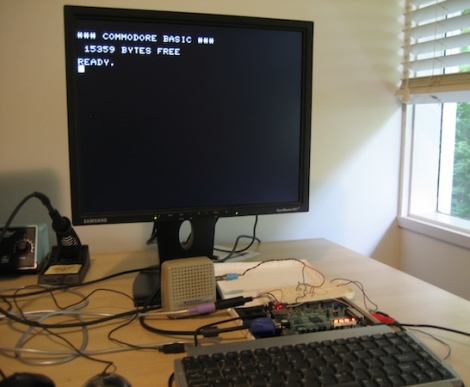
[Thomas’] love affair with Commodore computers spans well over 30 years, and not too long ago he decided to recreate one of his favorite Commodore offerings, the PET. As we have seen with similar undertakings, this sort of project is no easy task, but [Thomas] seems to be making his way along nicely.

Using a Xilinx Spartan-6 FPGA on the Digilent Nexys3 dev board, he has implemented the Pet in Verilog. Like the original, his clone contains 16K of both ROM and RAM, utilizing the same simulated 6502 microprocessor he used on a previous Apple ][+ project. The FPGA version of the computer sports a 640×400 resolution which is twice that of the original, so [Thomas] simply doubled the size of each of the PET’s pixels to fill in the extra space.

[Thomas] has made some great progress so far, including the ability to load games and other programs from cassette images over a serial connection. He says that there are still a few loose ends to tie up, but it all looks good from here!

Continue reading to see a short video of Space Invaders running on he PET recreation.

Continue reading “Recreating The Commodore PET With An FPGA”

Internet Enabled Cat Feeder

[youtube=http://www.youtube.com/watch?v=kSCC2Z96s3g]

When travelling, it can always be a pain to have your cats cared for. There are some commercial automated solutions out there, but they tend to be pricey, especially when there are two required. These two cats don’t need to worry though. They have an internet enabled monster of a system.

The system used is pretty unique. They wanted internet connected relays, but didn’t want to put an entire computer in line just for the cat feeder. Instead, a Cisco router was hacked to run relays hooked to the status lights on the ports. Not only can it be controlled over the internet, there is also a live feed so you can see the cats as the binge. These are some pretty lucky cats. They also have an automatic cat door.

[via Hackedgadgets]

CATaLOG: RFID Cat Tracking

rfidcats

Like many pet owners, [Pete] was curious about his little furry friend’s habits while he was gone. He decided to build an RFID tracking system to monitor their positions. This data would then be available on the web.  An Arduino handles the communication of the data, both to twitter and his personal cat tracking site. We were a bit surprised to see that the only data transmitted on the final project was whether the cat was inside or out. We’d like to see a heat map of the cat’s activity in the house.