
Know Your Food: Our Daily Bread

It’s time to return to our no-punches-pulled look at food manufacture, and this time we’re looking at the humble loaf of bread. As before, we’re approaching the subject with a look at breadmaking both in the traditional sense that marketing people would like you to imagine, and in the modern sense of the loaf you’ll find on your supermarket shelf.

A Food Of Great Cultural Significance
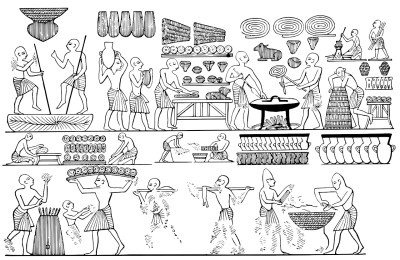
An ancient Egyptian relief, showing stylised figures at work on a variety of baking tasks.
An ancient Egyptian bakery, depicted in the reign of Ramesses III. Scanned by Peter Isotalo, CC BY-SA 4.0.

Perhaps there are few foods with as much cultural significance as bread. If your distant ancestors took the path of growing grain as their major subsistence carbohydrate, the chances are there will be some form of bread woven into your identity. Where this is being written for example were I to head for the cathedral of a Sunday morning I would recite the Lord’s Prayer as part of the service, Give us this day our daily bread. Whether your culture leavens its bread or not, or whatever grain it uses, the chances are that there will be something similar about the humble foodstuff within it.
Continue reading “Know Your Food: Our Daily Bread”

Norman Borlaug Saves A Billion

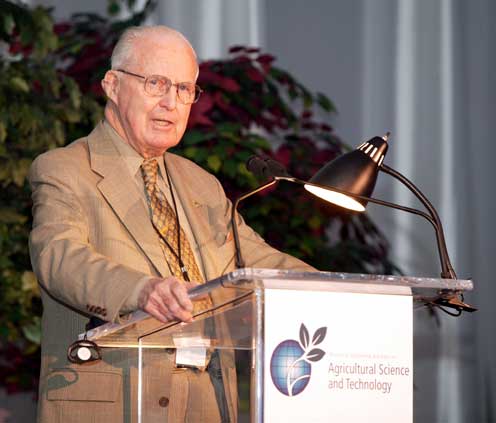
Everyone loves a hero. Save someone from a burning building, and you’ll get your fifteen minutes of fame. That’s why I’m always surprised that more people don’t know Norman Borlaug, who would have celebrated his 104th birthday on Sunday. He won the Nobel prize in 1970 and there’s good reason to think that his hacking efforts saved about a billion people from starving to death. A billion people. That’s not just a hero, that’s a superhero.

To understand why that claim is made, you have to go back to the 1970s. The population was growing and was approaching an unprecedented four billion people. Common wisdom was that the Earth couldn’t sustain that many people. Concerns about pollution were rampant and there were many influential thinkers who felt that we would not be able to grow enough food to feed everyone.

Paul Ehrlich, in particular, was a Stanford University biologist who wrote a book “The Population Bomb.” His forecast of hundreds of millions starving to death in the 1970s and 1980s, including 65 million Americans, were taken very seriously. He also predicted doom for India and that England would not exist by the year 2000.

Here we are 40 or 50 years later and while there are hungry people all over the world, there isn’t a global famine of the proportions many people thought was imminent. What happened? People are pretty good problem solvers and Norman Borlaug — along with others — created what’s known as the Green Revolution.

Continue reading “Norman Borlaug Saves A Billion”









