After 30 Years, Virtual Boy Gets Its Chance To Shine

When looking back on classic gaming, there’s plenty of room for debate. What was the best Atari game? Which was the superior 16-bit console, the Genesis or the Super NES? Would the N64 have been more commercially successful if it had used CDs over cartridges? It goes on and on. Many of these questions are subjective, and have no definitive answer.

But even with so many opinions swirling around, there’s at least one point that anyone with even a passing knowledge of gaming history will agree with — the Virtual Boy is unquestionably the worst gaming system Nintendo ever produced. Which is what makes its return in 2026 all the more unexpected.

Released in Japan and North America in 1995, the Virtual Boy was touted as a revolution in gaming. It was the first mainstream consumer device capable of showing stereoscopic 3D imagery, powered by a 20 MHz 32-bit RISC CPU and a custom graphics processor developed by Nintendo to meet the unique challenges of rendering gameplay from two different perspectives simultaneously.

In many ways it’s the forebear of modern virtual reality (VR) headsets, but its high cost, small library of games, and the technical limitations of its unique display technology ultimately lead to it being pulled from shelves after less than a year on the market.

Now, 30 years after its disappointing debut, this groundbreaking system is getting a second chance. Later this month, Nintendo will be releasing a replica of the Virtual Boy into which players can insert their Switch or Switch 2 console. The device essentially works like Google Cardboard, and with the release of an official emulator, users will be able to play Virtual Boy games complete with the 3D effect the system was known for.

This is an exciting opportunity for those with an interest in classic gaming, as the relative rarity of the Virtual Boy has made it difficult to experience these games in the way they were meant to be played. It’s also reviving interest in this unique piece of hardware, and although we can’t turn back the clock on the financial failure of the Virtual Boy, perhaps a new generation can at least appreciate the engineering that made it possible.

Continue reading “After 30 Years, Virtual Boy Gets Its Chance To Shine”
LED Interior Lighting Could Compromise Human Visual Performance

LED lighting is now commonplace across homes, businesses, and industrial settings. It uses little energy and provides a great deal of light. However, a new study suggests it may come with a trade-off. New research suggests human vision may not perform at its peak under this particular form of illumination.

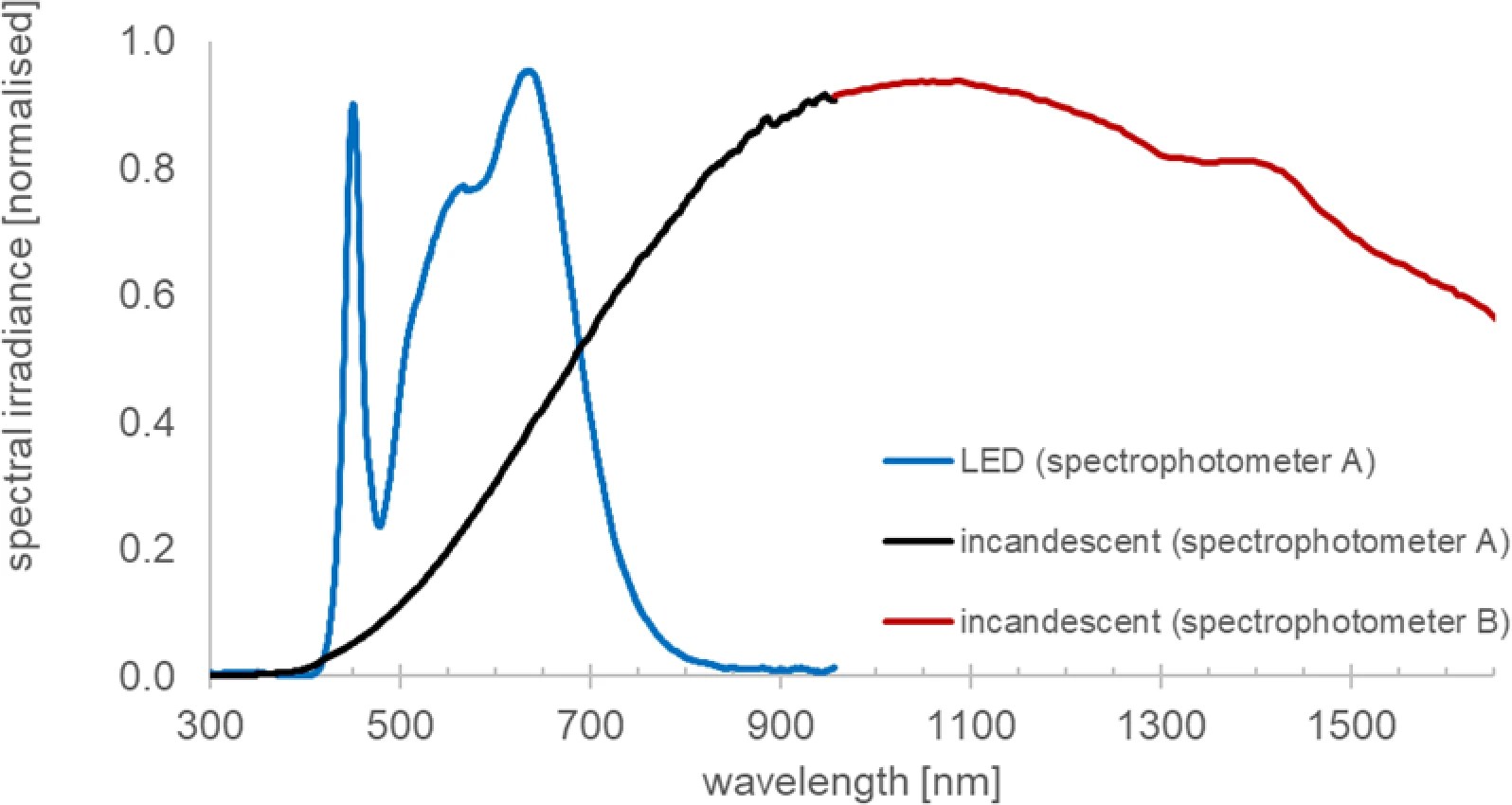
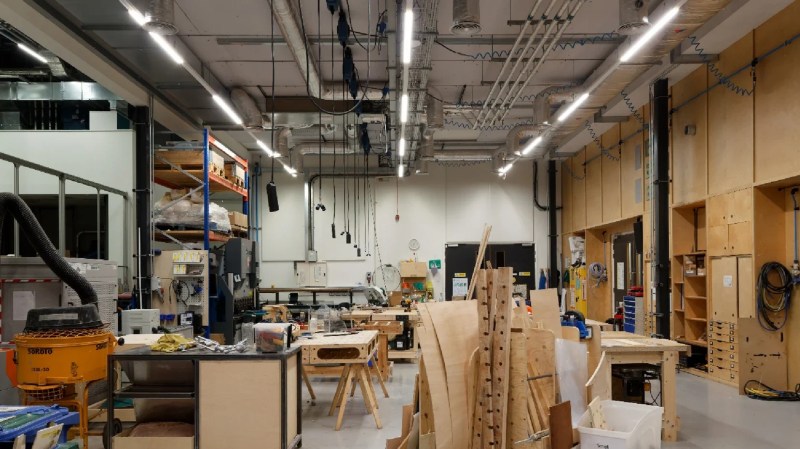
The study ran with a small number of subjects (n=22) aged between 23 to 65 years. They were tested prior to the study for normal visual function and good health. Participants worked exclusively under LED lighting, with a select group then later also given supplemental incandescent light (with all its attendant extra wavelengths) in their working area—which appears to have been a typical workshop environment.

Incandescent bulbs have a much broader spectrum of output than even the best LEDs. Credit: Research paper

Notably, once incandescent lighting was introduced, those experimental subjects showed significant increases in visual performance using ChromaTest color contrast testing. This was noted across both tritan (blue) and protan (red) axes of the test, which involves picking out characters against a noisy background. Interestingly, the positive effect of the incandescent lighting did not immediately diminish when those individuals returned to using purely LED lighting once again. At tests 4 and 6 weeks after the incandescent lighting was removed, the individuals continued to score higher on the color contrast tests. Similar long-lasting effects have been noted in other studies involving supplementing LED lights with infrared wavelengths, however the boost has only lasted for around 5 days.

The exact mechanism at play here is unknown. The study authors speculate as to a range of complex physical and biological mechanisms that could be at play, but more research will be needed to tease out exactly what’s going on. In any case, it suggests there may be a very real positive effect on vision from the wider range of wavelengths provided by good old incandescent bulbs. As an aside, if you’ve figured out how to get 40/40 vision with a few cheap WS2812Bs, don’t hesitate to notify the tip line.

Thanks to [Keith Olson] for the tip!

How Resident Evil 2 For The N64 Kept Its FMV Cutscenes

Originally released for the Sony PlayStation in 1998, Resident Evil 2 came on two CDs and used 1.2 GB in total. Of this, full-motion video (FMV) cutscenes took up most of the space, as was rather common for PlayStation games. This posed a bit of a challenge when ported to the Nintendo 64 with its paltry 64 MB of cartridge-based storage. Somehow the developers managed to do the impossible and retain the FMVs, as detailed in a recent video by [LorD of Nerds]. Toggle the English subtitles if German isn’t among your installed natural language parsers.

Instead of dropping the FMVs and replacing them with static screens, a technological improvement was picked. Because of the N64’s rather beefy hardware, it was possible to apply video compression that massively reduced the storage requirements, but this required repurposing the hardware for tasks it was never designed for.

The people behind this feat were developers at Angel Studios, who had 12 months to make it work. Ultimately they achieved a compression ratio of 165:1, with software decoding handling the decompressing and the Reality Signal Processor (RSP) that’s normally part of the graphics pipeline used for both audio tasks and things like upscaling.

Continue reading “How Resident Evil 2 For The N64 Kept Its FMV Cutscenes”