
There’s a thing that people who grew up on farms all share: a connection with food production that isn’t some mystical rose-tinted woo from a TV chef, but instead a practical general knowledge from being there on the ground. A glance at a crop in a field and you immediately recognise what it is, if it’s ploughing time you’ll know the soil type, and there’s always either too little, or too much rain. For a given foodstuff you’ll know far too much about where it came from, because if your dad wasn’t involved in its production, the chances are someone he knew was. You take this for granted, after all doesn’t everyone have this general knowledge? Seemingly not.
Hackaday is not a cooking channel, but I know we’re all interested here in how things are made. Shouldn’t that also extend to what we eat? It’s fashionable to follow a back-to-nature line that all commercial foodstuffs are somehow over-processed junk, but without the requisite knowledge you’re flying blind there. To know both how common foodstuffs should be made, as well as how they are made industrially, should be an essential for everyone.
Mm-Mm-Mmmm, Coagulated Milk!
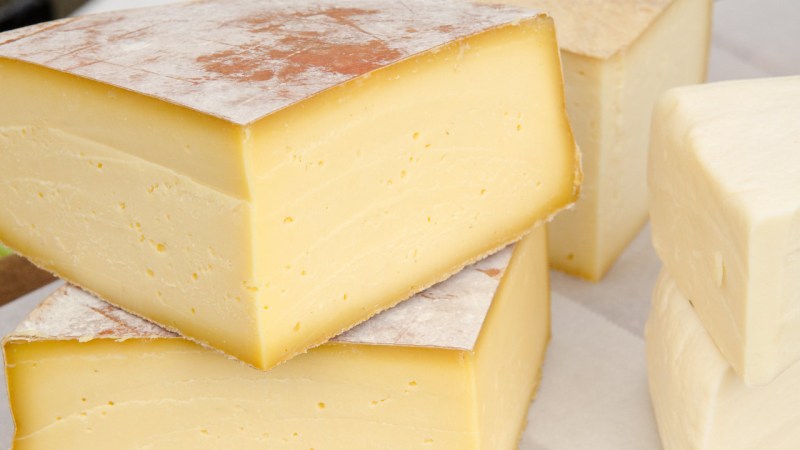
So without further ado, it’s time to dive straight in with cheese, or to be more specific, hard cheese. In simple terms the flavoursome snack is matured fermented coagulated preserved milk, which sounds a lot less appetizing than what the cheese marketing people will tell you, but that’s the hacker’s truth.
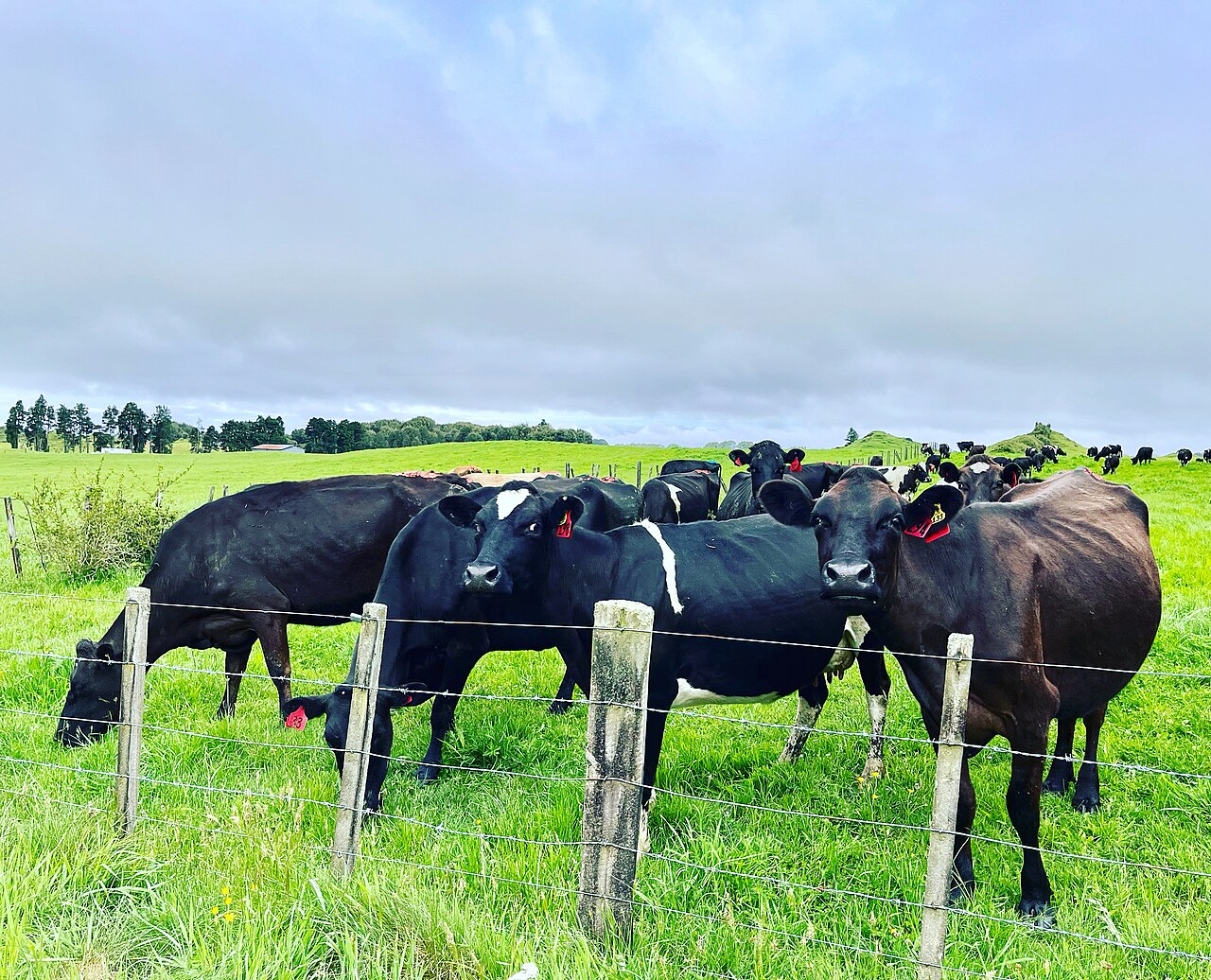
The milk comes from lactating farm animals, in most cases cows, but as an example in my local supermarket I can buy sheep and goat cheeses too. A dairy herd is also a breeding herd, and after the calves are weaned the cow continues to be milked until the next time she’s brought into calf.
Pulling no punches here, in most commercial settings the calves are removed from their mothers very young and brought up on a kind of cow infant formula, which is without doubt rather cruel. I grew up with a small suckler herd in which the aim is to breed high quality breeding cattle, so ours were fortunate enough to stay with their mothers until they were naturally weaned.
The milk will be collected and refrigerated, and in most cases will be pasteurised, heat treated to kill bacteria. Some people will tell you this removes all the goodness from the milk which is a questionable assertion, given that what it really does is make the stuff easier to transport without going off, and stop people dying from milk-borne infection. In a cheese context some cheeses rely on un-pasteurised milk for their flavour or authenticity, but as I’ll explain later, in most cases this doesn’t make them a health hazard.
Gambling at the Bacteria Races
Cheesemaking is a fermentation process, and as with others, the point is to control the fermentation such that its by-products kill off the harmful bacteria and preserve the food before they can spoil it. In the case of beer or wine the alcohol from anaerobic yeast metabolism does this job, but in the case of cheese it’s lactic acid from a class of bacteria that produce it given the right conditions.
This is why un-pasteruised milk can be used without too much worry, as those undesirable bugs should be removed by the lactic acid. You need lactic acid bacteria to be present which could be a hit-and-miss affair growing them in the milk naturally, but here in 2026 you add them as a pre-prepared culture. The make-up of this culture would originally be derived from the terroir of the cheesemaking region, for example the bacteria where Emmental cheese originated produces gas which gives that cheese its characteristic bubbles. It’s here you see the origins of the different types of cheese, as alongside the different bacteria are local variations in technique which lend the final product its unique qualities.

The milk is heated to speed up the fermentation, the idea being that a warm temperature favours the lactic acid bacteria over the undesirable bugs that might spoil it. Once the lactic acid fermentation is mostly done, the mixture is turned into curds and whey by the addition of rennet. This is an enzyme that coagulates the milk solids, the fat and proteins, leaving a thin liquid, whey, as the leftover.
Rennet is another of those things that can involve some cruelty, as traditionally it would have been produced from the stomachs of young calves slaughtered for the veal industry. Sorry veal farmers — I have never knowingly eaten veal. Fortunately it’s now much more likely to be made commercially from an engineered fungal or bacterial culture, which is why you will see most cheeses labelled as vegetarian.
The cheese is now a big tank full of curd, swimming in whey. The whey is strained off and the curd is broken up. releasing more whey. There is then a process of stirring the curd to release as much whey as possible, which yet again has an effect on the final cheese and is part of those different varieties, and eventually you have a pile of relatively dry fermented curds.
If you were Canadian you’d run off with some of it and make poutine, but sadly for me as a Brit we didn’t invent that marvelous street food, so we’d add salt before pressing it into moulds to make a basic cheese shape and extract the last drops of whey. We’d then wrap it in muslin and place it in a cool dark place to mature for several months. What you’d extract at the end would be covered in mould, but the cheese once you’d peeled off the muslin would (most of the time) be amazing!
Blessèd Are The Cheesemakers
So there you have it, that in a few paragraphs is how you make a farmhouse cheese. For us it was on a small kitchen-table scale for our own consumption, but it would be substantially the same for any small-to-medium farmhouse operation. Even the large-scale factory cheese operations do the same thing, with the key difference being that they require the process to be efficient and optimised, but above all consistent.
Remember I said that our cheese would be most of the time amazing? Cheese can go wrong, it can get infected with a bad bacteria, it can ferment differently, and it can taste, well, not so good. We could afford to lose a few cheeses, but a multi-million-dollar company can’t. So their process is controlled to the n’th degree, and out slightly hit-and-miss steps are eliminated. The hygiene, temperature, humidity, and every other possible variable are controlled exactly, to ensure that every cheese they make has the same flavour and texture, and time from milk to finished cheese is the same every time.
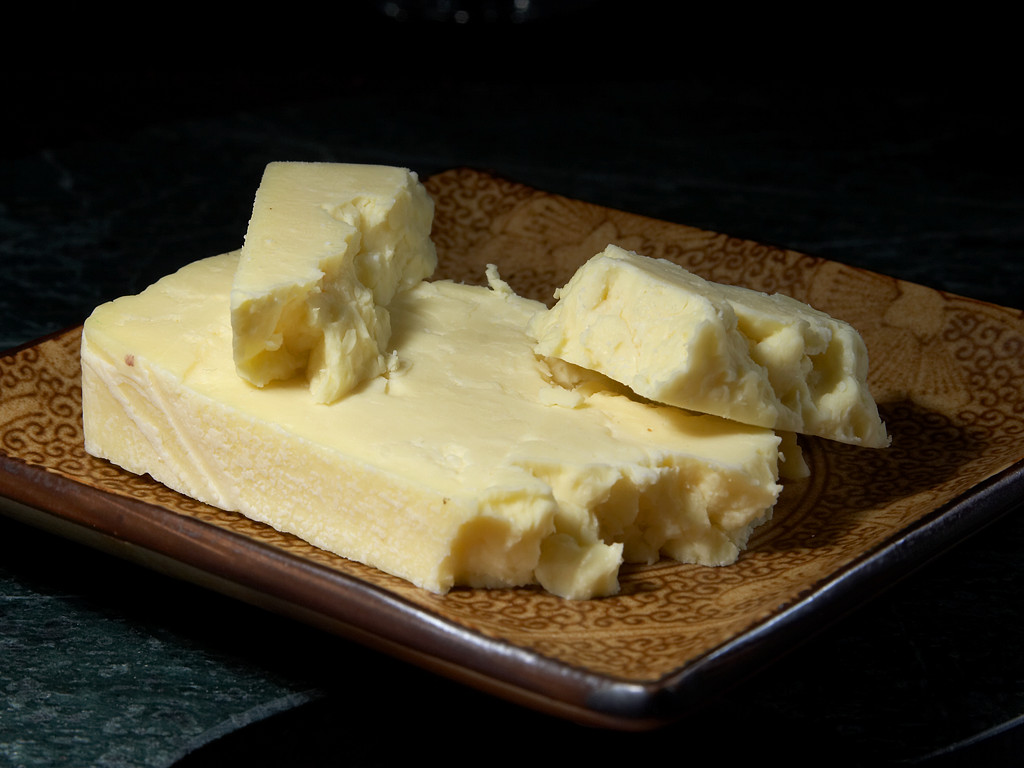
If I were asked, I would say that a commercial cheese from my supermarket is entirely as good a product as the most artisanal of farmhouse cheeses, and I think in terms of nutrition and quality, I would be right. Of course the farmhouse cheese would almost certainly taste a lot better because its production schedule is optimised for those qualities in a premium product rather than for low price, but I think it’s an important thing to say in order to head off those who’ll tell you that the cheaper stuff is not so good for you.
There certainly are cheeses that come closer to that, for example “pizza cheese analogue” which is a synthetic product, or plastic wrapped slices for which the name “Processed cheese” should be a clue, but in general if it’s “proper” cheese it’ll be real enough.
I hope now you know more about cheese from a hacker perspective rather than a culinary one than you did before you started. I’ve shared what I know about the agriculture behind it with an unflinching approach because I feel consumers should know what’s behind what they eat. Above all then, buy decent cheese, and enjoy it.
Featured Image: US Department of Agriculture, Public Domain












Thanks to the first peasan who hacks milk to cheese.
“Blessed are the cheesemakers…”
The first in animal husbandry certainly weren’t peasants, they were probably the antecedents to most aristocrat groups around the globe.
But the owner of the flock wasn’t necessarily the one playing around with the milk. He probably just expected one of his wives or servants to bring him something to eat.
Pleasantly surprised as I did not have “Cheesemaking” on my Hackaday bingo card. Is it something the adventurous home cook can/should try? If so, what type?
Do it! I think if you research making cheese at home, it will lead you to the type that you want to try to make.
I’ve seen basic recipes they called “mozzarella” but it was actually a more basic farmer’s cheese. If you search “farmer’s cheese homemade” you should find some good resources.
Yeah without adding rennet after acidification the protein doesnt develop properly and you cant get the sort of stretchy pulled curd that you expect from a true mozzarella.
” Is it something the adventurous home cook can/should try?”
The thing is, grocery store milk has been strained of most of its cream, pasteurized, and homogenized. That pretty much makes it useless for most cheesemaking. Then there is price. It takes a LOT of milk to make a little cheese. You only get around a pound of cheese per gallon of milk.
So really unless you have a goat, sheep, or cow of your own, or have a friend with one thats willing to hook you up, its not an easy nor practical pursuit.
Then again, this is Hackaday. We do all sorts of things that aren’t practical in the pursuit of knowledge, understanding, and experience. I’ve learned that pasteurized milk typically still has most of the characteristics you need for a decent cheese. The main requirement that can be hard to find is a room with the right temperature and humidity control.
If you’re looking for an absolutely minimum viable cheese of a spreadable type, any old regular milk with some lemon juice is all you need. Put it over a low heat till it starts to curd, drain the whey and add some herbs and garlic. Instant goodness.
The goat and sheep can be handy without any butchering. All those solar farms need trimming, and winter eventually will get here.
Pasteurized isnt ideal, but its also not the bigger issue with store bought milk, Homogenization.
Homogenization is bad for cheesemaking because the process shatters the milk’s natural fat globules into tiny, uniform particles. This process also damages the protein structure, resulting in a weak, fragile curd that shatters easily when stirred. It also drains poorly and significantly lowers cheese yield.
Store milk is fine for Ricotta, Paneer,Queso Fresco, Fromage Blanc, and farmers cheese but really doesnt work out well for most other cheeses.
Temperature and humidity is a trivial matter. Unless you are producing literal TONS of cheese a year there is no need for an entire room. Its very easy to outfit a used refrigerator from craigslist with temperature and humidity controls to maintain exact standards. We have 5 fridge built cheese caves.with 3 different temperature/humidity ranges specific to our hard, soft and washed rind cheeses.
Fortunately, the tendency of a dairy to not homogenise their milk (very difficult to find) also tend to cluster around the tendency to avoid high-temperature pasteurisation, which does ruin curd quality. (NB when I make cheese I find the curd is much more workable when I re-pasteurise to about 80°C — it coagulates some of the whey protein and allows me to capture that too, similar to how ricotta or mozzarella are made with skim milk.)
David Asher https://www.milklab.ca/ is a really interesting raw-milk cheese hacker (AKA traditional cheesemaker). He claims that, if the milk came from happy cows with a good measure of cleanliness (IOW, not large-scale commercial dairies) and is used quickly, it’s not risky and in fact the necessary bacteria are already present in the milk. He’s a bit polemical and absolutist, but I really appreciate his creativity and craft. He has a couple books you can buy or find at your library.
It can be nice to mix that with butter. Bit hard to spread though, fresh out of the fridge.
Or you ask your local dairy farmer for some milk? I get my milk from one of my neighbors. There are also many places here that sell fresh milk and if you ask you can get it with even more fat.
The sale of raw milk is prohibited in 20 states . In states where raw milk sales are legal, producers face significant strict liability in civil lawsuits. If consumers fall ill, farmers can be held liable for injuries regardless of whether they followed safety standards. Additionally, commercial liability policies often void coverage for raw milk-related claims
As a result, Unfortunately, your local dairy farmer would often have to fall under “have a friend with one thats willing to hook you up”
People have been making cheese at home for centuries … this dingleberry can’t figure out what to type (i assume in a search engine)
Maybe its best we don’t show them the way
I’ve never tried it myself, but you can apparently whip up a batch of ricotta with ordinary whole milk and lemon juice.
Alton Brown made (soft) cheese out of yogurt that looked pretty good. IIRC, he just strained it through cheesecloth to remove the bulk of the moisture.
yeah, labneh or Lebanese/Turkish yogurt cheese. It’s really easy — basically just really thick, salted Greek yogurt. Just make sure you get a cheesecloth with 90# or 100# weave — the crap they sell in grocery stores shouldn’t even be called cheesecloth.
(NB: keep the whey. It’s great in smoothies, pancakes, muffins, etc as a substitute for milk, buttermilk, or water.)
He made cottage cheese in the most recent video of his I watched. Strained it through a tea towel. He also decried how cottage cheese had been largely shoved aside by {some unfavorable adjective} yogurt. :-)
Growing up in Wisconsin USA, this information was a required part of our grade school education. Yes, cheese-heads we are.
There’s nothing quite like a fresh, salty, squeaky cheese curd straight from the dairy, is there?
Do they still do the wedge of cheese hat up there? I always loved seeing that
A few points of note
Veal is any beef harvested under a year of age, often as young as 4-6 months.
The practice of keeping them in the dark, crating, and force feeding has long since been discontinued in almost all countries. Very little veal today is raised strictly with milk/milk substitute. Most veal today is produced from young pasture fed and/or grain finished animals.
The enzyme profile becomes unsuitable for cheesemaking shortly after grasses and grains are added to the calf’s diet, at such very little rennet is produced by veal farming today. Most cow rennet is harvested from commercial dairy bull calves which are slaughtered at around 2 weeks.
We have a dexter bull and raise mini jersey cows. The mini jersey produces more milk than a dexter, and their hybrid offspring produce more/better quality beef.
We separate the mothers and calves at night, milk the mothers in the morning, and then reunite them. This practice allows 1-2 gallons of milk to be harvested per mini jersey per day. At 3 months we move the calves to their own pasture and offer them supplemental grain feed. We slaughter at 6-9 months. Once they stop nursing we get 3-4 gallons a day from each of these tiny cows.
My final comment, “synthetic product” makes it sound like “Pizza cheese analogue” is some sort of edible plastic. Its simply a cheese like product made from vegetable oil and milk protein designed for low cost and smooth melting consistency. The only “synthetic” aspect is the use of hydrogenated oils. Ive never heard anyone refer to peanut butter or margarine as synthetic food for the same offense.
“Processed cheese” starts with regular blocks of cheese. The pasteurization and emulsification processes (along with added salts and preservatives) destroy bacteria and prevent mold, giving it a much longer shelf-life than natural cheese.
Our neighbor has a single “family cow” and during some parts of the year has way more milk then they need, and have to supplement with store bought milk during other parts of the year.
Thats why we went with mini jerseys. We can keep more cows per acre staggering breeding to maintain a more stable average milk production year round.
Cow pregnancy is just over 9 months long.
A healthy cow can get pregnant as early as 45 to 60 days after giving birth.
Cows will only produce milk for 9-12 months after giving birth.
You want to stop milking a cow 2 months before it gives birth,
And its best to not harvest milk during the first month after it gives birth.
So with initial nursing, calf sharing period, and dryoff, each cow only has around 5 good months of milk production per year.
There’s a reason that us farm kids are always wary of strawberry milkshakes. :-)
why????? did your parents use strawberries to hide the colostrum or something?
Its common for there to be blood mixed in with the milk during the first couple of weeks after a cow gives birth due to post partum edema.
I have. The issue was trans fats, which come from partially hydrogenated vegetable oils.
of course YOU have.
And I’m sure people had an issue with “coal butter” (50kg of coal made 1kg of coal butter).
hydrogenated means that you pressurize an oil from 1 to 7 atmospheres, heat it up to 130C to 150C and bubble hydrogen through it to change double carbon bonds into hydrogen carbon bonds. These longer chains means that it can be a solid at a higher temperature.
Just like coal butter, hydrogenation is clearly an industrial process. If it can not easily be performed in a home it is chemical process.
a brief thank you for this informative comment.
best
Eh, it’s a cheese product, not a cheese. Kind of like a cheese sauce that just happens to melt only above room temperature.
I’d say this still depends on what kind of cheese you buy in the supermarket. Some of the cheese products there qualify as Ultra-processed food and these are not considered as healthy as artisanal cheese.
As a Frenchman, I can’t help but smile when I see English people talking about food.
Especially cheese! :-)
It’s ok, we still love you.
When american people talk about food, we cry ! :-)
I recently saw a video about P. Camemberie possibly going extinct. (the clones are producing fewer spores these days) You might want to save those tears. A world without camembert and brie may be just around the corner.
Many Americans don’t know how bad it is, and the rest of those who do know, they definitely didn’t ask for it.
In this world, there is nothing sadder than a Frenchman eating a slice of Velveeta with Wonder Bread in some American backwater, trying to figure out when exactly his life went off the rails. Trust me, it’s an ugly thing.
Oh please, stop acting like it’s 1985. We have imports now, nobody eats any of that except for wartime nostalgia like how the British still eat spam for some reason.
Velveeta is a sauce delivered in block form. It’s supposed to be an ingredient in a larger recipe, or a larger sandwich. Using it as a normal cheese is like trying to use marmalade as a beverage.
As an American,
Pay your bills please
stop messing with the world
The frog croaked, without a hint of irony or self awareness.
Truth:
Respect for the frog spooks that sank the hippie ship!
Decades ago now.
US “sank” the NordStream 2
Ukrainians.
Don’t infantilize them.
Yeah NordStream bombers!
Yeah DGSE greenie boat sinkers!
I’m Italian.
I completely understand your point.
But if they’re happy, who are we to criticize?
:-D
Actually i’m also half-Italian. Italy, the other country with greatest food !
Thai / Italian hybrid?
All you eurotrash should get out more.
What do you have that’s better than a stilton, or a stinking bishop?
If you want to play with part of the process of cheese making at home, you can start with yogurt (purchased or cultured yourself using some purchased as starter culture; some pressure cookers have a yoghurt cycle) and let the whey drain off through a coffee filter in the fridge. Result is something close to cream cheese/neufchatel. Weight Watchers in my area used to recommend it as a lower calorie alternative to those. No idea of relative cost.
Supposedly one can get something closer to mozzarella by using vinegar to curdle the milk. Haven’t tried that one.
No idea whether either of those would work with nonfat milk, or whether any of the nut milks contain protein that would curdle in the right way.
Using vinegar or preferentially lemon juice on milk is how people have traditionally made paneer for hundreds or maybe thousands of years. It’s pretty easy to DIY, although as noted above, it takes a lot of milk per unit cheese, and yeah don’t try it with low or nonfat milk.
if it is your first try i suggest you might start off with the “cottage cheese” process which is simpler and quicker as it doesn’t include fermentation/maturation and compared to hard cheeses is almost instant – then from there you can work up to soft/bland cheeses – then hard/tasty cheeses : )
Correction to the article:
Ementaler bubble voids are due to tiny impurities, originally hay particles.
https://en.wikipedia.org/wiki/Emmental_cheese
I’m french and only eat cheese made with un-pasteruised milk.
It’s so much more tasteful.
We even have a local cheddar maker ;)
We’re wondering if we can run cheese through our 3D printer to produce edible objects?
Do it.
And while you’re at it, see if Billy the Fish has any ideas.
Can confirm. Dad is a farmer.
What, why? The cow gives colostrum milk the first few weeks anyway, not suited for sale.
And also, the cow is healthier and gives better milk after, if they can at least see their calf.
Which is, why it’s “encouraged” (direct payments) here, though we are not a hyper industrialized milk production nation.
There’ also the american thing of melting multiple cheeses together to two or three variations, just because.
Or the truly awful “processed American cheese food”, so entitled because even we the ‘Muricans can’t legally call it cheese. Shudder.
Thanks, Jenny. A great read.
Perhaps a dive into brewing next? Malting processes, how mashing works, what happens in the boil, hops, fermentation, what yeast is and how varied the strains are…
I agree and quietly hope for “know your food” column.
Thank you both.
I grew up on Raw Milk; Best stuff on the planet.
pasteurised Milk is Dead and is not the way GOD intended it.
Yeah! GOD intended us to die of preventable diseases!
Fact check: false
Man brought death into the world by sinning.
Haha “fact”
Please….the amount of religion in “news”, in “politics”, and from ersatz door-to-door salespeople is already far more than sufficient. Such should not appear in Hackaday (unless the construction of an infinite power supply via connection of a voltage regulator, a few suitable capacitors and resistors, etc., to the creator has been demonstrated).
Nonsense.
How else will I spread the word about dancing around your milk naked to prevent cooties!
Fact check: true
It is known!
GOD game me an Immune System that works well.
I cannot speak for the rest of you, afer all I am only seventy years old, what do I know…
Right……
And in your 70 years you’ve never heard of survivorship bias?
If he only give it to everyone…
Buy your ticket, take your chances.
Same as everyone else.
If your immune system is F’ed, don’t eat unpasteurized milk cheese.
IMHO it only makes a big difference on fancy smelly cheeses (the good ones).
Unpasteurized mozzarella is a waste of money, find a Bree.
For me, CA is a big enough market, lots of smelly hippies making cheese.
Feds are busybodies, same as always.
Now if one of them will only make a good rye bread.
French bread sucks btw.
The mayonnaise of breads.
I made a cheese computer to control the temperature profile of my friend’s cheese production tank. Depending on what kind of cheese you are trying to make, you use different yeast cultures AND temperature profile vs time. https://hackaday.com/2019/08/24/perfect-cheese-every-time-with-this-temperature-controller/
Nice read, Jenny. SWMBO tried her hand at cottage cheese just a few weeks ago. Not too flavorful but a little buttermilk after curdling but before eating made a significant difference.
FWIW rennet tablets may be found near yeast in many grocery stores; look for “Junket” brand without flavorings or colorings. Rennet tablets seem to age very well. The tablets in our spice drawer were purchased sometime before we moved here (1997!!) and curdled the milk perfectly.
Also, keep an eye out for milk that has been mishandled in shipping or is about to expire, marked down half-price or less. Nice stuff for experimenting.
They ship expired milk back to the distributor to make into cheese.
Old milk is rarely marked down as the returns are all part of the grocery store’s deal.
May depend partly on where you live. It’s not too uncommon to see milk and half-and-half (half milk, half cream, for coffee) marked down at the local Kroger. Possibly because we live in PartsUnknown KY, and it’d be nasty-expensive to ship those small quantities anywhere.
Now that Jenny has very graciously taught us how to make cheese – what marvelous things can we make out of it?
Grilled cheese sandwiches, what else?? Seriously…try using your favorite cheese and your favorite jam in a grilled-cheese sandwich. Almost any cheese and any jam. I’d have it five times a week for lunch if my diabeetus would let me.
I was thinking more of physical inedible objects really.