
It’s a complex world out there, and more than ever folks may find themselves in a situation where they want to keep particular bits of information away from prying eyes. At the same time, overly complex methods of file security can make it difficult to share said information with the intended recipients impractical. So what’s the solution?
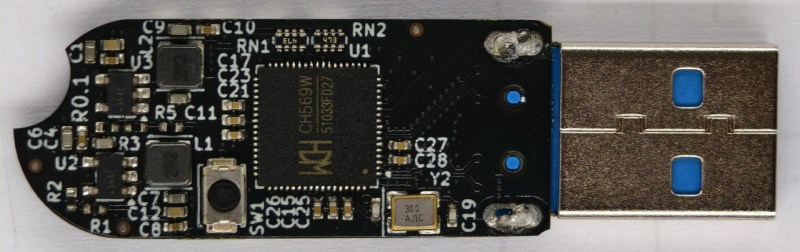
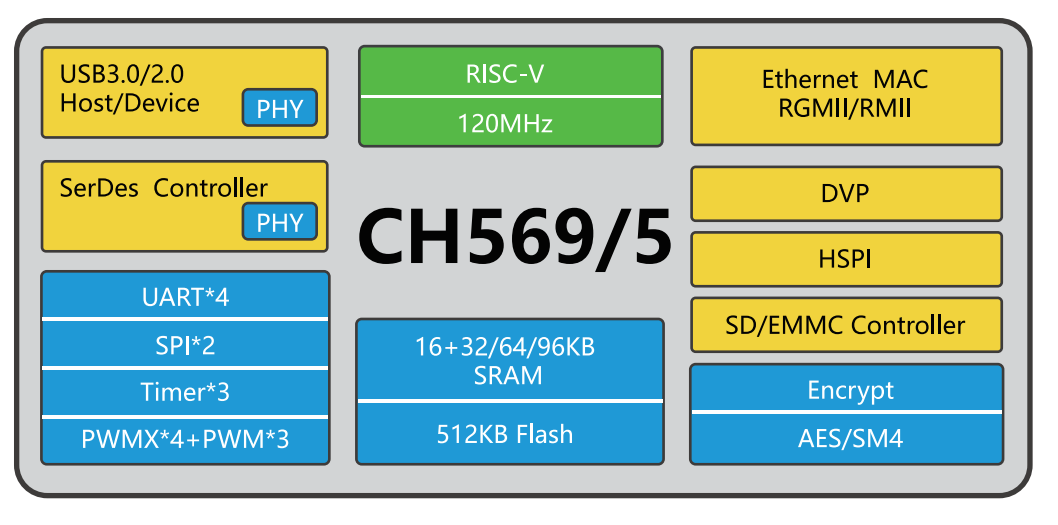
One proposal from [Ryan Walker] AKA [machinehum] is the Phantomdrive — a fully open source USB flash drive that features a secret secondary filesystem. Not only is the existence of this data hidden from the operating system under normal circumstances, but it’s encrypted with AES-256. Rather than relying on software running on the computer to handle the decryption, the CH569 chip that powers the drive does it internally.
 To complete this platform-agnostic approach, [machinehum] had to come up with a way for the user to unlock the secure storage that didn’t require running any code on the client machine. A hardware solution such as a keypad is the obvious answer, but in this case, was out of the question as it would immediately tip off an observer about the drive’s true nature. A covert storage device needs a similarly inconspicuous method of authentication.
That’s why the firmware on the Phantomdrive keeps an eye on all the write operations to the unsecured section of the drive looking for the string password:. Once it sees that, it treats whatever follows as the decryption key. If it’s correct, the previously inaccessible data will appear to the operating system as a new drive.
[machinehum] cautions that none of this has been professionally audited from a security standpoint, and that you should treat this whole concept as an experiment. In other words, it’s probably more than sufficient for the average person, but no guarantees on how long it would last should a three letter agency gets too interested in what you’re up to.
If this seems a bit familiar, it’s because the Phantomdrive follows up [machinehum]’s self-destructing USB flash drive from a few years back. The concept is essentially the same, except this time there’s no Magic Smoke getting released.









Nice concept but you’ll want to roll your own using different hardware. Why? Because now the spooks will be looking for anyone with this exact device and use their five dollar wrench decryption tool.
Somehow it’s like monks smuggling silkworm eggs in hollow walking canes.
Same things make us laugh, make us cry.
It is a proof of concept, but I have thought about just reprogramming an existing pendrive’s memory chip, to hide a partition until told otherwise. Unfortunately, SDKs for major flash memory manufacturers aren’t easy to come by.
You probably don’t – 99.99% of the time that drive you are carrying won’t even be cracked open to find the internals are little novel if the outside looks normal enough. Then even when it is unless you leave all the chip marking intact which the cheap/clone electronics so rarely do a package soldered to a PCB looks too much like any other and there are so many ways to arrange the components and traces inside that to really ID this is not just a cheap USB stick would be fairly serious levels of effort.
Odds are good they would never consider the need for the five dollar wrench, as it functions and looks even internally just like a pretty regular cheapo drive, which it would if you put that effort in… Even if they did break out that five dollars of persuasion odds are they’d not be asking the right questions so even under that duress I doubt by the time you are breaking you’d actually think to tell them what they really want to know.
Plus a minor code change even if they load you up with a keylogger it will be rather hard to see the “password: string” that is something a little odd to type often. So if its instead looking for something normal enough to pass unnoticed – you could for instance make that string ‘BBC wetter/wether/forcast” (or even spell it correctly the deliberate but easily made miss spelling just adds a little more) to anything but a rather complete owning of the system you tried to use it would look like you are simply doing the web search for looking up the weather with the BBC. And so many variations of this concept are possible that would fit seamlessly into your life – maybe its checking the sporting fixtures, visiting your bookies website, Amazon, etc etc
Tiny NFC coil and a chip embedded in your hand would be even more secure.
Do you want to lose your hand? Because that’s how you lose your hand.
NFC chips I’m embedded in files had been around almost as long as NFC chips have existed. Prior to that people were already implanting magnets. It is a thoroughly solved problem at this point.
Wow. Autocorrect really crapped the bed on that. *NFC chips embedded in flesh have…
Pretty sure he’s referring to the idea of an adversary lopping off your hand to use as a key.
and every handshake becomes a potential skim of your data
Why not just institute strong encryption + Shamir’s Secret Sharing(SSS) across multiple online file sharing/storage sites? you cant crack what you cant find. And NOT having a physical device on your person eliminates any desire for someone to want to try to figure out what youre hiding when they search you
“It’s a complex world out there”.
Of course, the “out there” is an ineradicable obsession for US culture.
Really neat idea. One potential issue is you’ll want to delete the password you wrote to unencrypted memory, and sometimes that’s easier said than done, what with wear leveling and such. Can’t remember if flash drives do that or just SSDs, but either way, a simple delete of the file you wrote is not enough. Have to write over it reliably.
So if my primary use of the drive is an encrypted FS, I’m out of luck.
Don’t really see that, if all you want is an encrypted drive you don’t need to use something like this as there are plenty of ways to encrypt a regular drive’s filesystem/data that might suit your needs better however this is still an encrypted filesystem that just requires you to make a tiny an unusual effort to unlock it.