Active Antenna Runs On A Single Lithium-Ion Cell

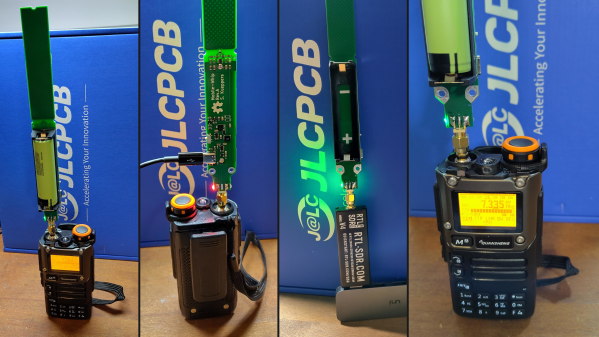
[skuep]’s Mobile-Whip is a compact, active receive-only antenna that is optimized for operation from a single lithium-ion battery or USB power. This makes it very handy for use on portable equipment, as shown in the images here.

What’s an active antenna do? Its main purpose is to provide useful reception with an antenna size much smaller than would normally be called for. It’s pretty handy to be able to have one that’s completely self-contained, and able to easily fit on a mobile radio or scanner.

The Mobile-Whip is based on the Mini-Whip active antenna by [PA0RDT], but with some important changes. One is that it has a narrower frequency range, but it’s also one piece, much smaller, can be powered by a single lithium-ion cell, and it integrates a charger.

It’s still in early development (and there’s no enclosure designed yet), but if you’d like to try it out for yourself the schematics and KiCad files are available. There are also instructions for ordering everything from a PCB manufacturer, which is about as easy as it gets.

[skuep] seems to have a knack for designing PCBs that attach directly to portable equipment, like the Ham Radio All-in-one cable (AIOC) which makes interfacing to a computer ridiculously easy.
The Hidden Microcontroller Inside A LoRa Chip

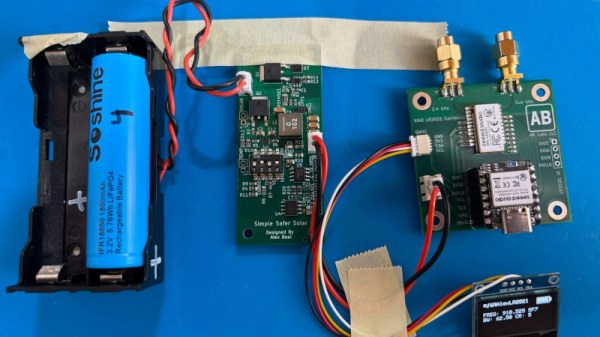
If you’ve ever done anything with LoRa, the chances are you’ve used a LoRa chip or module as a peripheral for a microcontroller, and left it at that. But that’s not always the case. Rather than being a pre-programmed ASIC under the hood, the Semtech LR2021 has its own on-board microcontroller whose firmware can be updated. [Alex Beale] has managed to unlock its secrets.

The use of LLMs can elicit strong opinions at times, but in this case we agree with him that the task of reverse engineering this hidden microcontoller would have been a near-impossible task without their help. Having done so though,he can write custom firmwares, which he’s able to demonstrate. Running the required FFTs for a waterfall display on-chip for example is now possible, as is running your mesh network node on the chip itself.

This work continues a streak of recent discoveries unlocking software-defined radio functionality inside dedicated radio chips, with both WiFi and LoRa chips falling prey to reverse engineering. It’s an interesting time, if SDR is your thing.

Thanks [Notbasa] for the tip.

A Bike-Friendly, DIY Action Cam Stereo Microphone

[DJJules] had two problems. Being an avid biker, recording audio on a bike-mounted action camera was less than ideal due to wind. In addition, the built-in microphone on action cameras is also just not as good as a dedicated stereo microphone setup. His solution: The Bike Mike.

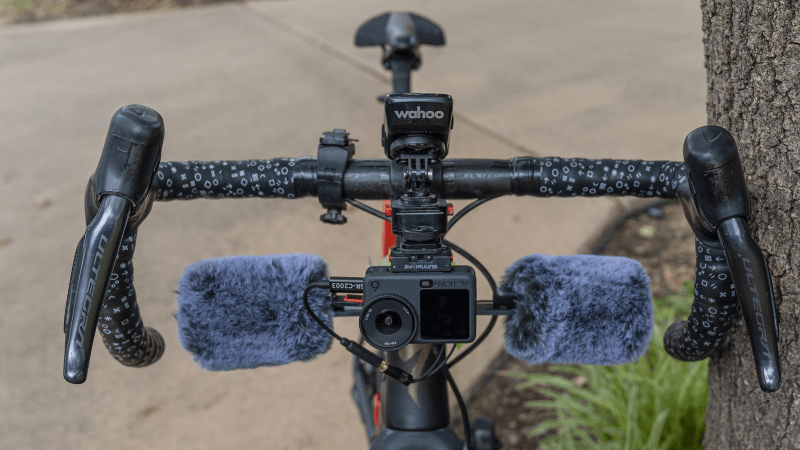
The furry ends contain one mic each, mounted with foam.

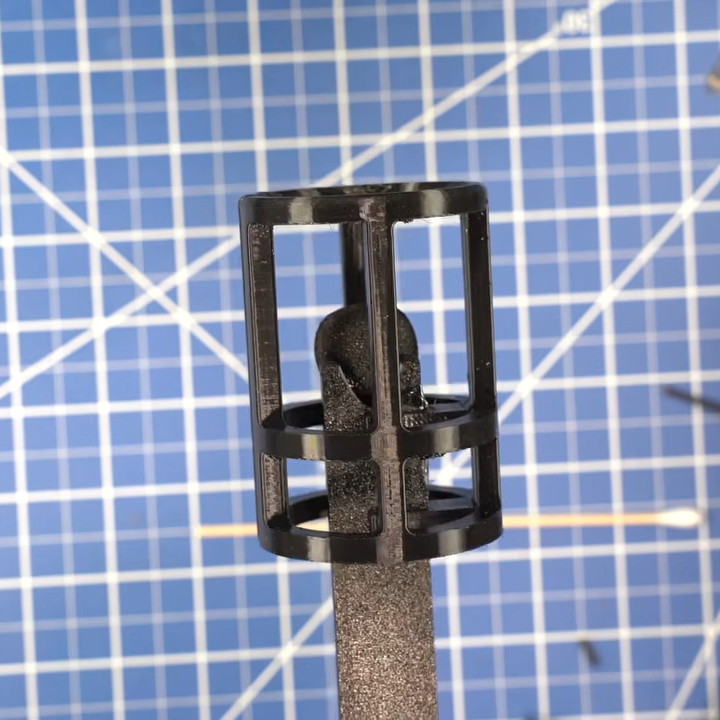
The Bike Mike solves both problems at once by providing a windproof stereo microphone for [DJJules]’s bike-mounted action camera. It consists of a 3D printed frame and mount for two electret microphones. The mics each get a foam cover, and are surrounded by a cage upon which furry mic covers are applied.

The microphones are wired up to a 3.5 mm audio connector, which is a pretty straightforward soldering job. To make it compatible with the action camera, [DJJules] uses a super slim USB microphone adapter that accepts the 3.5 mm connector on one end, and provides a USB-C plug on the other. One can insert that directly into the camera and have it recognized as an external mic.

If this looks a bit familiar, it’s similar to his earlier design for a DIY external stereo mic for things like DSLR cameras. This one’s adapted for action cameras, integrating a USB adapter for a wider compatibility.

Embedded is a build video followed by sample footage, so give it a watch and listen for yourself.

Continue reading “A Bike-Friendly, DIY Action Cam Stereo Microphone” →