
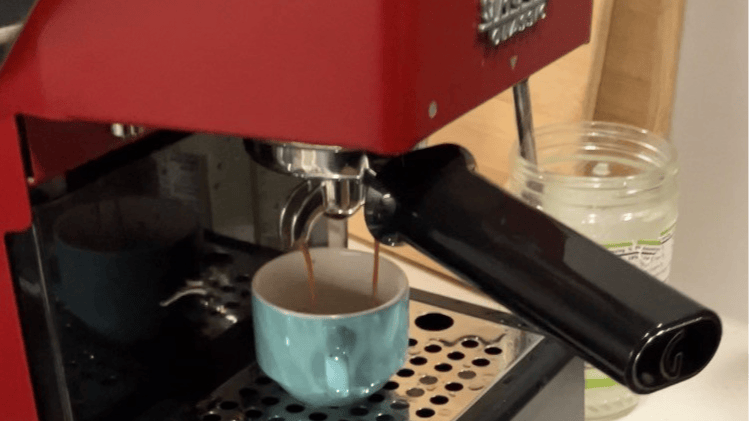
While pondering some repairs for his Gaggia Classic Pro espresso machine, [Hans Gaensbauer] ended up machining an entirely new boiler from stainless steel.
It was a nontrivial undertaking, since the boiler is an assembly that integrates not only heaters and pump connections, but one end is also the group head into which the portafilter interfaces. [Hans] had to deal with machining out the contours and pockets necessary for a portafilter to lock in securely, complete with the little screen and perforated plate responsible for even water distribution. And of course, the whole thing still has to fit into the original machine. All in all, [Hans] had some constraints to work around, making it a considerably more complex job than just milling a chamber out of a block of stainless steel.
Overall he matches the original as much as possible, but since the original was cast from a mold and not designed with machining in mind, the operation is a bit tricky. This is a common issue when one changes manufacturing methods: a part designed to be molded will tend to have features that prove inconvenient for machining.
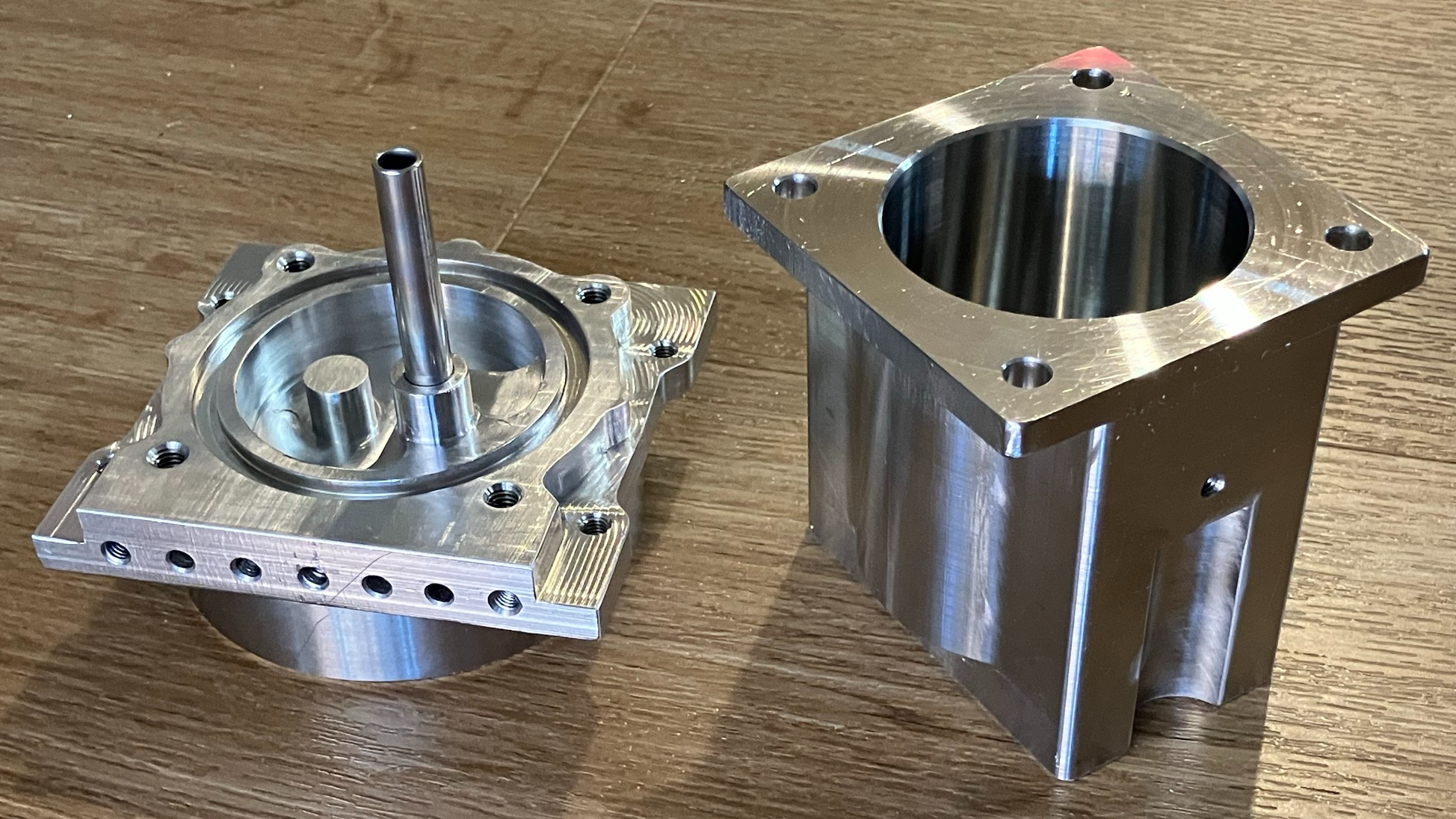
In the end it’s a success, complete with brand new seals and some upgraded electric components to address an original thermostat failure. If you want to see the insides of [Hans]’ espresso machine as well as loads of pictures showing the process of machining a whole new boiler and group head, check it out.
Coffee is a topic near and dear to many hackers, so there are plenty of retrofits and repairs but we’ve also seen folks go right back to square one and re-imagine entire espresso machines, rather than just single parts.












Btw, wouldn’t a hand-held filter brewer (similiar to a mixer) be possible?
I love the write-up – in addition to the challenges of designing and machining a boiler that will work, designing and building a switching circuit, they also faced a challenge more familiar to someone at my skill level:
“in the five months it took to get this far, many of the smaller screws and O-rings vanished”
Stainless is a .. bold choice for a part that is supposed to conduct heat from the heating coils outside to the liquid inside.
There is a reason that those boilers are made of Aluminium (cheap) or bronze(? or was it brass? one of those.)
Yeah, without dropping the wall thicknes and doing some quick calcs, it’s probably not ideal. That said, stainless has twice the heat capacity, so it should smooth out the shot to shot variation by maintaining a reservoir of heat. Hell of a think to hack from stainless billet though, good job. The originals are awful for oxidising and becoming a furry mess.
Stainless is used in commercial espresso machine boilers too. True, I believe it has something like 1/5 to 1/10 the thermal conductivity of aluminum, but although this means there’s a bit of an increase in the temperature gradient across the boiler, the actual impact this has on time-to-boil and evenly distributed heat is very small since there is relatively little metal between the heating elements and water.
I believe I can taste a change in the coffee’s flavor when it touches Stainless Steel. I could be wrong, but every stainless mug I’ve tried demonstrably changes the flavor whereas a porcelain lined mug I found does not. Does anyone else have this issue? If so would copper be a better choice for the boiler?
I have an espresso machine in the queue waiting for a rework, hence the question
I think that’s a mug/mouth interaction. Most commercial brewers are stainless IIRC.
I agree. Stainless ain’t going to change much of anything in the cup. Grounds Basket , perhaps, copper cup maybe
depends on the alloy tbh. many alloys shouldn’t be used for food at all.
I’ve had this with certain brands. I think it was Sigg that always tasted nasty and metallic to me, to the point I swore it was a manufacturing defect. Except the replacements were the same. Currently have a generic stainless steel bottle and its fine!
Surely you do.
Hovever, it may depend on the alloying elements’ composition. The stainless steel with a higher concentration of nickel works as a catalyst. Practically, there is a stainless steel “soap” product (soap-shaped ellipsoid made from stainless steel) to remove the onion or garlic scent from hands. The stained skin contact leads to a rapid decomposition of the aroma oils, etc. Next, the margarine is made by pushing vegetable oils through nickel mesh. That is a catalyst filter that changes the structure of lipids.
So, I bet that contact with the particular kind of steel could change coffees’ flavor. There are widely proven food-grade steel compositions made to avoid the effect in particular cases. In coffee brewers they usually use 316L or 304 steel. Each one is a compromise between the flavor influence, the descaling durability, and many other factors.
You can try to pour it from the stainless mug into a porcelain cup before you drink your coffee. If you still taste a difference (With a 2nd person you can do this test blind too) then it at least excludes mouth / cup interactions.
Hard water is hard on any boiler or such. Use R/O filtered water and you will see the difference as water spots will no longer be around and crusty crap will not be.