Only 90s Kids Will Appreciate This Prototype

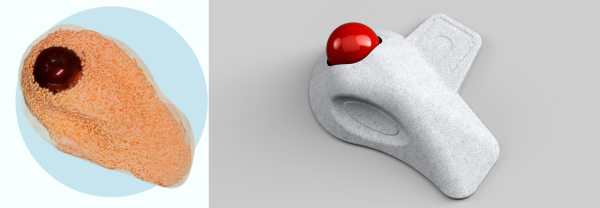
[Madox] is a trackball user, which is fine; we at Hackaday respect and appreciate those who live alternative lifestyles. As you would expect, there aren’t many makes and models of trackballs being sold, and [Madox] wanted something ergonomic. A DIY solution was necessary, but how to you model something ‘ergonomic’ before printing it out? Floam, apparently.

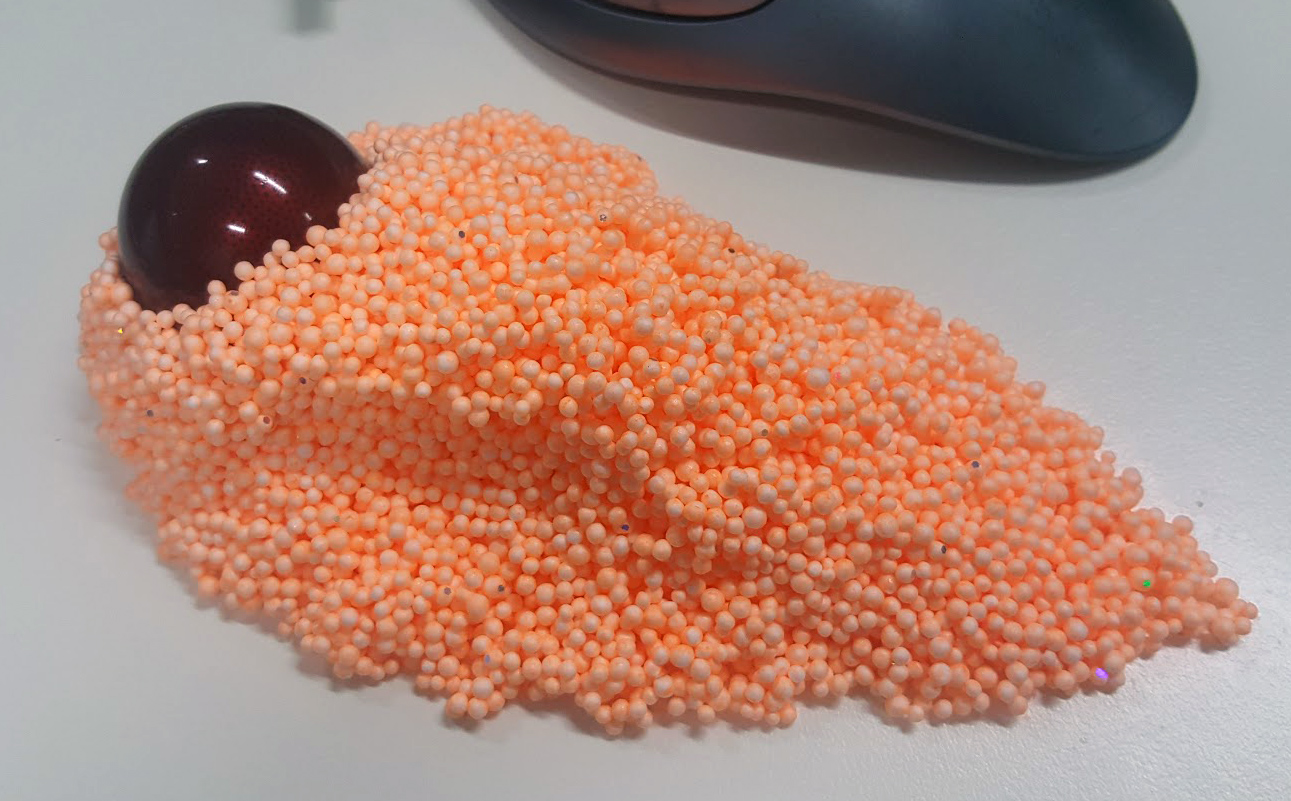
Highly advanced 3D prototyping skills

Floam is a sticky, moldable goo originally sold as the follow-up to Nickelodeon’s Gak in the early 1990s. It consists of styrofoam pellets held together with a colored binder that doesn’t leave a mess and doesn’t dry out. While the Nickelodeon version is lost to the sands of time, a Floam-like substance is available at any toy store. [Madox] picked up a few blister packs and began modeling his ideal trackball.

With the proper shape in hand, [Madox] needed a way to get this design into a computer. Photogrammetry is the solution, and while earlier experiments with Autodesk Catch were successful, Autodesk has morphed and rebranded their photogrammetry software into Autodesk ReMake. Turing a pile of styrofoam balls into a 3D model is as simple as taking a bunch of pictures and uploaded to Autodesk’s ‘cloud’ service.

In just a few minutes, a proper 3D mesh arrived from the Autodesk mothership, and [Madox] took to importing this model into Fusion 360, fiddling with chamfers, and eventually got to the point where a 3D printer was necessary. It took a few revisions, but now [Madox] has a custom designed trackball that was perfectly ergonomic.

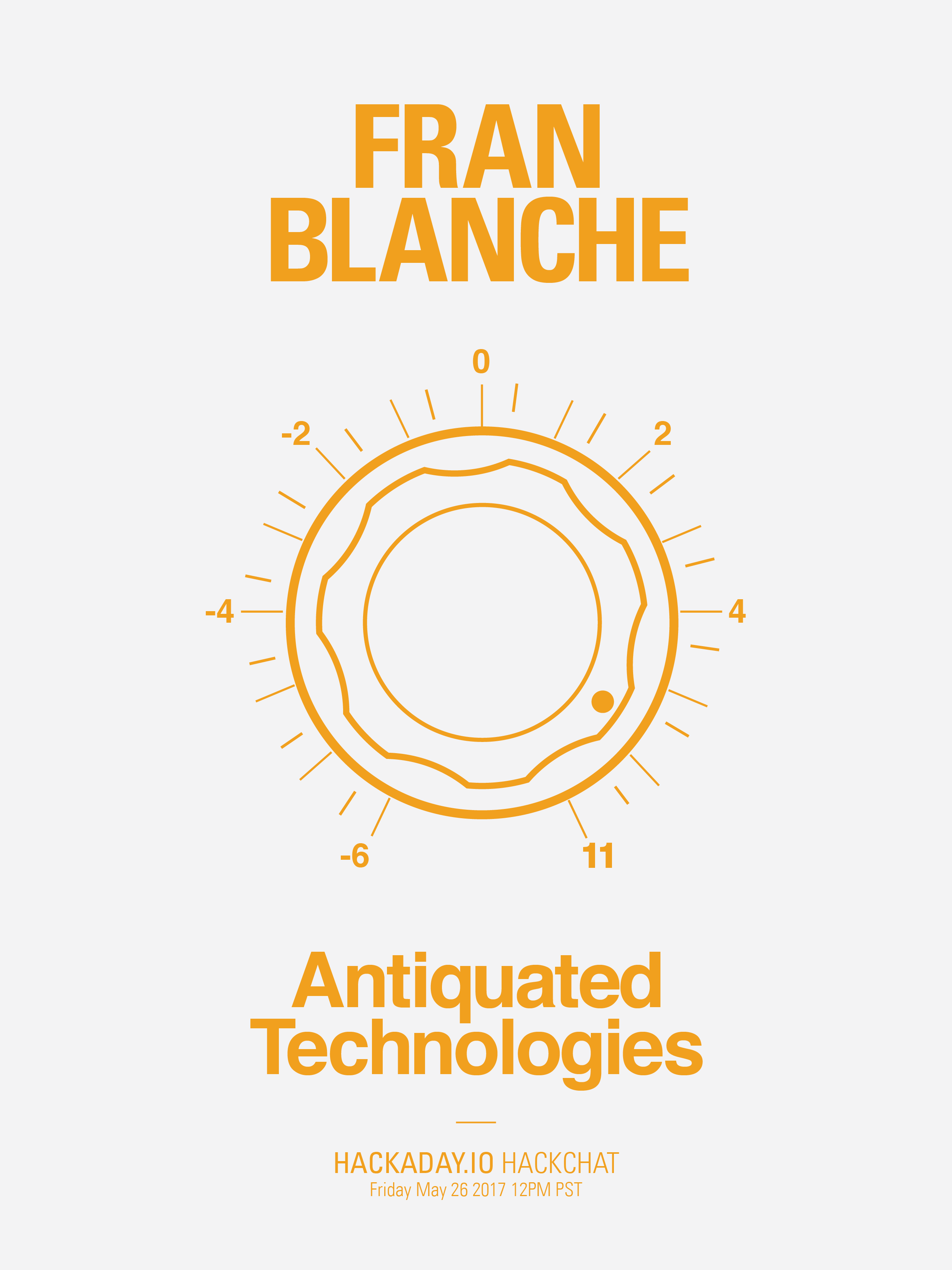
Friday Hack Chat: Antiquated Technologies With Fran Blanche

Join us this Friday for a Hack Chat on antiquated technologies.

Every Friday, we round up someone from the hardware scene and sit them down in front of a keyboard to discuss what they’re working on. This week, we’re talking with [Fran Blanche] to discuss ancient technologies, weird electronics, and everything that goes into building a hardware company from the ground up.

Who’s [Fran Blanche], you might ask? She’s a self-taught electronic engineer, artist, musician, photographer, mechanical engineer, and YouTube vlogger. She’s the founder of Frantone Electronics, one of the very first manufacturers of boutique guitar effects. Her Peachfuzz is one of the very, very few original distortion/fuzz circuits out there. She’s given talks at Brown University on the boutique effects industry, worked with the Franklin Institute on the Maillardet Automaton, wandered around the largest musical instrument, taken apart flight hardware from the Saturn V just to see how it works, and she’s been inside the warehouse for the Smithsonian’s Air and Space museum.

With a resume of work this cool, what’s [Fran] working on now? She’s trying to recreate the DSKY from the Apollo Guidance Computer. The DSKY is the user interface for the Apollo Guidance Computer, a wonderful block of aluminum studded with beautiful buttons and electroluminescent displays. For the last few years, her attempts to reproduce a modern DSKY — including the custom segmented EL display — has been on the back burner, but now [Fran] is attempting to raise the money for a reproduction on GoFundMe. I encourage you all to at least look at that GoFundMe campaign.

Here’s How To Take Part:

join-hack-chatOur Hack Chats are live community events on the Hackaday.io Hack Chat group messaging.

Log into Hackaday.io, visit that page, and look for the ‘Join this Project’ Button. Once you’re part of the project, the button will change to ‘Team Messaging’, which takes you directly to the Hack Chat.

You don’t have to wait until Friday; join whenever you want and you can see what the community is talking about.

[Bre Pettis] Buys Other Machine Co.

Other Machine Co., manufacturer of the very capable and very cool OtherMill Pro CNC machine, has been acquired by [Bre Pettis], former CEO of MakerBot. Under the terms of the acquisition, current CEO of Other Machine Co, Dr. Danielle Applestone, will remain in charge of the company.

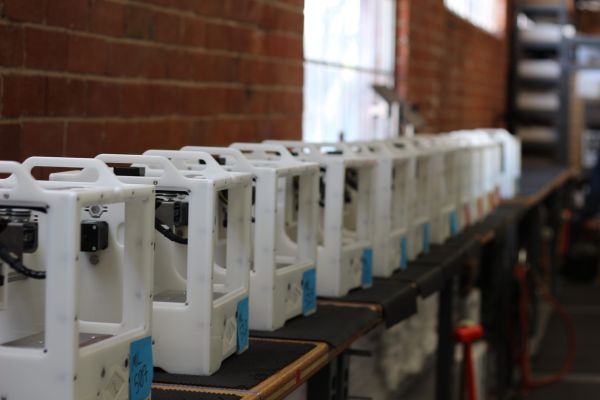
We have a love affair with the OtherMill here at Hackaday. We have a few of them kicking around the Design Lab, and they’re great. Six mil traces are possible, and the OtherMill is a very reliable machine. We’ve taken a look at the OtherMill manufacturing process and liked what we saw, and we’ve invited [Danielle Applestone] to talk about the quest for the highest precision per dollar.

Of course, the newsworthy item for this, ‘rich guy buys a company’ story is who acquired the company. [Pettis] is most famous for being one-third of the original MakerBot team, a position that netted him about $130 Million after Stratasys acquired MakerBot. Stratasys’ acquisition of MakerBot has made a lot of people angry and has been widely regarded as a bad move. The history of MakerBot is not written yet, but the general consensus is that [Pettis] only played a very limited role in the downfall of MakerBot and desktop 3D printing as a whole.

Since leaving MakerBot for greener pastures, [Pettis] has put his money to work; he’s also an investor in the laser cutter startup Glowforge. While Glowforge has seen its share of troubles including a ridiculous policy on field-replaceable laser tubes, and perpetual delays for production units, Glowforge will be shipping soon. It’s unclear how the Glowforge will ultimately be received. But [Pettis’] continues to put his money where his mouth is (and into hardware startups) with this acquisition of Other Machine Co..

Arise, Chicken, Arise!

A couple of months ago, [Mike] started saving bones from all the fried chicken he had been eating. If that’s the opening line, you know it’s going to be good.

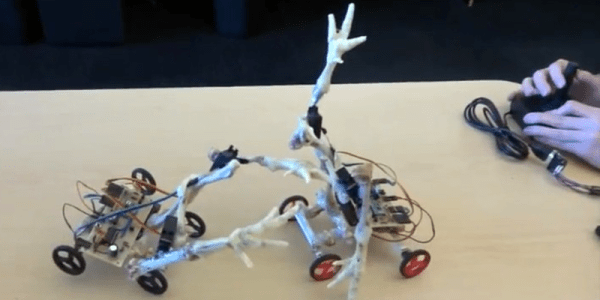
This Cyborg Chicken project grew out of [Mike]’s love for battlebots, and an immense dearth of battleborgs. The difference, though small, is distinct: a robot is simply a machine that carries out instructions either automatically or via remote control. A cyborg, on the other hand, contains both organic and biomechatronic body parts. Since [Mike] was saving chicken bones, he stumbled upon the idea of creating a cyborg out of trash, a few servos, an MSP430, and some other parts sitting around in his junk drawer.

A continuation of an earlier remote controlled food project, the capabilities of these chicken battleborgs are about what you would expect: they roll around on wheels and flail their drumsticks wildly. [Mike] has already built at least two of these devices, and the result is accurately described as Rock ’em Sock ’em Borgs. Check out the video below for the action.

On the hardware side of things, [Mike] picked up an MSP430, and whipped up a bit of code in Java. Three billion enterprise computing systems and, now, two cyborg chickens run Java. The motors and drivers come from Pololu, and control is provided over IR with a pair of Atari joysticks.

You can check out the videos of these cyborg chickens below. If you have to ask why, the answer is always, ‘because’.

Continue reading “Arise, Chicken, Arise!”

Hackaday Links Column Banner

Hackaday Links: May 21, 2017

It’s time to talk about something of supreme importance to all Hackaday readers. The first trailer for the new Star Trek series is out. Some initial thoughts: the production values are through the roof, and some of this was filmed in Jordan (thank the king for that). The writers have thrown in some obvious references to classic Trek in this trailer (taking a spacesuit into a gigantic alien thing a la TMP). There are a few new species, even though this is set about 10 years before waaaait a second, those are the Klingons?

In other news, [Seth MacFarlane] is doing a thing that looks like a Galaxy Quest series. We can only hope it’s half as good as a Galaxy Quest series could be.

The Dayton Hamvention should have been this week, but it’s never going to happen again. The Hara Arena, the traditional venue for the biggest amateur radio meet on the continent (thankfully) closed this year. Last year it was looking old and tired. This year, Hamvention moved to Xenia, Ohio, and it looks like we’re still getting the best ham swap meet on the planet. Remember: if you  drove out to Hamvention, the Air Force museum is well worth the visit. This year they have the fourth hangar open, full of space craft goodness.

Last week we saw an Open Source firmware for hoverboards, electric unicycles, and other explodey bits of self-balancing transportation. [Casainho], the brains behind this outfit, recently received an eBike controller from China. As you would expect, it’s based on the same hardware as these hoverboards and unicycles. That means there’s now Open Source firmware for eBikes.

Last year, [Cisco] built a cute little walking robot. Now it’s up on Kickstarter.

This week saw the announcement of the Monoprice Mini Delta, the much-anticipated 3D printer that will sell for less than $200. For one reason or another, I was cruising eBay this week and came upon this. They say yesterday’s trash is tomorrow’s collectors’ item, you know…

A new Tek scope will be announced in the coming weeks. What are the cool bits? It has a big touchscreen. That’s about all we know.

The ESP32 is the next great wonderchip, and has been for a while now. The ESP32 also has a CAN peripheral stuffed in there somewhere, and that means WiFi and Bluetooth-enabled cars. [Thomas] has been working on getting a driver up and running. There’s a thread on the ESP32 forum, a Hackaday.io page, and a GitHub page.

What do you do when you have a nice old Vacuum Fluorescent Display and want to show some stats from your computer? You build a thing that looks like it’s taken from a cash register. This is a project from [Micah Scott], and it has everything: electronics 3D modeling, magnets, print smoothing, creating snap-fit parts, and beautiful old displays.

Here’s something that randomly showed up in our Tip Line. [Mark] recently found some unused HP 5082-7000 segment displays in a collection of electronic components (pics below). According to some relevant literature, these were the first LED display package available, ever.  They were released in 1969, they’re BCD, and were obviously very expensive. [Mark] is wondering how many of these were actually produced, and we’re all interested in the actual value of these things. If anyone knows if these are just prototypes, or if they went into production (and what they were used for), leave a note in the comments.

The Tiniest Mechanical Keyboard Ever

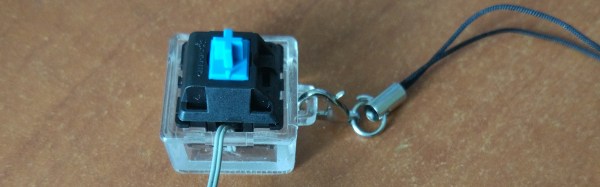
Owning a mechanical keyboard makes you a better person. It puts you above everyone else. Of course, owning a mechanical keyboard does come with some downsides. Carrying a mechanical keyboard around all the time to tell everyone else you’re better than them is usually impractical, but [cahbtexhuk Joric] has come up with a solution. It’s a miniature Bluetooth mechanical keyboard that’s also a keychain.

Continue reading “The Tiniest Mechanical Keyboard Ever”

Arduino Cinque – The RISC-V, ESP32, WiFi, Bluetooth Arduino

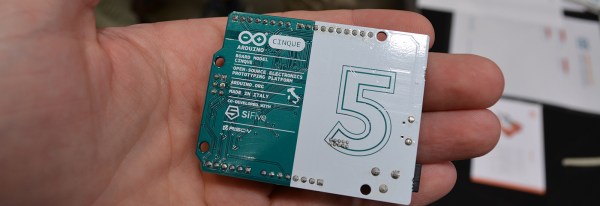
This weekend at the Bay Area Maker Faire, Arduino in conjunction with SiFive, a fabless provider of the Open Source RISC-V micros, introduced the Arduino Cinque. This is a board running one of the fastest microcontrollers available, and as an added bonus, this board includes Espressif’s ESP32, another wonderchip that features WiFi and Bluetooth alongside a very, very powerful SoC.

Details on the Arduino Cinque are slim at the moment, but from what we’ve seen so far, the Cinque is an impressively powerful board featuring the RISC-V FE310 SoC from SiFive, an ESP32, and an STM32F103. The STM32 appears to be dedicated to providing the board with USB to UART translation, something the first RISC-V compatible Arduino solved with an FTDI chip. Using an FTDI chip is, of course, a questionable design decision when building a capital ‘O’ Open microcontroller platform, and we’re glad SiFive and Arduino found a better solution. It’s unknown if this STM32 can be used alongside the FE310 and ESP32 at this point.

We’ve taken a look at SiFive’s FE310 SoC, and it is an extremely capable chip. It was released first at the HiFive1, and our hands-on testing revealed this is a chip that outperforms the current performance champ of the Arduino world, the Teensy 3.6. Of course, with any new architecture, there will be a few problems porting the vast number of libraries over to the FE310, but SiFive has included an Arduino compatible SDK. It’s promising, and we can’t wait to see SiFive’s work in more boards.