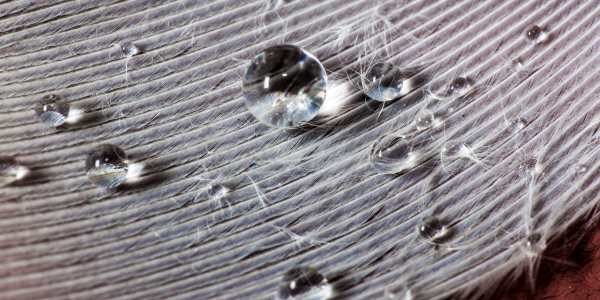
Water beading up on a feather

PFAS: The Organofluorines Your Biochemist Warned You About

Sometimes it begins to feel like a tradition that a certain substance or group of substances become highly popular due to certain highly desirable chemical or physical properties, only for these chemicals then to go on to turn out to form a hazard to the biosphere, human life, or both. In the case of per- and polyfluoroalkyl substances (PFAS) it’s no different. Upon the discovery that a subgroup of these – the fluorosurfactants – have the ability to reduce water surface tension significantly more than other surfactants, they began to be used everywhere.

Today, fluorosurfactants are being used in everything from stain repellents to paint, make-up, and foam used by firefighters. In a recent study of 231 cosmetic products bought in the US and Canada (Whitehead et al., 2021), it was found that all of them contained PFAS, even when not listed on the packaging. The problematic part here is that PFASs are very stable, do not decay after disposal, and bioaccumulate in the body where they may have endocrine-disrupting effects.

Some areas have now at least partially banned PFAS, but the evidence for this is so far mixed. Let’s review what we do know at this point, and which alternatives we have to continuing to use these substances. Continue reading “PFAS: The Organofluorines Your Biochemist Warned You About”


Back of Rigol DS1104Z oscilloscope with the Ethernet and USB ports visible.

SCPI: On Teaching Your Devices The Lingua Franca Of Laboratories

One could be excused for thinking sometimes that the concept of connecting devices with other devices for automation purposes is a fairly recent invention. Yet for all the (relatively) recent hype of the Internet of Things and the ‘smart home’, laboratories have been wiring up their gear to run complicated measurement and test sequences for many decades now, along with factories doing much the same for automating production processes.

Much like the chaotic universe of IoT devices, lab equipment from different manufacturers feature a wide number of incompatible protocol and interface standards. Ultimately these would coalesce into IEEE-488.1 (GPIB) as the physical layer and by 1990 the first Standard Commands for Programmable Instruments (SCPI) standard was released that built on top of IEEE-488.

SCPI defines (as the name suggests) standard commands to interact with instruments. It has over the past decades gone on to provide remote interaction capabilities to everything from oscilloscopes and power supplies to exotic scientific equipment. Many off the shelf devices a hobbyist can buy today feature an SCPI interface via its Ethernet, USB or RS-232C port(s) that combined with software can be used to automate one’s home lab.

Even better is that it’s relatively straightforward to add SCPI functionality to one’s own devices as well, so long as it has at least an MCU and some way to communicate with the outside world.

Continue reading “SCPI: On Teaching Your Devices The Lingua Franca Of Laboratories”

Sulfur Hexafluoride: The Nightmare Greenhouse Gas That’s Just Too Useful To Stop Using

Sulfur hexafluoride (SF6) is not nearly as infamous as CO2, with the latter getting most of the blame for anthropogenic climate change. Yet while measures are being implemented to curb the release of CO2, for SF6 the same does not appear to be the case, despite the potentially much greater impact that SF6 has. This is because when released into the atmosphere, CO2 only has a global warming potential (GWP) of 1, whereas that of methane is about 28 over 100 years, and SF6 has a GWP of well over 22,000 over that same time period.

Also of note here is that while methane will last only about 12.4 years in the atmosphere, SF6 is so stable that it lasts thousands of years, currently estimated at roughly 3,200 years. When we touched upon sulfur hexafluoride back in 2019 in the context of greenhouse gases, it was noted that most SF6 is used for — and leaks from — high-voltage switchgear (mechanical switches), transformers and related, where the gas’ inert and stable nature makes it ideal for preventing and quenching electrical arcing.

With the rapid growth of highly distributed energy production in the form of mostly (offshore) wind turbines and PV solar parks, this also means that each of these is equipped with its own (gas-filled) switchgear. With SF6 still highly prevalent in this market, this seems like an excellent opportunity to look into how far SF6 usage has dropped, and whether we may be able to manage to avert a potential disaster.

Continue reading “Sulfur Hexafluoride: The Nightmare Greenhouse Gas That’s Just Too Useful To Stop Using”

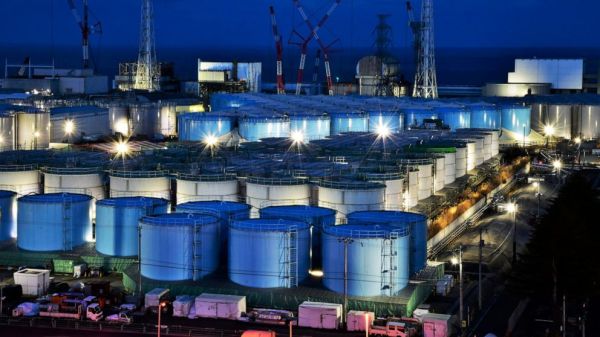
Fukushima Daiichi at night

A Tritium Story: How Afraid Should You Be Of Hydrogen’s Big Brother?

Despite being present in everything that contains water, tritium is not an isotope that many people were that familiar with outside of select (geeky) channels, such as DEF CON with a tritium-containing badge, the always excellent NurdRage’s assembly of a tritium-based atomic battery, or the creation of a tritium-phosphor-based glow-in-the-dark tesseract cube.

Tritium is a hydrogen isotope that shares a lot of characteristics with its two siblings: 1H (protium) and 2H (deuterium), with the main distinction being that tritium (3H) is not a stable isotope, with a half-life of ~12.32 years that sees it decay into 3He. Most naturally occurring tritium on Earth originates from interactions between fast neutrons (>4.0 MeV) from cosmic radiation and atmospheric nitrogen.

Recently tritium has become a politically hot topic on account of the announced release of treated water at the Japanese Fukushima Daiichi nuclear plant. This has raised for many the question of just how much tritium is ‘too much’ and what we’re likely to notice from this treated — but still tritium-containing water — being released into the ocean.

Continue reading “A Tritium Story: How Afraid Should You Be Of Hydrogen’s Big Brother?”

Creating Methane From Captured Carbon Dioxide And The Future Of Carbon Capture

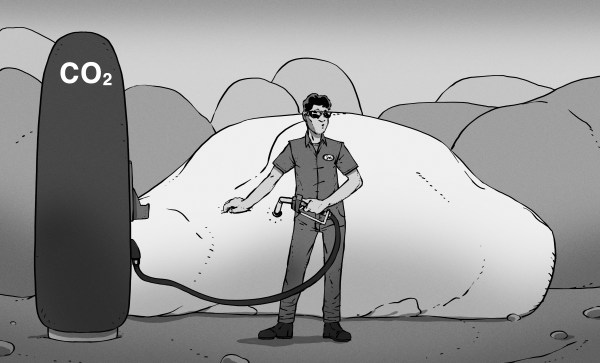
There’s something intrinsically simple about the concept of carbon (CO2) capture: you simply have the CO2 molecules absorbed or adsorbed by something, after which you separate the thus captured CO2 and put it somewhere safe. Unfortunately, in physics and chemistry what seems easy and straightforward tends to be anything but simple, let alone energy efficient. While methods for carbon capture have been around for decades, making it economically viable has always been a struggle.

This is true both for carbon capture and storage/sequestration (CCS) as well as carbon capture and utilization (CCU). Whereas the former seeks to store and ideally permanently remove (sequester) carbon from the atmosphere, the latter captures carbon dioxide for use in e.g. industrial processes.

Recently, Pacific Northwest National Laboratory (PNNL) has announced a breakthrough CCU concept, involving using a new amine-based solvent (2-EEMPA) that is supposed to be not only more efficient than e.g. the previously commonly used MEA, but also compatible with directly creating methane in the same process.

Since methane forms the major component in natural gas, might this be a way for CCU to create a carbon-neutral source of synthetic natural gas (SNG)? Continue reading “Creating Methane From Captured Carbon Dioxide And The Future Of Carbon Capture”

The Coming Copper Shortage: Aluminium Or Carbon Nanotubes To The Rescue?

The use of aluminium in wiring is unlikely to bring a smile to the face of anyone who has had to deal with it in a 1960s, or early 1970s-era house. The causes behind the fires and other accidents were myriad, including failure to deal with the higher thermal expansion of aluminium, the electrically insulating nature of aluminium oxide, and the general brittleness of aluminium when twisted.

Yet while copper is superior to aluminium in terms of electrical conductivity and ease of installation, copper prices have skyrocketed since the 1970s, and are on the verge of taking off to the moon. A big part of the reason is the increased use of copper in everything from electronics and electrical motors to generators, driven by large-scale deployment of wind turbines and electrical vehicles.

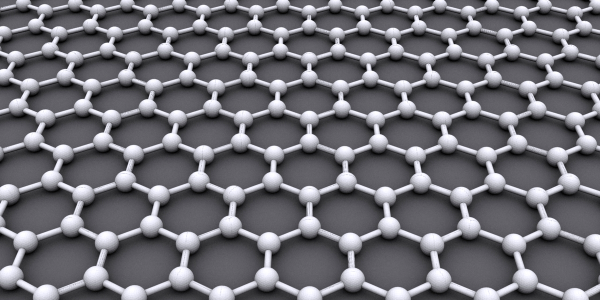
As the world moves to massively expand the use of electrical cars and installation of wind turbines, copper demand is predicted to outstrip current copper supply. With aluminium likely to make a big return as a result, it’s worth taking a look at modern-day aluminium-based wiring, including copper-clad aluminium and the use of carbon-based replacements. Continue reading “The Coming Copper Shortage: Aluminium Or Carbon Nanotubes To The Rescue?”

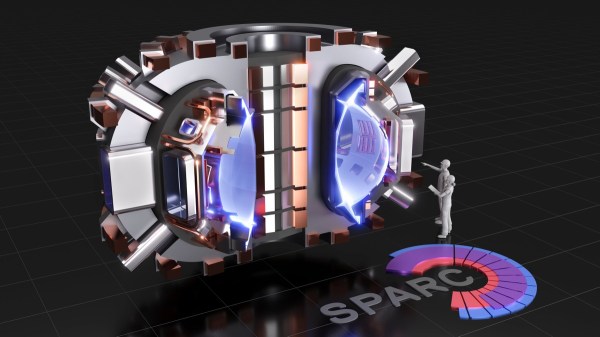
Image of CFS's SPARC reactor

Commonwealth Fusion’s 20 Tesla Magnet: A Bright SPARC Towards Fusion’s Future

After decades of nuclear fusion power being always ten years away, suddenly we are looking at a handful of endeavours striving to be the first to Q > 1, the moment when a nuclear fusion reactor will produce more power than is required to drive the fusion process in the first place. At this point the Joint European Torus (JET) reactor holds the world record with a Q of 0.67.

At the same time, a large international group is busily constructing the massive ITER tokamak test reactor in France, although it won’t begin fusion experiments until the mid-2030s. The idea is that ITER will provide the data required to construct the first DEMO reactors that might see viable commercial fusion as early as the 2040s, optimistically.

And then there’s Commonwealth Fusion Systems (CFS), a fusion energy startup.  Where CFS differs is that they don’t seek to go big, but instead try to make a tokamak system that’s affordable, compact and robust. With their recent demonstration of a 20 Tesla (T) high-temperature superconducting (HTS) rare-earth barium copper oxide (ReBCO) magnet field coil, they made a big leap towards their demonstration reactor: SPARC.

A Story of Tokamaks

CFS didn’t appear out of nowhere. Their roots lie in the nuclear fusion research performed since the 1960s at MIT, when a scientist called Bruno Coppi was working on the Alcator A (Alto Campo Toro being Italian for High Field Torus) tokamak, which saw first plasma in 1972. After a brief period with a B-revision of Alcator, the Alcator C was constructed with a big power supply upgrade. Continue reading “Commonwealth Fusion’s 20 Tesla Magnet: A Bright SPARC Towards Fusion’s Future”