Eulogy To Arecibo: With Demise Of A Unique Scientific Facility, Who Will Carry The Torch?

Few telescopes will get an emotional response from the general public when it is ultimately announced that they will be decommissioned. In the case of the Arecibo Observatory in Arecibo, Puerto Rico, the past months has seen not only astronomers but also countless people across the world wait with bated breath after initial reports of damage to the radio telescope’s gigantic dish.

When the National Science Foundation announced that they would be decommissioning the telescope, there was an understandable outpouring of grief and shock. Not only is Arecibo a landmark in Puerto Rico, it is the telescope from iconic movies such as GoldenEye (1995) and Contact (1997). Its data fed public programs such as the Seti@Home and Einstein@Home projects.

Was Arecibo’s demise truly unavoidable, and what does this mean for the scientific community?

Continue reading “Eulogy To Arecibo: With Demise Of A Unique Scientific Facility, Who Will Carry The Torch?”

The Shipping Industry’s Transition To Atomic Power And Faster Deliveries

The transport of goods with cargo ships and especially container ships is the backbone of today’s economies, with about 90% of non-bulk cargo transported with them. This is in addition to the large number of oil tankers and LNG carriers. Unfortunately, due to their use of diesel engines they are also responsible for about 3.5% of the world’s CO2 emissions, in addition to 18 – 30% of nitrogen oxide and 9% of sulfur oxides.

Although the switch to low-sulfur diesel (ULSD) and the use of speed limits has reduced some of these pollutants, the shipping industry sees itself faced with the necessity to decarbonize in order to meet the obligations of the Paris Agreement. This essentially means finding a way to switch from diesel engines to an alternative which has comparable or better fuel costs, produces no or almost no pollutants and will not negatively affect logistics.

As a highly competitive, cut-throat industry, this does seem to leave shipping companies backed up against  a wall. Yet an existing, proven technology just so happens to exist already which can be retrofitted into existing cargo ships. Continue reading “The Shipping Industry’s Transition To Atomic Power And Faster Deliveries”

Bare-Metal STM32: From Power-Up To Hello World

Some may ask why you’d want to program a Cortex-M microcontroller like the STM32 series using nothing but the ARM toolchain and the ST Microelectronics-provided datasheet and reference manual. If your first response to that question wasn’t a panicked dive towards the nearest emergency exit, then it might be that that question has piqued your interest. Why, indeed?

Definitely, one could use any of the existing frameworks to program an STM32 MCU, whether the ST HAL framework, plain CMSIS, or even something more Arduino-flavored. Yet where is the fun in that, when at the end of the day one is still fully dependent on that framework’s documentation and its developers? More succinctly, if the contents of the STM32 reference manuals still look like so much gibberish, does one really understand the platform?

Let’s take a look at how bare-metal STM32 programming works, and make the most basic example run, shall we? Continue reading “Bare-Metal STM32: From Power-Up To Hello World”

Wireless Earphones And Getting Them Back After They Fall On Tram Tracks

Over the past years, the trend has become to ditch anything with wires. This has led to many people dropping wired earphones and headphones for wireless (Bluetooth) versions. Yet along with the freedom from having the wires snagged on something and having earphones painfully torn out of your ears comes the very real risk of having them drop out of your ears to land potentially very inconvenient.

In Japan this has led to a big issue for railway companies, where throngs of commuters will often accidentally drop possessions onto the tracks. Staff members will then use a mechanical claw (‘magic hand’) to fetch them without having to risk their life by jumping down. With small items such as wireless earphones, this is however not so easy. With 947 cases of dropped earphones in the period of July-September in just the Tokyo area, this has led to desperate staff members coming up with new methods of easily retrieving the small gadgets.

Solutions range from putting something sticky like tape at the end of a stick, to modifying vacuum cleaners. Most recently Tokyo railway company JR East has collaborated with Panasonic to develop a vacuum cleaner-like device that is especially designed to easily retrieve such small items from the tracks, according to the Japan Times article.

The embedded video (also found after the break) from a Japanese broadcaster describes the issue in detail, along with tips on how to properly wear earphones so that they’re far less likely to fall out when you’re waiting on the tram or walking down the street. While it’s possible to fetch your dropped wireless earphones from the tracks, having someone step on it right after it falls out of your ear on the street is less easy to recover from.

Continue reading “Wireless Earphones And Getting Them Back After They Fall On Tram Tracks”

Local And Remote Debugging With GDB

As a debugger, GDB is a veritable Swiss Army knife. And just like exploring all of the non-obvious uses of a those knives, your initial response to the scope of GDB’s feature set is likely to be one of bewilderment, subsequent confusion, and occasional laughter. This is an understandable reaction in the case of the Swiss Army knife as one is unlikely to be in the midst of an army campaign or trapped in the wilderness. Similarly, it takes a tricky debugging session to really learn to appreciate GDB’s feature set.

If you have already used GDB to debug some code, it was likely wrapped in the comfort blanket of an IDE. This is of course one way to use GDB, but limits the available features to what the IDE exposes. Fortunately, the command line interface (CLI) of GDB has no such limitations. Learning the CLI GDB commands also has the advantage that one can perform that critical remote debug session even in the field via an SSH session over the 9600 baud satellite modem inside your Swiss Army knife, Cyber Edition.

Have I carried this analogy too far? Probably. But learning the full potential of GDB is well worth your time so today, let’s dive in to sharpen our digital toolsets.

Continue reading “Local And Remote Debugging With GDB”

STM32 Clones: The Good, The Bad And The Ugly

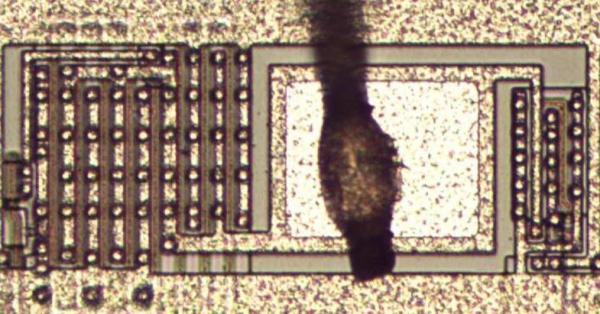
Whenever a product becomes popular, it’s only a matter of time before other companies start feeling the urge to hitch a ride on this popularity. This phenomenon is the primary reason why so many terrible toys and video games have been produced over the years. Yet it also drives the world of electronics. Hence it should come as no surprise that ST’s highly successful ARM-based series of microcontrollers (MCUs) has seen its share of imitations, clones and outright fakes.

The fakes are probably the most problematic, as those chips pretend to be genuine STM32 parts down to the markings on the IC package, while compatibility with the part they are pretending to be can differ wildly. For the imitations and clones that carry their own markings, things are a bit more fuzzy, as one could reasonably pretend that those companies just so happened to have designed MCUs that purely by coincidence happen to be fully pin- and register compatible with those highly popular competing MCU designs. That would be the sincerest form of flattery.

Let’s take a look at which fakes and imitations are around, and what it means if you end up with one. Continue reading “STM32 Clones: The Good, The Bad And The Ugly”

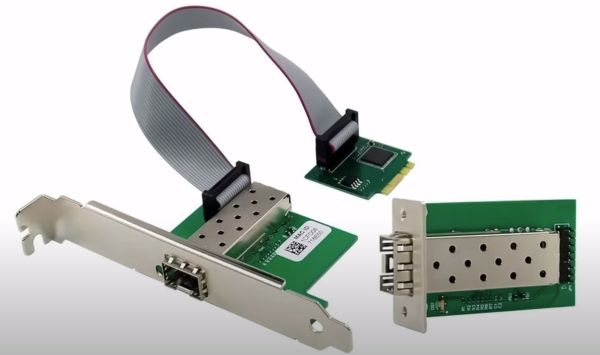
Ethernet At 40: From A Napkin Sketch To Multi-Gigabit Links

September 30th, 1980 is the day when Ethernet was first commercially introduced, making it exactly forty years ago this year. It was first defined in a patent filed by Xerox as a 10 Mb/s networking protocol in 1975, introduced to the market in 1980 and subsequently standardized in 1983 by the IEEE as IEEE 802.3. Over the next thirty-seven years, this standard would see numerous updates and revisions.

Included in the present Ethernet standard are not just the different speed grades from the original 10 Mbit/s to today’s maximum 400 Gb/s speeds, but also the countless changes to the core protocol to enable these ever higher data rates, not to mention new applications of Ethernet such as power delivery and backplane routing. The reliability and cost-effectiveness of Ethernet would result in the 1990 10BASE-T Ethernet standard (802.3i-1990) that gradually found itself implemented on desktop PCs.

With Ethernet these days being as present as the presumed luminiferous aether that it was named after, this seems like a good point to look at what made Ethernet so different from other solutions, and what changes it had to undergo to keep up with the demands of an ever-more interconnected world. Continue reading “Ethernet At 40: From A Napkin Sketch To Multi-Gigabit Links”