Hacking The R-390A Military Shortwave Radio Receiver To Transmit As Well

hacking-r390a-radio

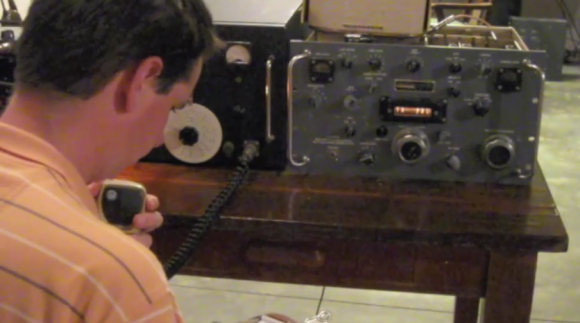
After getting his hands on this relic [Gregory Charvat] manage to hack it, converting the receiver into a transceiver.

It may be old, but the R-390A is nothing to scoff at. It’s abilities include AM, code, and FSK operation from 500 kHz to 32 MHz. But it is a receiver with no way of transmitting on the same bands. This is where [Gregory’s] hack comes into play. He rerouted the variable-frequency oscillator feed inside of the R-390A in order to use his 20M single-sideband unit. Basically what this does is allow him to control everything from the 390, using the microphone from the SSB — along with some switching hardware — to transmit his own messages.

His demo video starts with him making a few contacts using the hacked equipment. He then spends some time at the whiteboard explaning the changes. This portion went over our heads, but it becomes more clear when he cracks open the case and shows the actual modifications.

Continue reading “Hacking The R-390A Military Shortwave Radio Receiver To Transmit As Well”

NES Zapper Modified To Work With An Old Nintendo VS. Cabinet

nes-zapper-nintendo-vs

The company which [Eric Wright] works for recently bought a Nintendo VS. It had Ice Climber installed as one of the titles but they asked the vendor if it was possible to swap it out for the Duck Hunt ROM. They had the ROM but not a light gun that would work with the system. [Eric] suggested they buy it with Duck Hunt and hack an NES Zapper to work with the VS cabinet.

Let’s take a step back for a moment. The Nintendo VS was a coin-operated gaming cabinet you would find in an Arcade. Luckily there’s quite a bit of information about the original hardware on the web. Some research helped him discover that electronically the only difference between the arcade and home versions of the Zapper is that the sensor capture is inverted. This was fixed by replacing a transistor in the gun with a jumper wire. The next challenge was figuring out how to wire the gun up to the second controller port. And finally he patched the ROM to work with the incorrect PPU as the right chip was not easily sourced.

Continue reading “NES Zapper Modified To Work With An Old Nintendo VS. Cabinet”

Ask Hackaday: How Are These Thieves Exploiting Automotive Keyless Entry?

A new attack on automotive keyless entry systems is making headlines and we want to know how you think it’s being done. The Today Show reports that vehicles of different makes and models are being broken into using keyless entry on the passenger’s side of the car. It sounds like thieves steal items found inside rather than the vehicles themselves which makes these crimes distinctly different from the keyless ignition thefts of a year ago.

So how are they doing this? Here are the clues: The thieves have been filmed entering only the passenger side of the car. They hold a small device in their hand to unlock the doors and disable the alarm. And there is evidence that it doesn’t work on 100% of vehicles they try. Could it be some hidden manufacturer code reset? Has an encryption algorithm been hacked to sniff the keyfob identifier at a previous time? Or do you think we’re completely off track? Let us know your opinion by leaving a comment.

[Thanks Mom]

Plex Hack Runs Apple TV Without A Jailbreak

Apple has been keeping a tight leash on the third generation of their Apple TV hardware. Not only has it stood up to every attempt at a Jailbreak, but they don’t allow 3rd party applications through the app store like the other iOS hardware does. The second generation hardware was a popular platform for XBMC. It required a jailbreak to load the home media software which is why it can’t be done on the newest box. But here’s an alternative. This hack uses DNS redirects to make Apple TV 3 a Plex frontend.

Instead of putting new software on the Apple TV this uses a separate computer to intercept its web traffic. You aim your Apple TV DNS at the computer running the script, then use the native Movie Trailer app, which will be populated with movies and TV shows from your Plex backend. All other functionality will be retained, making for a near-perfect solution. For more info on the system check out this forum.

Continue reading “Plex Hack Runs Apple TV Without A Jailbreak”

Retrotechtacular: How I Wrote Pitfall For The Atari 2600

how-I-programmed-pitfall

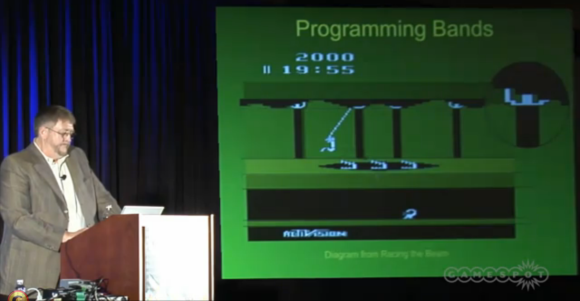
This week we’re taking another departure from the ordinarily campy videos featured in the Retrotechtacular section. This time around the video is only two years old, but the subject matter is from the early 1980’s. [David Crane], designer of Pitfall for the Atari 2600 gave a talk at the 2011 Game Developer’s Conference. His 38-minute presentation rounds up to a full hour with the Q&A afterwards. It’s a bit dry to start, but he hits his stride about half way through and it’s chock-full of juicy morsels about the way things used to be.

[David] wrote the game for Activision, a company that was started after game designers left Atari having been told they were no more important  than assembly line workers that assembled the actual cartridges. We wonder if any heads rolled at Atari once Pitfall had spent 64-weeks as the number one worldwide selling game?

This was a developer’s panel so you can bet the video below digs deep into coding challenges. Frame buffer? No way! The 2600 could only pump out 160 pixels at once; a single TV scan line. The programs were hopelessly synced with the TV refresh rate, and were even limited on how many things could be drawn within a single scan line. For us the most interesting part is near the end when [David] describes how the set of game screens are nothing more than a pseudo-random number generator with a carefully chosen seed. But then again, the recollection of hand optimizating the code to fit a 6k game on a 4k ROM is equally compelling.

If you like this you should take a look at an effort to fix coding glitches in Atari games.

Continue reading “Retrotechtacular: How I Wrote Pitfall For The Atari 2600”

GoPro Panning Time-lapse With Ikea Egg Timer

ikea-go-pro-time-lapse

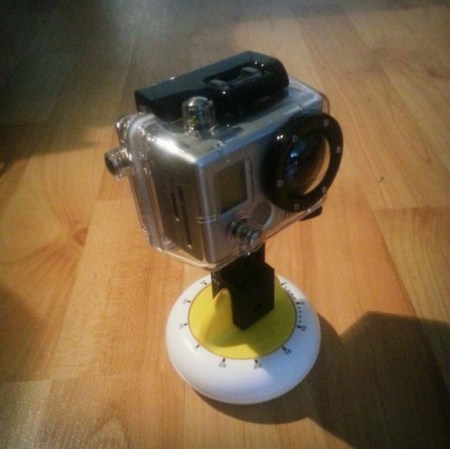
[Sebastian Schuster’s] weekend project was to turn his GoPro camera into a panning time-lapse rig. You’ll notice it’s in a waterproof case as his demo for the hack was an outdoor session and the weather’s not the best right now. He put this together quickly, easily, and on-the-cheap thanks to the Ikea egg timer and a 3D printed camera mount.

An egg timer is a popular choice for panning hacks. Any type that includes a dial that spins on the horizontal axis will do. The Ikea Stam egg timer has that raised handle which is easily gripped by the 3D printed part. You can get a hold of the design files through a web service which is new to us. [Sebastian] used Tinkercad for the design, and shared it in his project post linked above.

This is just one more tool in his collection of camera hacks. A couple years back we looked at a motorized pan and tilt platform he built.

Continue reading “GoPro Panning Time-lapse With Ikea Egg Timer”

Automated Aquarium Fertilizer Doser

aquarium-auto-doser

If you are using live plants in your aquarium you must remember to fertilize them at regular intervals. Being a bit forgetful, [Deven] automated the process by building this auto-doser.

There are three different chemicals which are dispensed by the system. They are stored in the drink bottles seen above. Each has a plastic tube which runs up to the dosing motors mounted on the black box. [Deven] sourced the motors from eBay. They are designed for this type of application.

Inside the black box is the Arduino that handles timing and switches the motors. The control circuitry is protected using one MOSFET for each. To keep the fish safe the outflow is directed right into the aquarium pump so that the concentrated chemicals are quickly dispersed through the entire tank.

Now that he’s made it this far he might as well add the ability to feed the fish and control the lighting.

Continue reading “Automated Aquarium Fertilizer Doser”