While we’d love to have you all join us in Pasadena, the next best thing is to connect up to the festivities through the magic of the Internet. As always, the main stage talks will be streamed live to our YouTube channel, while the talks taking place in the DesignLab will be recorded and posted afterwards.
Though it’s not quite as immersive as being in the alleyway and listening to the dogs bark (if you know, you know), you can also join the #supercon-chat channel in the official Hackaday Discord server if you want to virtually rub shoulders with some of our favorite people in the world.
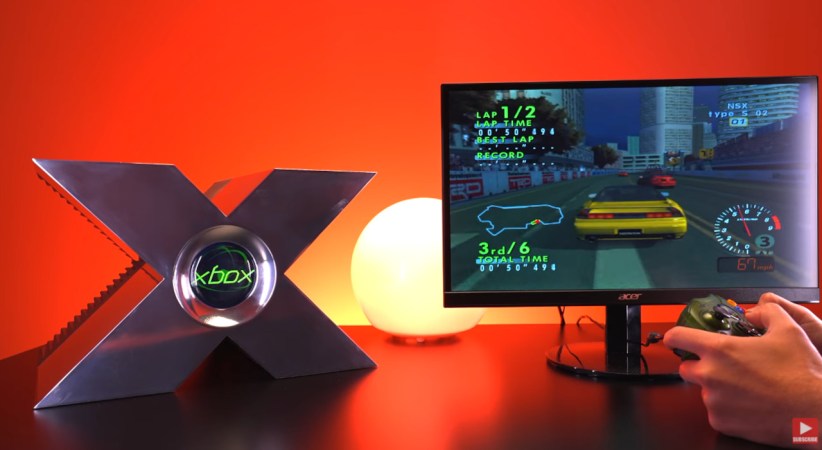
When Microsoft decided they wanted to get into the game console market, they were faced with a problem. Everyone knew them as a company that developed computer software, and there was a concern that consumers wouldn’t understand that their new Xbox console was a separate product from their software division. To make sure they got the message though, Microsoft decided to show off a prototype that nobody could mistake for a desktop computer.
The giant gleaming X that shared the stage with Bill Gates and Seamus Blackley at the 2000 Game Developers Conference became the stuff of legend. We now know the machine wasn’t actually a working Xbox, but at the time, it generated enormous buzz. But could it have been a functional console? That’s what [Tito] of Macho Nacho Productions wanted to find out — and the results are nothing short of spectacular.
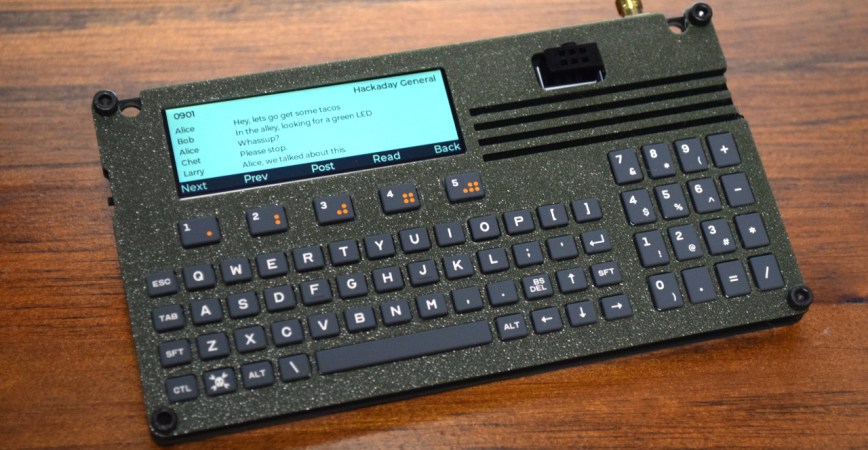
There are still a few days before the doors open on this year’s Hackaday Supercon in Pasadena, but for the most dedicated attendees, the badge hacking has already begun…even if they don’t have a badge yet.
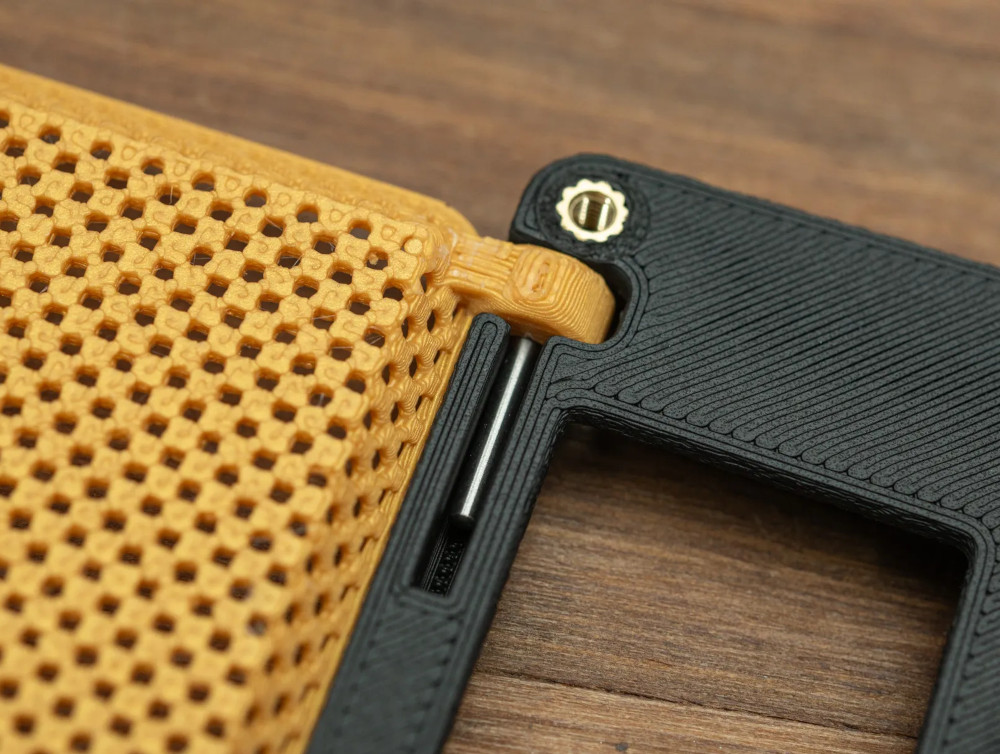
Metal hinge pin? Brass inserts? Scotty would be proud.
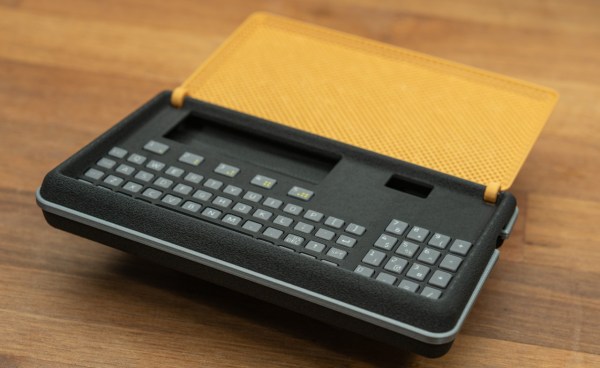
Although the layout of this year’s badge is about as far from the slim outline of the iconic flip-up Trek communicator as you can get, [Thomas] managed to perfectly capture its overall style. By using the “Fuzzy Skin” setting in the slicer, he was even able to replicate the leather-like texture seen on the original prop.
Between that and the “chrome” trim, the finished product really nails everything Jadzia Dax loved about classic 23rd century designs. It’s not hard to imagine this could be some companion device to the original communicator that we just never got to see on screen.
While there’s no denying that the print quality on the antenna lid is exceptional, we’d really like to see that part replaced with an actual piece of brass mesh at some point. Luckily, [Thomas] has connected it to the body of the communicator with a removable metal hinge pin, so it should be easy enough to swap it out.
Considering the incredible panel of Star Trek artists that have been assembled for the Supercon 2025 keynote, we imagine this won’t be the last bit of Trek-themed hacking that we see this weekend — which is fine by us.
For anyone who’s joined us for previous years, you’ll know that badge hacking and modification are core to the Hackaday Supercon experience. While you’re of course free to leave the badge completely stock, we encourage attendees to tear it apart, learn how it works, and (hopefully) rebuild it into something unique. There are even prizes for the best hacks.
As such, every decision about the badge’s hardware and software is made with hackability in mind. It’s why we always try to add an expansion port to the badge and, in recent years, have leaned into MicroPython to make it easier for attendees to modify the code.
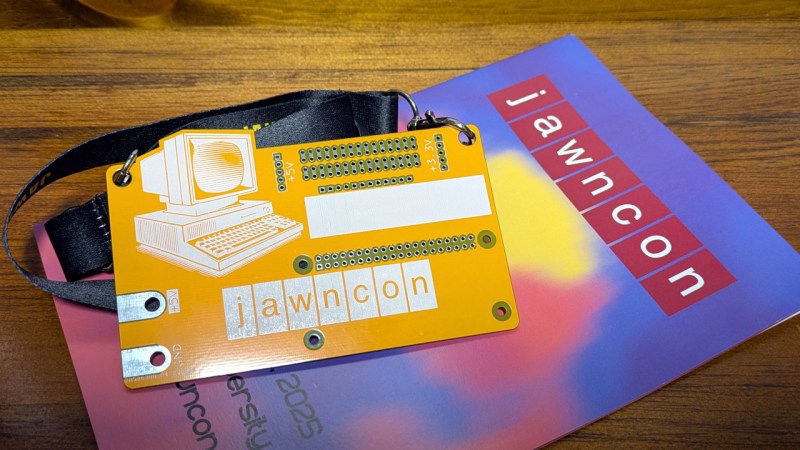
But one thing that’s been largely missing in previous badges is aesthetic customization. Sure, you could strip out the firmware and write something entirely new, or hang some oddball peripheral off the side of the thing, but ultimately it still looked like the badge we gave you at the door. That’s because, at the end of the day, the badges are just PCBs. Short of designing your own enclosure (which has certainly been done), every badge looks the same. That is, until now.
Make no mistake, just getting a hacker con off the ground is a considerable challenge. But the really hard part comes after. To be more than a one-off success story, you’ve got to expand the event year after year in a manageable way. Go too slow, and attendees might lose interest. Move too fast, and you run the risk of going broke if your ticket sales don’t keep up with your ambitions.
Luckily for hackers living in the Philadelphia area, the folks behind JawnCon have once again demonstrated they’re able to thread the needle. While the ticket price remained the same as in 2024, this year an additional track of talks was introduced as well as expanded activities throughout the con. Even though it only wrapped this past weekend, there’s already buzz about what the event will look like in 2026.
Until then, let’s take a look at some of the projects that were on display at this year’s JawnCon. If it’s the talks you’re after, they’ll be edited and uploaded to the event’s YouTube page in the near future. In the meantime, the Friday and Saturday live streams are still available.
In the history of entertainment, few properties have made the sort of indelible mark on popular culture as StarTrek has. In 950 episodes across the twelve television series that have carried the name, the franchise has made a spectacle not of explosions and machismo, but of competent professionals working together to solve complex problems. In the world of Star Trek, the coolest people in the room are the scientists, engineers, physicists, and doctors — is it any wonder so many in the sciences credit the show for putting them on their career path?
Hardware hacker, maker, and Trekkie Andrew [MakeItHackin] will lead the panel.To celebrate the impact of Star Trek, we’re proud to announce our keynote event for the 2025 Hackaday Supercon: Crafting the Final Frontier. This round-table discussion led by Andrew [MakeItHackin] will bring together some of the artists that have helped cultivate the look and feel of the final frontier since Star Trek:The Next Generation and all the way into the modern era with Star Trek: Picard.
While the art direction of the original Star Trek series from 1966 was remarkably ahead of its time, these are some of the key individuals who were brought in to refine those early rough-hewn ideas into cultural touchstones. Their work ended up becoming more than simple entertainment, and ultimately helped inspire some of the real-world technology we use on a daily basis. The iconic LCARS computer interface predicted the rise of the touch screen, while its impossible to look at props such as the PADD and Tricorder and not see the parallels with modern tablets and smartphones.
If I’m honest with myself, I don’t really need access to an off-grid, fault-tolerant, mesh network like Meshtastic. The weather here in New Jersey isn’t quite so dynamic that there’s any great chance the local infrastructure will be knocked offline, and while I do value my privacy as much as any other self-respecting hacker, there’s nothing in my chats that’s sensitive enough that it needs to be done off the Internet.
But damn it, do I want it. The idea that everyday citizens of all walks of life are organizing and building out their own communications network with DIY hardware and open source software is incredibly exciting to me. It’s like the best parts of a cyberpunk novel, without all the cybernetic implants, pollution, and over-reaching megacorps. Well, we’ve got those last two, but you know what I mean.
Meshtastic maps are never exhaustive, but this gives an idea of node density in Philly versus surrounding area.
Even though I found the Meshtastic concept appealing, my seemingly infinite backlog of projects kept me from getting involved until relatively recently. It wasn’t until I got my hands on the Hacker Pager that my passing interest turned into a full blown obsession. But it’s perhaps not for the reason you might think. Traveling around to different East Coast events with the device in my bag, it would happily chirp away when within range of Philadelphia or New York, but then fall silent again once I got home. While I’d get the occasional notification of a nearby node, my area had nothing like the robust and active mesh networks found in those cities.
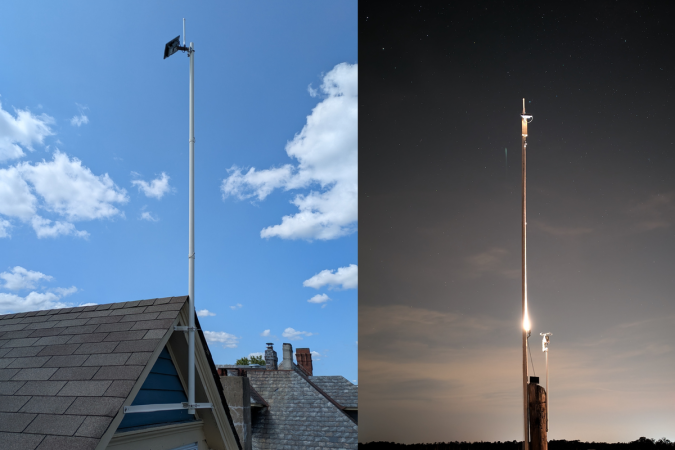
Well, they say you should be the change you want to see in the world, so I decided to do something about it. Obviously I wouldn’t be able to build up an entire network by myself, but I figured that if I started standing up some nodes, others might notice and follow suit. It was around this time that Seeed Studio introduced the SenseCAP Solar node, which looked like a good way to get started. So I bought two of them with the idea of putting one on my house and the other on my parent’s place down the shore.
The results weren’t quite what I expected, but it’s certainly been an interesting experience so far, and today I’m even more eager to build up the mesh than I was in the beginning.