Trackuino – An Open Source Arduino APRS Tracker

trackuino board

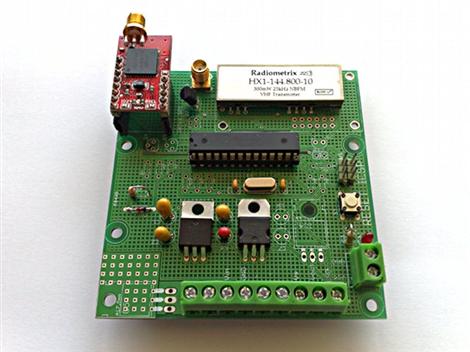
Trackuino is a new open source (GPLv2 license) Arduino APRS tracker designed by [Javier Martin]. If you are unfamiliar: APRS (Automatic Packet Reporting System) is an amateur radio method used to relay small packets of position-tracking data to an online database for easy access and mapping. In this case, GPS telemetry data is used to track latitude, longitude, altitude, course, speed, and time measurements in near real-time via aprs.fi.

Although this reminds us of the WhereAVR that we covered previously, the Trackuino includes an onboard radio so no external handheld unit is necessary. Since the Trackuino was designed primarily for high-altitude balloon tracking, a number of useful related features are also included: dual temperature sensors, support for a humidity sensor, and a remote “cut-down” trigger really make this a complete package.

Initially there was some concern that the 300mW radio used would not be powerful enough to reach the ground-based receivers from peak altitudes. This was clearly not an issue however, as the signal was heard from nearly 600Km away during the maiden voyage. If this still doesn’t sound like enough power, a 500mW radio is also supported.

Make sure to check out [Javier]’s blog for some amazing high-altitude photos and everything needed to get your own Trackuino up and running in no time!

Thanks [Brad]!
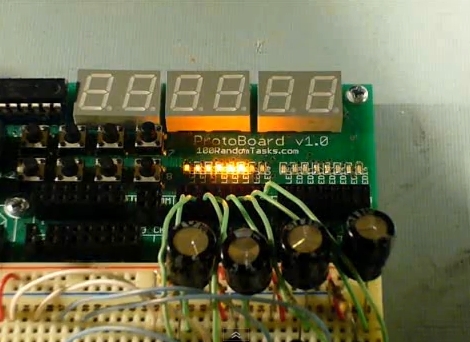
Larson Scanner Using 7400 Series Logic Hardware

[RandomTask] is sharing a Larson scanner he built a few decades ago. These days you can whip one of these up using an Arduino in under an hour. He mentions this, but we agree that for nostalgic purposes there’s nothing like implementing the scanning LED effect using hardware.

Often called a Cylon Eye (after the television show Battlestar Gallactica) or referred to as the lights on the front of Kitt (the car from Knight Rider), the effect doesn’t just involve switching LEDs on and off in the proper order. A true Larson Scanner fades the LEDs as the bright point moves away from them, resulting in a tail that dims over time.

This implementation uses a 555 timer as the clock signal, allowing for speed control through a potentiometer. A counter chip, J-K flipflop, and line decoder all work with each other to address the movement of the brightest light. The fading effect is managed via a capacitor and resistor for each LED. The video after the break shows the pleasing result of this setup.

Continue reading “Larson Scanner Using 7400 Series Logic Hardware” →

Capacitive Touch Sensor Shield For The TI Launchpad

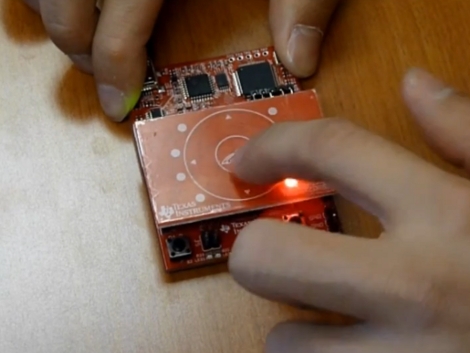
Texas Instruments just released a product they call the Capacitive Touch Boosterpack which is basically a touch-sensitive shield for the Launchpad. The video after the break shows an unboxing and demonstration of the product which TI is launching with a $4.30 limited-time price tag. The red PCB itself has a capacitive touch button in the center, surrounded by a touch-scroll wheel, which is centered in a proximity senor that takes up the rest of the board. There are also nine LEDs which look like they’re soldered on the underside of the board, through routed holes that mount them flush with the top surface. The pack also comes with a new MSP430 microcontroller, the G2452, which has 8 KB of flash memory and takes care of calibrating, reading, and processing signals from the board thanks to the software package that goes along with the add-on kit.

Looks quite nice. There’s a heck of a lot of information in the documentation for this hardware. We do wish it was a bit easier to find board layout information, but we’re sure it’s there somewhere.

Continue reading “Capacitive Touch Sensor Shield For The TI Launchpad” →

Interactive Sun Exhibit Uses 3D Projection Screen And Kinect

A few common components come together to make this interactive museum exhibit that teaches about the sun (translated). It uses three main physical components to pull this off. The first is a custom projection surface. It’s a hemisphere of the sun with a slice cut out of it. This is presumably coated with the paint you’d use to turn a wall into a projection surface. Software translates a projected image to map correctly on the topographic surface, resulting in what you see above, with a Kinect for user input.

Take a look at the video embedded after the break to see how the exhibit works. It instructs patrons to stand on a pair of footprint markers on the floor. This positions them at the proper range from a Kinect depth camera, which translates their outline into cursor commands. By moving a hand around they can explore the different parts of the sun.

We’re in love with how easy this type of interaction is becoming. Granted, there’s a fair amount of work that goes into to the coding for the project, but the physical build is quick and relatively inexpensive.

Continue reading “Interactive Sun Exhibit Uses 3D Projection Screen And Kinect” →

IPhone Watching Every Breath You Take, Every Move You Make

iphone_data

Most people tend to enjoy a certain modicum of privacy. Aside from the data we all share willingly on the web in the form of forum posts, Twitter activity, etc., people generally like keeping to themselves.

What would you think then, if you found out your iPhone (or any iDevice with 3G) was tracking and logging your every movement?

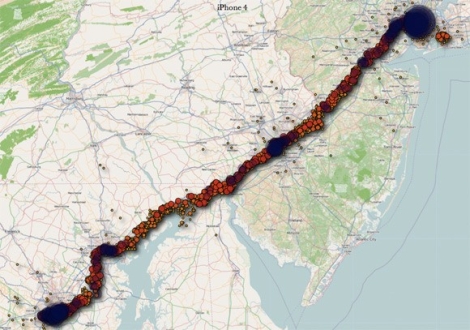
That’s exactly what two researchers from the UK are claiming. They state that the phone is constantly logging your location using cell towers, placing the information into a timestamped database. That database is not encrypted, and is copied to your computer each time you sync with iTunes. Additionally, the database is copied back to your new phone should you ever replace your handset.

We understand that many iPhone apps use location awareness to enhance the user experience, and law enforcement officials should be able to pull data from your phone if necessary – we’re totally cool with that. However, when everywhere you have been is secretly logged in plaintext without any sort of notification, we get a bit wary. At the very least, Apple should consider encrypting the file.

While this data is not quite as sensitive as say your Social Security number or bank passwords, it is dangerous in the wrong hands just the same. Even a moderately skilled thief, upon finding or swiping an iPhone, could easily dump the contents and have a robust dataset showing where you live and when you leave – all the makings of a perfect home invasion.

Continue reading to see a fairly long video of the two researchers discussing their findings.

[Image courtesy of Engadget]

Continue reading “IPhone Watching Every Breath You Take, Every Move You Make” →

Zork On The Microtouch

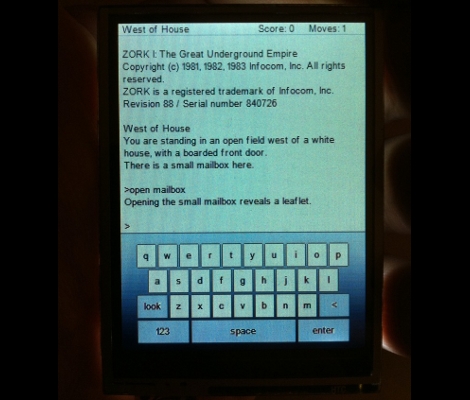
[Rossum] just finished porting Zork over to the Microtouch. This hardware, which he originally designed, is now available for purchase through Adafruit. It’s a tiny 320×240 TFT touchscreen, driven by an AVR ATmega32u4 microcontroller. The device draws power from a lithium battery, and also boast a USB connection and a MicroSD slot.

The hack here is getting Zork to run with the limited resources available on the device. [Rossum] needed to emulate the Z80 processor, but didn’t want to use extra hardware in the way that [Sprite_TM] did when he emulated a Z80 using an AVR. Instead, this is based on a stripped-down implementation of Frotz. The final code is too big to fit on the chip along side of the bootloader. This means you’ll need to use an ISP programmer in order to flash this example to the chip. We’re pretty sure that AVRdude can program the ATmega32u4, so pretty much any ISP (including an Arduino) can be used to do the programming.

555_contest

555 Contest Winners To Be Announced Tonight

It’s been nearly two months since the official entry portion of the 555 timer contest came to a close, and the judges have been busy poring over the 200+ entries since. Now that the votes have been tallied, it’s just about time for the official results to be announced.

The results will be live streamed this evening at 9pm Eastern, and you can watch the results here on uStream or here, with an embedded IRC chat. There will be four main awards given out this evening, highlighting the most complex, most minimalistic, most artistic, and most useful 555 creations. There are also “Best in Show” and “Best Under 18” awards up for grabs, the winners of which were selected by celebrity judges Forrest Mims and Hans Camenzind.

The show will definitely be worth checking out – we’ll be there at 9pm sharp, see you there!

If you want to take a look at some of the 555 Contest entries we featured throughout February, check these out:

Mini nixie keychain

Le Dominoux – LED dominoes

555 timer from discrete components

Slide whistle toy

555 video game

Alien synth toy

555 Radio

Punch tape musical synth