Medeco High Security Lock Picking


Despite, Hack a Day seeming to be fairly lock heavy lately, we’ve yet to cover a major story from The Last HOPE. At the conference, [Jon King] talked about vulnerabilities in Medeco locks and presented his Medecoder tool. Medeco is really what makes this story interesting; unlike the EU, the US has very few high security lock manufacturers. You pretty much have to use Medeco and it’s found in many government agencies.

The Medeco locks have a vertical row of six pins arranged like most pin tumbler locks. Unlike your average lock, the rotation of the pins is important. When the key is placed in the lock, it not only moves the pins to the correct height, it also rotates them to the correct orientation. A sidebar blocks the cylinder unless the pins are rotated properly. Each pin has three possible orientations. They’re biaxial as well, which means the pin’s offset point allows for three more possible positions.


Continue reading “Medeco High Security Lock Picking” →

Found: Artifacts From The Future


MetaFilter is reporting that Wired magazine (available on paper) has killed one of our favorite features. Found: Artifacts From the Future was a back page that asked artists and designers to create possible future products. While the magazine generally had a positive view, even in its sloppy use of infoporn, Found always seemed to have a comforting cynicism. Products appeared helpful on the surface, but still exhibited modern pitfalls: Even if you took the big leap to get a Bluetooth implant, it still required a two year contract. The Responsibeer could tell exactly how drunk you were, but did nothing to prevent localized debauchery. A Smart Windshield provided info on unsafe drivers… while obscuring your view.

The short of it is: Found was our kind of futurism. It was excited about new technology while emphasizing all the frustrations we currently have trying to get consumer products to do what we want. It’s sad to see something that got people thinking beyond the now go away. MeFi has conveniently assembled links to all the online Found features.

[via Waxy]

Simple Xbox 360 Rapid Fire Mod

[youtube=http://www.youtube.com/v/Gjzm1A5-GMk&w=470]

Back in May we mentioned AcidMods’ spitfire mod that enabled rapid fire (amongst other things) and was undetectable by Xbox Live. The parts list was quite low, needing just a PIC16F84A and a few other components, which led to third parties selling controller mod kits on eBay. The AcidMods team has figured out a new way to enable rapid fire using just a momentary switch and the necessary wire to hook it up. All you need to do is wire in the switch between the ground on the controller LED and the middle pin on the trigger. The only caveat is that because it’s hardwired to the LED, you can only use the mod on the particular port you’re using the controller on.

The reason it’s so simple is because the Xbox 360 controller uses pulse width modulation to “dim” the LED on the controller, creating a rapid high/low signal. When the momentary button is depressed, it routes this rapid high/low signal to the trigger input on the controller, which is then input to the Xbox 360. Hit the read link for a couple more videos explaining this hack.

While this modification is undetectable by Xbox Live, it does create an unfair advantage in multiplayer gaming and could result in your account being banned.

[via Xbox-Scene]

Related: Xbox 360 Hacks, Xbox Hacks

Lock Picking And Security Disclosure


Slate is running an interesting article about taking new security approaches to lock vulnerabilities. In the past, lock makers such as Medeco have been able to quietly update their product lines to strengthen their security, but as movements such as Locksport International gain popularity and lock picking videos on YouTube become dime a dozen, lock makers can no longer rely on security through obscurity. It’s no question that an increased interest in this field helps lock manufacturers to create more secure products, but because patching these flaws often means changing critical features of the lock, it becomes a very expensive game of cat-and-mouse.

Traditional lock picking has employed the use of picksets, like the credit card sized set given out sold at The Last HOPE, but more recent methods of lock hacking have used bump keys or even magnets. However, as manufacturers make their locks less susceptible to picking and bumping, not even high-security locks will ward off someone determined enough to create a copy of the key, either by observing the original or using impressioning, as [Barry Wels] covered in a recent talk at HOPE 2008.

How-To: Etch A Single Sided PCB

Making a PCB is very simple; it does not consume a lot of time and the results look professional. After reading this How-To and watching the step by step video, you will be able to make your own PCB in your workshop using just a few inexpensive materials.

Many people use protoboard and point-to-point wire everything, but needing multiple copies of the same circuit is the reason that forces many away from using protoboard. After making your first circuit board, you might not point-to-point wire anything again!

Continue reading “How-To: Etch A Single Sided PCB” →

Wiimoteless IR Whiteboard


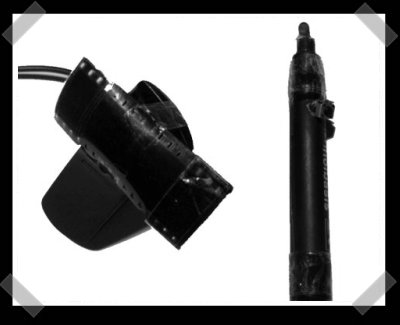
[Eduard] sent in his IR webcam whiteboard project. He wanted something like the Wiimote version, but without the expense of a Wiimote. He added some film negative to the camera to reduce the amount of visible light picked up by the CCD. (He notes that you might need to pull the IR filter from your camera to get a decent signal.) The pen is the usual IR LED with a power supply. To do the actual work, he wrote a custom application in Java.

Solder Paste Fridge


MightyOhm’s laboratories have recently decided to start tackling more surface mount work. As part of this upgrade to SMD hot air reflow stations, they’re handling a lot of solder paste. Solder paste is happy at less than 50degF and above freezing, and [Jeff] didn’t want to chance that lead infiltrating his Manwich, so he built this solder paste fridge. The main unit is a standard 12V peltier based travel cooler. He attached a surplus PID controller with a K-type thermocouple to maintain the temperature while preventing the cooler from being always on. The only adjustment he really had to make was adding a bleed resistor to force the MOSFET to turn off. You can find more pictures of his project on Flickr.