9v IR Tester

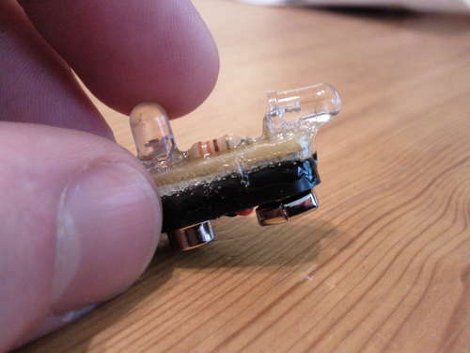
Whenever you are working with infrared, you sometimes need to see it, and thats kind of hard. Most people would jump up and say “camera”, but that is not always the best solution. For instance my phone camera is so filtered its near useless for IR, and my DSLR will only take a full blast source and present a dim glow. Wanting something a bit easier [Candymanproducitons] whipped up a little IR tester that fits on top of a standard rectangle 9V battery.

A simple circuit containing nothing more than a LED, resistor, and a IR photo-transistor was assembled on some perforated circuit board, then mounted on top of a battery clip with some epoxy. The end result is a compact and robust tool that will be very handy in the shop, though we think a little spot for your scope probe would be super.

9 volt batteries, with their internal design and locking / polarized terminals are usually a mainstay of electronic tinkerers, and often pop up in cool and compact projects like my lm386 amp in a battery shell from last year. So what can you do with them?
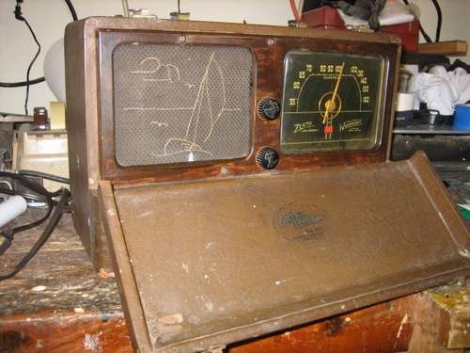
Vintage AM Radio Restoration

radio_restoration

Instructables user [knife141] enjoys restoring vintage electronics in his spare time, especially old radios. AM radios tend to pique his curiosity the most, and in this tutorial, he discusses the restoration of an old radio from the early 1940s.

While people would likely assume that the vacuum tubes in a radio this old are the source of poor performance, he has found that most units he repairs suffer from bad capacitors. He says that the old electrolytic, paper, and wax caps used in these radios were never meant to last more than a few decades, let alone 70 years.

He always starts the process off by discharging the caps and replacing the power cord, both as a safety measure. He was pretty sure the capacitors were bad in this radio, so he swapped all of them out, regardless of condition. All of the internal wiring was then checked over, and any damaged cables were replaced or covered with heat shrink tubing.

With that done, he powered on the radio and was happy to find that the distortion he previously experienced was completely eliminated. With the electronics taken care of, he tackled the radio’s asbestos insulation by encapsulating it with varnish. Attention was then turned to the exterior, where he cleaned and buffed the leather, refinished the face plate, and polished the dial’s cloudy glass.

While it’s not exactly a hack, we always like seeing vintage electronics given new life, and we’re always cool with saving these sorts of things from rotting in a landfill.

Hacking Analog Phones For VOIP

analog_phone

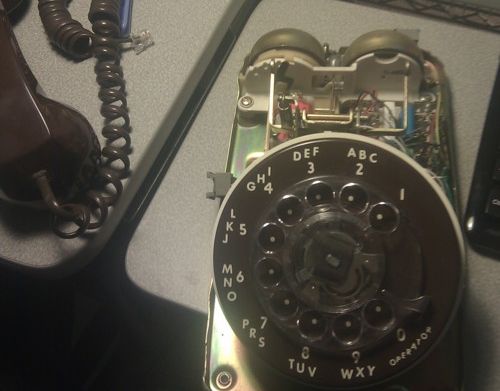
[Tyler] has been using Google Voice extensively for some time now, but he hasn’t quite found a microphone/speaker setup he is happy with. He tried a headset, but that just didn’t do it for him.

While browsing around at his local thrift store, he came across an old Model 500 rotary phone for just a few dollars and decided it just might do the trick. Once disassembled, he mapped out the circuitry and got busy wiring up the handset to a pair of 3.5 mm stereo plugs – one each for the earpiece and microphone.

Once everything was reassembled, he hooked it up to his computer and gave it a spin – success!

While he is happy with how the phone works at the moment, he already has plans for improving it. He is currently looking for a way to use the handset hook to disconnect calls as well as a way to implement the rotary dial for number entry. We think that hacking a Bluetooth headset would easily take care of the first part, as well as eliminate the need for any sort of wired interface to his PC. It would also make it dead simple to use with any other Bluetooth-enabled device such as a cell phone.

We’re pretty sure he is open to implementation suggestions, so let us know what you think.

Relay Calculator

Calculators are a handy tool to have around in just about every application. We often take them for granted today, but even when I was a kid they were still sort of expensive devices that you put thought into buying. Illustrating just how far we have come is this awesome Relay Calculator brought to us by [Team 619].

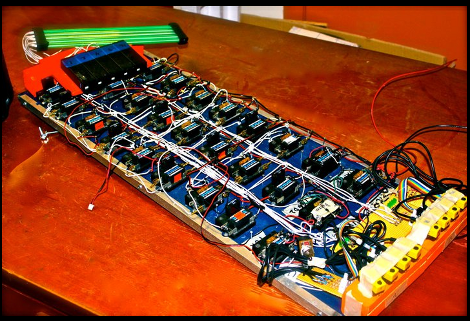
Featuring an optical slider input system, the user can select any two 4 bit numbers and can add or subtract them. Logic is carried out by a couple handfuls of relays setup to be AND, OR, or XOR gates, which are then linked together to build adders.

Output is in binary as well, in the form of lights, though we cant really tell if those are some form of tubes or if they are just rods lit on end. Either way if you require a lot of nibble math and want a conversation starter this suits the bill quite niceley. Otherwise you can keep hooking up more and more relays and maybe one day make your own relay computer.

Join us after the break for a quick video!

Continue reading “Relay Calculator”

turbografx_clone

FPGA-based Turbografx 16 Clone

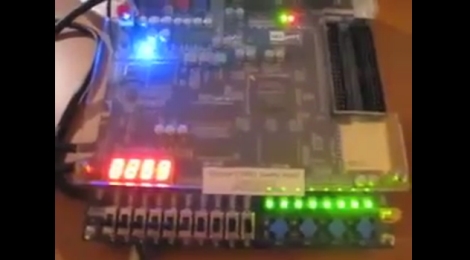
[Gregory] wrote in to share his most recent project, an FPGA clone of the PC Engine/Turbografx 16 console. You may remember him from last year, when we talked about his SEGA Genesis FPGA clone. He just couldn’t leave well enough alone, and decided to resurrect yet another 16-bit machine in FPGA form.

He has been working on the project for about three months now, but he has been making very quick work of getting everything up and running. As of a few weeks ago, the project was in a pretty unstable alpha stage, but after pounding away at some bugs, he is now able to render any game he pleases.

The clone uses an Altera DE1 board just like his previous builds, and he has been able to emulate all three if the main chips that make up the Turbografx logic board. He has yet to work on the Programmable Sound Generator, but that is slated for the near future. While the FPGA currently stores ROMS in its flash memory, he has plans to add the ability to load games from an SD card.

Keep reading to see a pair of videos showing his console clone in action, it’s impressive.

Continue reading “FPGA-based Turbografx 16 Clone”

Homebrew Z80 Computer Inspires Awe

How this one missed us, we’ll never know.

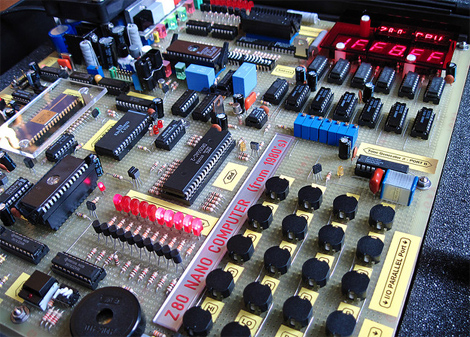
[GG] built himself a retro-styled Z80 nanocomputer over two years using all 1980’s tech. Laid out on one of the largest pieces of perfboard we’ve ever seen on a project, the computer uses a vintage Z80 CPU running at 2.5MHz, 8K ROM, 16K RAM, RS-232 and Parallel ports, an EPROM burner, and an AM95 math coprocessor for 32-bit floating point arithmetic.

We’ve seen a few homebrew computers before, including a Z80 laptop, but this blows them away. For his computer, [GG] created 8BASIC, A Basic interpreter that makes best use of the six 7-segment displays and eight 16-segment displays. The display isn’t really a limitation because [GG] also put together something in Visual Basic so his PC can communicate with his nanocomputer.

[GG] even went so far as to include error detection on the ROM and RAM, as well as an on-board power supply. If you can’t admire the dedication that went into this, at least admire the great wire porn. We’re just sad [GG] never did a proper write-up of his project. He could certainly teach us all something.

Video of [GG]’s work after the jump.

Continue reading “Homebrew Z80 Computer Inspires Awe”

Circuit Building With A Hammer And Nails

real_breadboarding

[Collin Cunningham] over at Make recently wrapped up another edition of “Collin’s Lab” – this time around, the subject is breadboards. He starts off by discussing a common solderless breadboard, something you are no doubt familiar with. What you might not know however is how breadboards got their name.

Way back when, before there was a RadioShack in every strip mall across the country, fancy prototyping supplies like your solderless breadboard did not exist. Amateur radio operators would prototype circuits on wooden boards, often using whatever was around as a substrate. Many times, this meant that the family’s cutting board ended up as a makeshift prototyping station.

One popular method of building circuits was to drive small nails into the breadboard, using wire wrapping to connect things together. [Collin] demonstrates this technique in the video, constructing a simple LED flasher circuit.

He says that the process works decently enough, and was kind of fun to do. He does mention however that building any sort of circuit requiring an IC would likely be out of the question.

If you have a few minutes to spare, check out the video embedded below – [Collin’s] take on technology is quirky and entertaining as always.

Continue reading “Circuit Building With A Hammer And Nails”