HOW-TO: Folding@Home Competitively

folding

UPDATE: For troubleshooting your F@H setup head to the unofficial Team Hack-A-Day forum.

After announcing the Hack-A-Day Folding Team last week it has become one of the fastest gaining teams. [BillytheImpaler] put together this great guide for not only getting started with folding, but also getting the best folding performance out of your machine. Read on and join the team so we can break into the top 1000!

From Wikipedia

Folding@home is a distributed computing project designed to perform computationally intensive simulations of protein folding. The project’s goal is to add greater understanding to protein folding, misfolding, aggregation, and related diseases. Such diseases include BSE (mad cow), Creutzfeldt-Jakob disease, Alzheimer’s, Parkinson’s, among others.

Folding@home does not rely on powerful supercomputers for its processing; instead, the primary contributors to the Folding@home project are many thousands of personal computer users who have installed a small client program. The client runs in the background, and makes use of the CPU when it is not busy. In most modern personal computers, the CPU is rarely used to its full capacity at all times; the Folding@home client takes advantage of this unused processing power.

Continue reading “HOW-TO: Folding@Home Competitively”

-100degC Cascading CPU Cooler

cooler

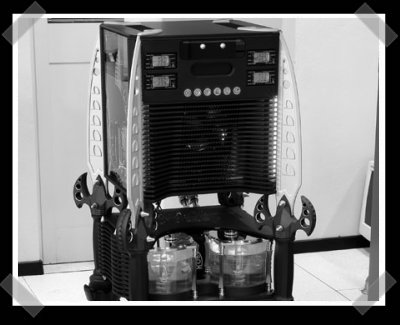
From a thermodynamics standpoint this project is damn near pornographic. The goal is to cool both the CPU and GPU down to -100 degrees Celsius using a dual evaporator cascade system. The project is fully documented starting with making the CPU/GPU blocks and polishing them to 0.005 microns. Next step is the case build up followed by a ton of brazing. He got everything assembled and pressure tested with only a few bugs. Right now they’re troubleshooting the system. They can get one of the heat exchangers down to -48.9degC, but not both. I’m sure they’ll get through this. Head over and check out the beautiful work they’ve done so far.

[thanks weirdguy0101]

Continue reading “-100degC Cascading CPU Cooler”

HOW-TO: SSH HTTP Proxy Setup

putty config

We’ve been linking to a couple proxy options in the links posts recently and [tom] thought it would be a good idea to write up how to use Privoxy. In [tom]’s case he wanted to route all of his internet surfing at work through an encrypted tunnel to his home machine. The guide is Windows based, but it won’t be to hard to translate to your OS of choice. It starts by setting up an OpenSSH server and new user on the home machine. Then Privoxy is installed. Next PuTTY is used to establish the secure tunnel from the work machine. The last step is to configure the browser to use the proxy. You can use this for IM too. You may not need this at work or school, but it should offer you some decent protection if you’re out using open access points.

Continue reading “HOW-TO: SSH HTTP Proxy Setup”

Router Design Project

router

Sure, I’ve known for quite a while that Linux is good for scratch building devices like routers, but I never considered that there might be an online community dedicated to doing exactly that. It isn’t just Linux either; whether you want to run Windows, DOS, BSD or Linux, RDP has compiled summarys and links to the software you need. They’ve got a gallery of projects that you can rate and luckily only a few feature cardboard. If you’ve got some specialized networking needs this is definitely worth a look. Me, I’m going to remain firmly entrenched in my WRT fanboyism.

[thanks XyTec]

Continue reading “Router Design Project”

Oil Computer Ver. 2

oil bath computer

Reader Jay was so mesmerized by the original oil computer story that he had to try it out himself. He had other good reasons: producing an experience report in English and creating a case that didn’t look slap-dash. It turned out to be a partial success and definitely a lesson. First thing he discovered was how not to oil proof a hard drive. He does get the chance to use the phrase “rock out with my caulk out”; which only goes to show: if you mess with bad puns, you will get burned. The rig did drop the computer temp quite a bit and Jay’s got numbers to prove it. Within hours of completion the case developed a fatal crack and redistributed the oil to the floor. Better luck next time Jay. It has been a couple months since the first story so if you’ve completed a similar project feel free to post your pics and/or comments.

Continue reading “Oil Computer Ver. 2”