XKCD Inspires YouTube Feature

Who knew that a silly comic strip could be so influential? XKCD’s strip focusing on the inanity of YouTube comments inspired someone to actually add the Audio Preview feature to YouTube. It’s provided us with much amusement, especially where one commenter mentions that the “preview of my own post sounded moronic!”

Speech synthesis software is nothing new, of course. While it’s not the most sophisticated software, it’s an invaluable resource to those with disabilities, language learners, and others. This tutorial on Festival, a Linux-based text-to-speech software framework, would be a great place to start. You’re just moments away from finding out how stupid email, IM, and IRC sound read aloud.

Prevent Drunken Emails With Mail Goggles

Google introduced a new Labs feature named Mail Goggles. If you turn it on, on late night weekends, the feature will ask you to perform some math problems before you can send an email. We’re not sure how widespread a problem drunk emailing is, but maybe the delay will allow you to sober up and realize when you’re about to CC your entire company on a rant about your boss, or your adventures with the cute guy or girl in the office. It’s enabled for late nights on the weekends, but once you’ve turned it on, you can adjust the time in the General settings.

Google Chrome Roundup

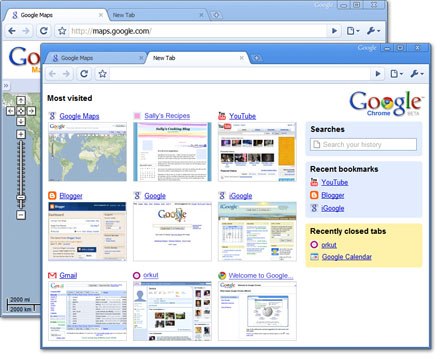
Google Chrome made a huge splash in the past week, but will it really change the way you browse, and convince you to switch from your current browser? For those who want to play with it but don’t want Google to completely take over their lives, Chromium is the open source project behind Google Chrome. Linux and OS X users can also run Chrome using WINE, although success is not guaranteed. To make an educated choice, read Scott McCloud’s comic which explains the underpinnings. Make sure you’re aware of Chrome’s security vulnerabilities, and take advantage of Lifehacker’s guide to make your browsing experience as convenient and useful as possible. There are some great features, including the ability to log into multiple Google accounts using its much-lauded Incognito mode, which prevents Google Chrome from logging information on your browsing and downloading habits (websites you browse can still track your information). For convenience, you can also install Chrome on a USB drive, and take it anywhere with you. Explore the many Google Chrome blogs that have popped up to provide advice on hacking and tweaking the browser. Or you could just get all your information from 4chan.

Using Mologogo With Google Earth

earth

[yug1taht] wrote in to tell us about his lastest addition to Mologogo. You may remember Mologogo from its launch last fall. It lets you track GPS enabled phones using Google maps. It works with most Nextel phones and the inexpensive pay-as-you-go Boost Mobile phones; which is what our friend PT used when he tried it out. This latest addition to Mologogo lets you output the data as .kml file which you can then play with in Google Earth.

Continue reading “Using Mologogo With Google Earth”

Build A Google Maps Service

google map

[8Ball] was interested in building a Google Maps based service, but didn’t know where to start. Luckily he stumbled across Peter Rukavina’s Charlottetown Transit Map. The project shows the bus routes and has schedule popups linked to each of the stops. Peter was nice enough to include full source code for how this was implemented in PHP and Javascript. He also describes setting up the necessary MySQL tables.

Continue reading “Build A Google Maps Service”

FUSE: Filesystem In Userspace

flickr

There has been a lot of buzz this week about Flickrfs the virtual filesystem for Flickr. Using Flickrfs you can interact with Flickr tags and photos just like your regular filesystem. A similar service is GmailFS which lets you mount a Gmail account as a large virtual filesystem. Both of these services are built on top of FUSE. FUSE makes it easy to build fully functional filesystems inside of a userspace program. Users can script and manipulate files just like their regular files. FUSE is now part of the main Linux kernel with release 2.6.14. Check out the list of other interesting filesystems built using FUSE. Of particular interest: WikipediaFS, SMB for FUSE is similar to Network Neighborhood, SSHFS, btslave to mount torrent files, and djmount is a UPnP AV client.

Continue reading “FUSE: Filesystem In Userspace”