It’s Linux, On A Sega Megadrive

If you were in the market for a games console in 1990, the chances are that the object of your desire was either a Super Nintendo with its 16-bit 6502 derivative, or the Sega Megadrive, sold as the Genesis in North America, with its Motorola 68000. Both machines featured impressive graphics and sound for their time, but they remain firmly in the 16-bit era. Which makes it a surprise to see LinuxMD. It’s Linux, for the Sega Megadrive, with the latest mainline kernel.

The Motorola 68000 series of chips was the first porting target for Linux, and is still maintained in 2026. This build runs from an SD card  in a modern Megadrive storage peripheral, and is reported to run on the original hardware. The lowly 68000 in the Sega doesn’t have a memory management unit required for the full Linux experience, so what’s really running here is a kernel compiled with the -nommu option. That in itself is a feat, on this architecture. On it you get smolutils, a cut down coreutils, and that seems to be it.

We like this project, for pushing both console and kernel to the limit, even though we see that maybe it’s not the most practical Linux machine. Meanwhile though, this isn’t the only UNIX-like OS for this console.


Image: Evan-Amos, Public domain.

Make That Smart TV Into A Computer

The smart TV is a fixture in most houses, variously an entertainment portal, corporate data gathering tool, or sometimes an outright spy. It’s a nice monitor with a computer built in, so can that computer be released to do something else? It’s a question [Xen’on] is answering, on an Android-based TV.

The guide is not too different from many others relating to Android phones, with a few quirks. An Android Debug Bridge (ADB) connection is established, root access is gained using Shizuku, and then it’s a case of installing a more conventional Linux front end with the Openbox window manager through Termux. There are some TV-specific things to do with handling power cycles, but the TV is now a usable Linux box.

It’s always good to see someone retrieve the Linux underneath a locked-down device, but the system spec tells the real story. By the looks of things this TV is a few years old as it had an Android version that’s a bit long in the tooth, and thus it also packs an aged version 4.x kernel. Couple that with a more seat-of-your-pants experience compared to a regular distro where many of the annoyances are taken care of, this isn’t an easy route to a trouble free desktop. Instead it has a lot of potential for making the TV what it was intend to be, an entertainment device. Merely one that gives much more software freedom.

Meanwhile, this isn’t the first Termux guide we’ve seen.

Linux Fu: Upcycling An Old Router

You’re wandering through a thrift store and spot an old router for ten bucks. Worthless, right? But in this case, it was a Google OnHub, which, at the time, was pretty premium and still isn’t anything to sneeze at. Of course, Google abandoned it long ago, and it runs Chrome, so pass, right? Of course I didn’t. In fact, I bought two for less than $20. The question is always the same: what do you do with it?

OpenWrt will run on the device. That’s a good start, but merely replacing the firmware isn’t much of a project. The more interesting question is whether the hardware can still do something useful. I had a specific need: connect a wired workstation to a reasonably distant WiFi network without running cable and without suffering the usual double-NAT headaches that come from turning the router into yet another subnet. For this, the OnHub turned out to be nearly perfect.

The Hardware

The OnHub was Google’s first Wi-Fi router, built by TP-Link and ASUS in different versions. Mine was the TP-Link model, and one was missing a bit of plastic cowl trim. Under the hood, it has a Qualcomm IPQ8064 dual-core processor — a dual-core ARMv7 — multiple radios, gigabit Ethernet, and enough memory to run OpenWrt comfortably: 1 GB of RAM and 4 GB of flash. The processor also has two network offload processors, but it isn’t clear to me that the stock OpenWrt build uses them.

These devices were expensive when new, but now show up regularly at thrift stores and surplus sales. Installing OpenWrt was straightforward. You do need to remove a screw that covers the magic switch at the bottom, but that’s not a big problem. You can just peel the rubber foot back if you don’t want to remove it. However, the interesting part came afterward.

Continue reading “Linux Fu: Upcycling An Old Router”

MSYS2 And The No-Fuss Way To Get More GNU Into Your Windows

As great and streamlined as the Windows desktop experience is, one area where it’s at best disappointing and at worst rage-inducing is when it comes to its command line interface (CLI) offerings. In Windows 9x/ME this could be excused by the fact that it was essentially just a dressed-up MS-DOS CLI experience, but on Windows NT-based OSes no such excuse exists.

Yet even after Microsoft finally acknowledged the shortcomings of the cmd.exe shell by 2006, they then proceeded to go their own way with PowerShell, industry standards be damned. Especially for those of us who have no beef with the UNIX/BSD/Linux CLI experience and the joys of shell scripting, this insistence was disappointing. Simultaneously, everyone from OS X/MacOS to Haiku were happily offering a familiar CLI environment alongside POSIX compatibility.

Although Windows NT OSes were POSIX compliant, they never offered a suitable shell along with it, nor any of the other things you’d expect in a modern-day BSD, Haiku or Linux CLI environment. In a recent article by my esteemed colleague Al Williams, these sore points were somewhat addressed as far as basic CLI tools go, but the issue goes obviously much deeper than just the basic userland tools. Which is where MSYS2 comes into the picture.

Continue reading “MSYS2 And The No-Fuss Way To Get More GNU Into Your Windows”

A Brief History Of Unix Commands On Windows: CoreUtils (Again)

If you use Windows today and type ls, cat, grep, or awk in a terminal, there is a good chance something useful will happen. That was not always true. For most of the history of personal computing, Unix/Linux and Windows lived on opposite sides of a cultural border. Unix people had pipes, small composable tools, shell scripts, make, sed, awk, grep, tar, and the idea that everything was a file. Windows people had drive letters, backslashes, COMMAND.COM or cmd.exe, and an API that did not care much about what POSIX thought.

Yet there has always been a demand for Unix tools on Windows. Some of it came from programmers who wanted the same build scripts everywhere. Some came from administrators who missed grep and awk. Some came from companies trying to port big Unix applications to NT without rewriting them all. The result is a long, strange history of Unix-on-Windows layers, toolkits, compromises, and almost-but-not-quite compatibility.

Easy?

The simplest version of the problem sounds trivial. How hard can cat be? Open a file, copy bytes to standard output, done. Writing ls is a little more work, but Windows has directory APIs. Common commands like cp, mv, rm, mkdir are not very mysterious. Even pipes are not foreign to Windows. A lot of the everyday Unix command set can be ported as ordinary Win32 console programs with some path handling and enough patience.

But not all of Unix or Linux translates cleanly to Windows. The big issue is fork(). On Unix, a process can clone itself. The child gets a copy of the parent’s address space, open file descriptors, environment, signal state, and so on. Modern kernels make this efficient with copy-on-write memory, but the programming model is old and deeply baked into Unix. Shells use it constantly. Servers use it. Build systems use it. Scripting languages assume it exists, or at least that the surrounding environment behaves as though it does.

Windows process creation is different. Windows has CreateProcess(), which starts a new program. That is a perfectly reasonable model, but it is not fork() (more like fork()+exec()). If you are just launching notepad.exe, no problem. If you are trying to implement a POSIX shell that forks, redirects file descriptors, adjusts the environment, and then starts another program, the mismatch is extreme and you’ll have to do some strange things to fake things out.

One of the early commercial answers was the MKS Toolkit, originally from Mortice Kern Systems. MKS gave Windows users a pile of familiar commands, shells, and development tools. It was not just ls and friends; it included things like ksh, vi, grep, find, awk, make, and many of the utilities needed to move scripts and build procedures between Unix and Windows. The current PTC MKS documentation still describes it in exactly that spirit: Unix shells and hundreds of commands for interoperability with Windows.

MKS was attractive because it treated Windows as Windows. You were not necessarily pretending your machine was a Unix workstation. You were getting a Unix-flavored toolbox that could operate in a Windows environment. For many people, that was enough. You could write scripts, process text, drive builds, and avoid learning three different syntaxes for the same job.

Continue reading “A Brief History Of Unix Commands On Windows: CoreUtils (Again)”

yserver screenshot demonstrating compiz comptibility

Why Not Yserver? It’s Xserver, But Rust-y.

If you’re not into Wayland as a display manager, it seems like your options are slowly dwindling. Xorg isn’t exactly a hotbed of activity, and the one fork everyone knows about is best known as a political lightning rod. Luckily, Rust developers can apparently never see a tool without pulling it into their heavily oxidized bucket of crabs, so we now have another option: the creatively named yserver, released under the MIT license by [joske].

The name, yserver, for the record, is just a placeholder name, but we rather like the simple logic of “Y comes after X” — sure, you could call it X12, but that could imply continuity, and this is a clean break. It’s also not a full reimplementation of the huge, sprawling mess that Xorg has become over the decades. It can’t launch multiple screens and thus lacks full multi-monitor support. So, for now, it may be too bare-bones for some people’s use cases.

As it uses Vulkan, it is limited to relatively modern hardware, but has been tested on Intel, AMD, Nvidia, and Apple chips. The target kernel is good old Linux, but the docs do cover compiling for FreeBSD; just be aware that that’s very much a secondary target. FreeBSD users are probably used to that, though.

On Linux, a standalone DRM/KMS yserver can successfully run not just window managers but full desktops — specifically MATE, Cinnamon, and XFCE, as they’re not on the Wayland bandwagon. It even supports Compiz, in case you missed the cube and wiggly window animations. You can also use yserver via Xwayland or even Xorg. Speaking of Xorg, [joske] has run the X.Org X Test Suite (xts5) against this proposed successor, and it currently scores 66.2%, which seems pretty good considering the project explicitly does not plan to copy all of Xorg’s functionality.

Aside from multiple screens, one thing that would have been neat to see is support for the Asterinas rust-based Linux-compatible kernel — though if that project achieves full Linux compatibility, that may be a non-issue. Even if you aren’t an oxidization enthusiast, you might find reasons to be happy to see more competition in the display-manager market — after all, Wayland Will Never Be Ready For Every X11 User. If Xorg really is destined to the slow death critics predict, perhaps yserver could cover the holdouts.

Custom FM Radio Station Powered By Shell Scripts

[Trwmato] wanted to spend more time listening to a normal radio to cut back on phone use. But the programming wasn’t quite right so, of course, the solution was to spin up a custom radio station!

The station in question uses a Pi Zero to poll podcasts and news from RSS feeds and automatically mixes them with local content and sends it out via Bluetooth. An FM transmitter allows it to still work on the FM radio, too. Grabbing podcasts isn’t very difficult, thanks to podget. The real logic is in how long to retain things and creating a playlist that both prioritizes fresh content while not repeating things too often. Did we forget to mention the whole thing is a collection of shell scripts?

We could see this as the start of a cool project to have a “radio station” for a school, organization, or company. It is easy to understand and modify.

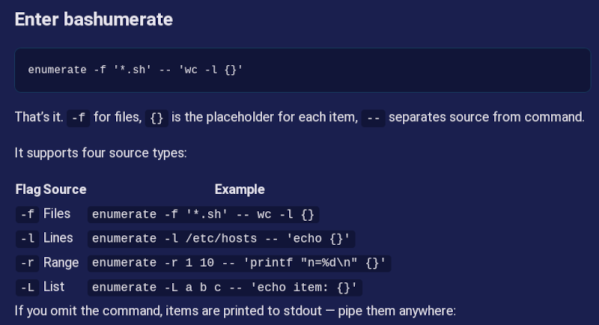
We often argue that the much-maligned bash script is sometimes the right tool for the job. You can even do things like critical sections in them.