31415926 (That’s Roughly Π Times 10 Million Raspberries)

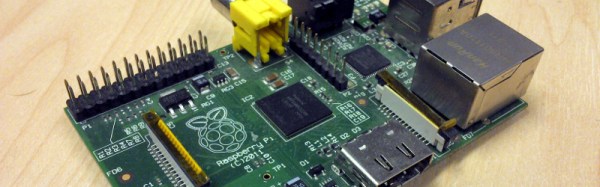
The Raspberry Pi Foundation founder Eben Upton has announced that their ten millionth eponymous single-board computer has been sold since their launch back in February 2012. It’s an impressive achievement, especially so since their original sales expectations were for a modest ten thousand. For those of us who watched the RS and Farnell websites crumble under the strain of so many would-be purchasers on that leap day morning four and a half years ago their rapidly exceeding that forecast came as no surprise, but still, it’s worth a moment’s consideration. They passed the Sinclair ZX Spectrum’s British record of 5m computers sold back in February 2015, leaving behind the Pi’s BBC Micro spiritual ancestor on 1.5m sold long before that.

Critics of the Pi will point out that its various versions have rarely been the most powerful small single board computer on the market, or even at times the cheapest. They will also point to the closed-source nature of the Broadcom binary blob that underpins Pi operating systems, and even the sometimes unpredictable nature of the Pi Foundation with respect to its community, product availability and launches. But given that the Pi Foundation’s focus is not on our side of the community but on using the boards as a tool to introduce young people to computing, it’s fair to say that they’ve done a pretty good job of ensuring that a youngster can now get their hands on a useful and easily programmable computer much more easily than at any time in the past.

Would we be in the same position of being able to buy a capable Linux computer for near-pocket-money prices had the Raspberry Pi not been released? Probably so, in fact certainly so. The hardware required to deliver these products has inevitably fallen into a more affordable price bracket, and we would certainly have plenty of boards at our fingertips. They would probably have Allwinner or maybe Mediatek processors rather than the Pi’s Broadcom part, but they would be very likely to deliver equivalent performance at a similar cost. Where the Raspberry Pi’s continued success has come from then has not necessarily been from its hardware but from its community and software. The reliability and ease of use delivered by the Raspbian Linux distribution that Just Works for the parent putting a Pi in front of their child, and the wealth of expert information on the Raspberry Pi forums to get them through any Pi-related troubles are what has given the Pi these sales figures. The boards themselves are almost incidental, almost any hardware paired with that level of background information would likely have met with similar success. Comparing the Pi software experience with for example one of their most capable competitors, it’s obvious that the software is what makes the difference.

It’s likely that Raspberry Pi sales will continue to climb, and in years to come we’ll no doubt be reporting on fresh milestones on ever more powerful revisions of their product. But it’s also likely that their competition will up their software game and their position in the hearts and minds of single board computer users might be usurped by a better offering. If this increased competition in the single board computer market delivers better boards with more for the hardware developer community, then we’re all for it.
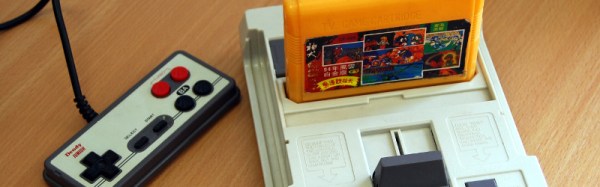
Nintendo Wields DMCA Ax On Fan Games

In a move that may sadden many but should surprise nobody, Nintendo of America has issued a DMCA takedown notice for 562 fan-created games created in homage to Nintendo originals and hosted on the popular Game Jolt site. Games affected include Mario, Zelda, and Pokémon based creations among others, and Game Jolt have responded, as they are required to, by locking the pages of the games in question. They state that they believe their users and developers should have the right to know what content has been removed from their site and why the action has been taken, so they have begun posting any notices they receive in their GitHub repository.

It is likely that this action won’t be appreciated within our community, however it’s important to note that while there are numerous examples of DMCA abuse this is not one of them. Nintendo are completely within their rights over the matter, if you use any of the copyrighted Nintendo properties outside the safe harbor of fair use then you will put yourself legitimately in their sights.

Something that is difficult to escape though is a feeling that DMCA takedowns on fan-created games are rather a low-hanging fruit. An easy way for corporate legal executives to be seen to be doing something by their bosses, though against a relatively defenseless target and without really tackling the problem.

To illustrate this, take a walk through a shopping mall, motorway service station, or street market almost anywhere in the world, and it’s very likely that you will pass significant numbers of counterfeit toys and games copying major franchises including those of Nintendo. A lot of these dollar store and vending machine specials are so hilariously awful that their fakeness must be obvious to even the most out-of-touch purchaser, but their ready availability speaks volumes. Unlike the fan-created games which are free, people are buying these toys in huge numbers with money that never reaches Nintendo, and also unlike the fan-created games there’s not a Nintendo lawyer in sight. Corporate end-of-year bonuses are delivered on the numbers of violations dealt with, and those come easiest by piling up the simple cases rather than chasing the difficult ones that are costing the company real sales.

We’ve covered many DMCA stories over the years, and some of them have been pretty shocking. Questions over its use in the Volkswagen emissions scandal, or keeping John Deere tractor servicing in the hands of dealers. Let’s hope that the EFF and Bunnie Huang’s efforts pay off and dismantle section 1201, one of the most nonsensical parts of the law.

Via Engadget. Dendy Junior unauthorised Nintendo Famicom clone image, By Nzeemin (Own work) [CC BY-SA 3.0], via Wikimedia Commons.

Carbon Nanotube Transistors Are On The Passing Lane

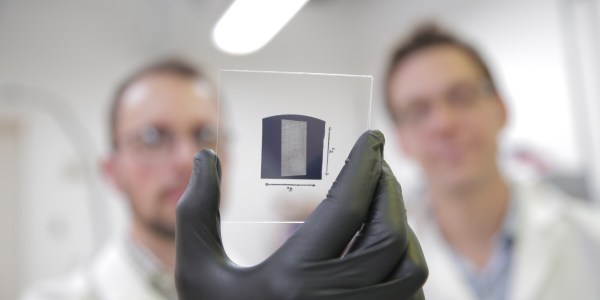
There are many obstacles in the way to turning carbon nanotubes into something useful. Materials engineers at the University of Wisconsin-Madison have now brought carbon nanotubes (CNTs) one step closer to becoming practically applicable for semiconductor electronics. In particular, the team managed to assemble arrays of carbon nanotube transistors that outperform their silicon-based predecessors.

Continue reading “Carbon Nanotube Transistors Are On The Passing Lane”

Inventables Releases Improved X-Carve CNC Router

Introduced last year as an improvement on the very popular Shapeoko CNC router, the X-Carve by Inventables has grown to be a very well-respected machine in the community. It’s even better if you throw a DeWalt spindle on there, allowing you to cut almost everything that’s not steel. With a recent upgrade to the X-Carve, it’s even more capable, featuring the best mods and suggestions from the community that has grown up around this machine.

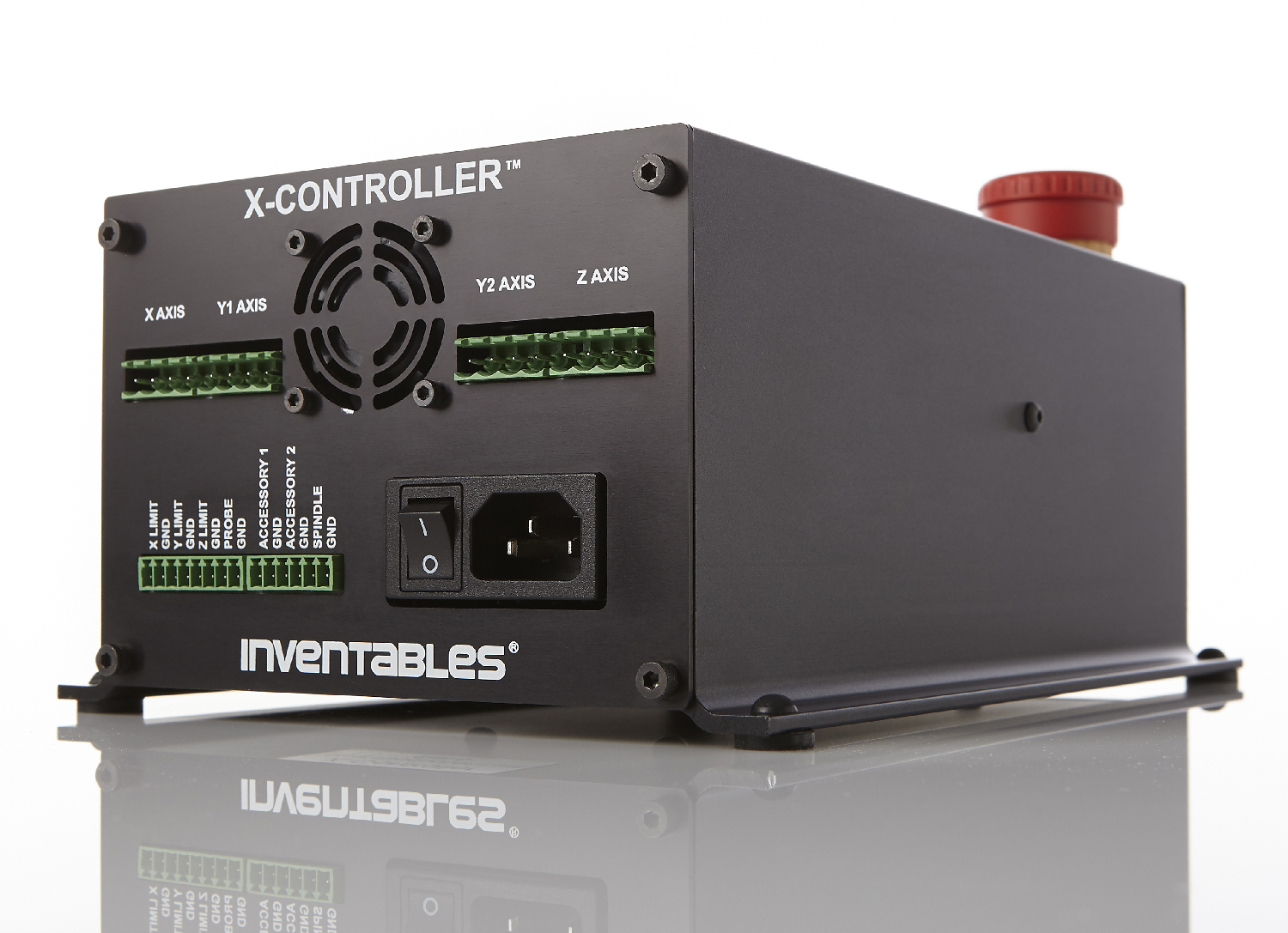
The newest iteration of the X-Carve features higher power drivers, better rigidity, and a heat sink for the spindle. That last item is an interesting bit of kit – routing takes time, and a 1¼HP motor will turn electricity into heat very effectively.

X-CarveIn addition to the 500mm square and 1000mmm square routers previously available, there’s a new, 750mm square machine available. All machines feature a new electronics box for the X-Carve, the X-Controller. This ‘brain box’ is a combined power supply, stepper driver, and motion controller built into a single box. The stepper drivers are able to supply 4A to a motor, is capable of 1/16 microstepping, and has connections for limit switches, spindle control speed, a Z probe, and outputs for vacuums or coolant systems. The underlying controller is based on grbl, making this brain box a very solid foundation for any 3-axis CNC build. The ‘brain box’ format seems to be the way the hobbyist CNC market is going, considering the whispers and rumors concerning Lulzbot selling their Taz6 brainbox independently from a 3D printer.

The new X-Carve is available now, with a fully-loaded 1000mm wide machine coming in at about $1400. That’s comparable to many other machines with the same volume, unlike the Chinese 3040 CNC machines, you don’t need to find an old laptop with a parallel port.

Citizen Scientist Radio Astronomy (and More): No Hardware Required

We sometimes look back fondly on the old days where you could–it seems–pretty easily invent or discover something new. It probably didn’t seem so easy then, but there was a time when working out how to make a voltage divider or a capacitor was a big deal. Today–with a few notable exceptions–big discoveries require big science and big equipment and, of course, big budgets. This probably isn’t unique to our field, either. After all, [Clyde Tombaugh] discovered Pluto with a 13-inch telescope. But that was in 1930. Today, it would be fairly hard to find something new with a telescope of that size.

However, there are ways you can contribute to large-scale research. It is old news that projects let you share your computers with SETI and protein folding experiments. But that isn’t as satisfying as doing something personally. That’s where Zooniverse comes in. They host a variety of scientific projects that collect lots of data and they need the best computers in the world to crunch the data. In case you haven’t noticed, the best computers in the world are still human brains (at least, for the moment).

Their latest project is Radio Meteor Zoo. The data source for this project is BRAMS (Belgian Radio Meteor Stations). The network produces a huge amount of readings every day showing meteor echoes. Detecting shapes and trends in the data is a difficult task for computers, especially during peak activity such as during meteor showers. However, it is easy enough for humans.

Continue reading “Citizen Scientist Radio Astronomy (and More): No Hardware Required”

Fixing The Ampere: Redefining The SI Unit

We all know that it’s not the volts that kill you, it’s the amps. But exactly how many electrons per second are there in an amp? It turns out that nobody really knows. But according to a press release from the US National Institute of Standards and Technology (NIST), that’s all going to change in 2018.

The amp is a “metrological embarrassment” because it’s not defined in terms of any physical constants. Worse, it’s not even potentially measurable, being the “constant current which, if maintained in two straight parallel conductors of infinite length, of negligible circular cross-section, and placed 1 meter apart in vacuum, would produce between these conductors a force equal to 2 x 10⁻⁷ newton per meter of length.” You can’t just order a spool of infinite length and negligible cross-section wire and have it express shipped.

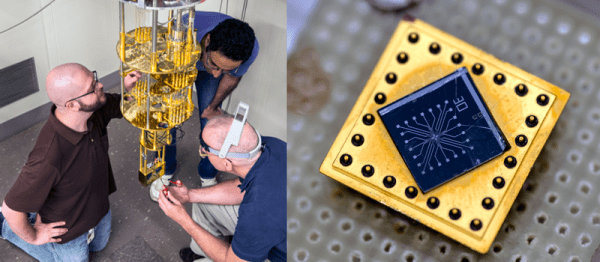
So to quantify the exact number of electrons per second in an amp, the folks at NIST need an electron counter. This device turns out to be a super-cooled, quantum mechanical gate that closes itself once an electron has passed through. Repeatedly re-opening one of these at gigahertz still provides around a picoamp. Current (tee-hee) research is focused on making practical devices that push a bit more juice. Even then, it’s likely that they’ll need to gang 100 of these gates to get even a single microamp. But when they do, they’ll know how many electrons per second have passed through to a few tens of parts per billion. Not too shabby.

We had no idea that the amp was indirectly defined, but now that we do, we’re looking forward to a better standard. Thanks, NIST!

Thanks [CBGB123B] for the tip!

Police Baffled? Send For The Radio Amateurs!

The police force in Evanston, Illinois had a problem on their hands. A mystery transmitter was blocking legal use of radio devices, car key fobs, cellphones, and other transmitters in an area of their city, and since it was also blocking 911 calls they decided to investigate it. Their first call for help went to the FCC who weren’t much use, telling them to talk to the manufacturers of the devices affected.

Eventually they approached the ARRL, the USA’s national amateur radio organisation, who sent along [Kermit Carlson, W9XA] to investigate. He fairly quickly identified the frequencies with the strongest interference and the likely spot from which it originated, and after some investigation it was traced to a recently replaced neon sign power supply. Surprisingly the supply was not replaced with a fault-free unit, its owner merely agreeing to turn it off should any further interference be reported.

The ARRL are highlighting this otherwise fairly unremarkable case to draw attention to the problem of devices appearing on the market with little or no pretence of electromagnetic compatibility compliance. In particular they are critical of the FCC’s lacklustre enforcement response in cases like this one. It’s a significant problem worldwide as huge numbers of very cheap switch-mode mains power supplies have replaced transformers in mains power applications, and in any center of population its effects can be readily seen with an HF radio in the form of a significantly raised RF noise floor. Though we have reported before on the FCC’s investigation of the noise floor problem we’d be inclined to agree with the ARRL that it is effective enforcement of EMC regulations that is key to the solution.

City of Evanston police vehicle picture, [Inventorchris] (CC BY-NC 2.0) via Flickr.