

Yesterday, I was standing on a tropical island off the coast of Belize. Vacation rocked with lots of SCUBA diving, spearfishing and snorkeling. I’m back home, shaking off the jet lag and clearing up my inbox. Thanks to [fabienne] for filling in and letting me unplug for a while!
[Darkrom] has set a new standard for Hack-A-Day readers… I haven’t seen it in person, but that looks like a legit Hack-A-Day tattoo.
[null] sent in a new use for a frequency generator, a spare car amp, a sub-woofer and a plastic coffee can – brass cartridge polishing.
[LoopyMind] sent in this Game Boy Advanced Movie Player IDE hack. It’s pretty much a direct CF to laptop drive cable with an external battery supply.
[Dingolishious] sent in a POE UPS/remote power control solution. Could be handy if you’re using many POE devices, or if you’re having power issues. He added an inexpensive remote power monitor/switch solution behind his UPS. It senses power outages and kicks out an email – and allows remote power cycling of his POE devices. Of course, if you’ve got a linux box behind the UPS, it can monitor the output from the UPS and send notifications.
[William] added a preamp stage to his iKEY usb recorder. looks like an interesting toy – it’ll record audio directly to a USB flash key. The pre-amp allows him to record in more challenging environments.
[Andrew] noted a simple mod to increase the deadly fire power of the ubiquitous airsoft pellet gun. It’s just a matter of reducing some extra space in the spring compression area.
Last but not least, [VIPER] modded his projector to use a 12v halogen headlight bulb. Not a bad idea – at one point I was pondering a 550 watt source four halogen as a possible replacement.

 (
(
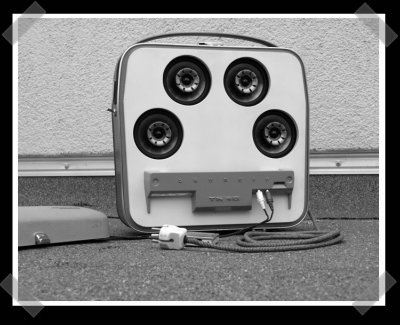 [formathirn] sent in his







