Radio Apocalypse: Clearing The Air With SCATANA

For the most part, the Radio Apocalypse series has focused on the radio systems developed during the early days of the atomic age to ensure that Armageddon would be as orderly an affair as possible. From systems that provided backup methods to ensure that launch orders would reach the bombers and missiles, to providing hardened communications systems to allow survivors to coordinate relief and start rebuilding civilization from the ashes, a lot of effort went into getting messages sent.

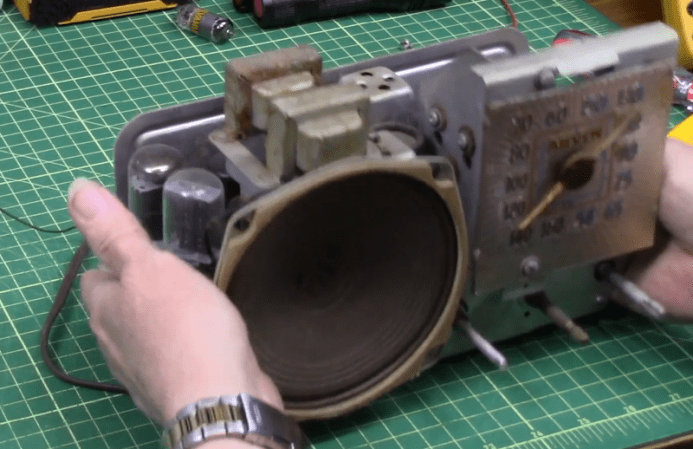
Strangely, though, the architects of the end of the world put just as much thought into making sure messages didn’t get sent. The electronic village of mid-century America was abuzz with signals, any of which could be abused by enemy forces. CONELRAD, which aimed to prevent enemy bombers from using civilian broadcast signals as navigation aids, is a perfect example of this. But the growth of civil aviation through the period presented a unique challenge, particularly with the radio navigation system built specifically to make air travel as safe and reliable as possible.

Balancing the needs of civil aviation against the possibility that the very infrastructure making it possible could be used as a weapon against the U.S. homeland is the purpose of a plan called Security Control of Air Traffic and Air Navigation Aids, or SCATANA. It’s a plan that cuts across jurisdictions, bringing military, aviation, and communications authorities into the loop for decisions regarding when and how to shut down the entire air traffic system, to sort friend from foe, to give the military room to work, and, perhaps most importantly, to keep enemy aircraft as blind as possible. Continue reading “Radio Apocalypse: Clearing The Air With SCATANA”

Getting The Most Out Of ISM Transceivers Using Math

WiFi is an excellent protocol, but it certainly has its weaknesses. Its range in even a normal home is relatively limited, so you could imagine the sort of performance you’d expect through the hundred meters of dense woodland that [DO3RB] is trying to penetrate. So naturally the solution was to develop a new wireless transceiver for the ISM band. 

Of course, getting reliable packet transmission is tough. In a building with brick walls, WiFi will get around five to ten percent packet loss. For TCP to remain reliable, one percent packet loss is the maximum designed loss of this wireless protocol. In reality, the transceiver achieves 0.075% packet loss real world.

The crux of the magic behind this excellent reliability is the extended binary Golay code. By halving the bitrate, the Golay code is able to correct for up to four errors per codeword. While a more complicated scheme could have been used, the Golay code allowed for easy porting to an MCU thus simplifying the project. All this is encoded with frequency shift keying in the ISM band.

This magic is tied up inside an tiny SAMD21 paired with a RFM12BP wireless front end. Using TinyUSB, the interface shows up to the host as a USB Ethernet adapter making for seamless networking setups. With reliable bi-directional communication, you could theoretically use this as a home networking solution. However, this is realistically best for IoT devices as the speeds are around 56 kbit/s.

While this is an incredibly simple system, harking back to 90s networking, it certainly gets the job done in a neat and tidy manner. And if you too wish hark back to 90s radio communications, make sure to check out this satellite imagery hack next! 

Thanks [Bernerd] for the tip!

It’s A Variable Capacitor, But Not As We Know It

Radio experimenters often need a variable capacitor to tune their circuits, as the saying goes, for maximum smoke. In decades past these were readily available from almost any scrap radio, but the varicap diode and then the PLL have removed the need for them in consumer electronics. There have been various attempts at building variable capacitors, and here’s [radiofun232] with a novel approach.

A traditional tuning capacitor has a set of meshed semicircular plates that have more of their surface facing each other depending on how far their shaft is turned. The capacitor presented in the first video below has two plates joined by a hinge in a similar manner to the covers of a book. It’s made of tinplate, and the plates can be opened or closed by means of a screw.

The result is a capacitor with a range from 50 to 150 picofarads, and in the second video we can see it used with a simple transistor oscillator to make a variable frequency oscillator. This can form the basis of a simple direct conversion receiver.

We like this device, it’s simple and a bit rough and ready, but it’s a very effective. If you’d like to see another unusual take on a variable capacitor, take a look at this one using drinks cans.

Continue reading “It’s A Variable Capacitor, But Not As We Know It”

The Practicality Of Solar Powered Meshtastic

A Meshtastic node has been one of the toys of the moment over the last year, and since they are popular with radio amateurs there’s a chance you’ll already live within range of at least one. They can typically run from a lithium-ion or li-po battery, so it’s probable that like us you’ve toyed with the idea of running one from a solar panel. It’s something we have in common with [saveitforparts], whose experiments with a range of different solar panels form the subject of a recent video.

He has three different models: one based around a commercial solar charger, another using an off-the-shelf panel, and a final one using the panel from a solar garden light. As expected the garden light panel can’t keep an ESP32 with a radio going all day, but the other two manage even in the relatively northern climes of Alaska.

As a final stunt he puts one of the nodes out on a rocky piece of the southern Alaskan coastline, for any passing hacker to find. It’s fairly obviously in a remote place, but it seems passing cruise ships will be within its range. We just know someone will take up his challenge and find it.

Continue reading “The Practicality Of Solar Powered Meshtastic”

Breadboard for vacuum tubes

This Board Helps You Prototype Circuits With Tubes

There you are at the surplus store, staring into the bin of faded orange, yellow, red, and black, boxes–a treasure trove of vintage vacuum tubes—dreaming about building a tube amp for your guitar or a phonograph preamp for your DIY hi-fi sound system. But, if you are not already in possession of a vintage, purpose-built tube testing device, how would you test them to know whether they are working properly? How would you test out your designs before committing to them? Or maybe your goal is simply to play around and learn more about how tubes work.

One approach is to build yourself a breadboard for tubes, like [MarceloG19] has done. Working mostly with what was laying around, [MarceloG19] built a shallow metal box to serve as a platform for a variety of tube sockets and screw terminals. Connecting the terminals to the socket leads beneath the outer surface of the box made for a tidy and firm base on which to connect other components. The built-in on/off switch, fuse and power socket are a nice touch.

[MarceloG19’s] inaugural design is a simple Class A amplifier, tested with a sine wave and recorded music. Then it’s on to some manual curve tracing, to test a tube that turns out to be fairly worn-out but serviceable for certain use cases.

If you’re dipping your toes into tube-based electronics, you’re going to want a piece of equipment like this prototyping board and [MarceloG19’s] documentation and discussion are a good read to help get you started.

Once you have your board ready, it’s time to move on to building a stereo amplifier , a tube-based headphone preamp, or take things in a different direction with this CRT-driven audio amplifier.

6502 Puts On An SDR Hat

The legendary 6502 microprocessor recently turned 50 years old, and to celebrate this venerable chip which brought affordable computing and video gaming to the masses [AndersBNielsen] decided to put one to work doing something well outside its comfort zone. Called the PhaseLoom, this project uses a few other components to bring the world of software-defined radio (SDR) to this antique platform.

The PhaseLoom is built around an Si5351 clock generator chip, which is configurable over I2C. This chip is what creates the phase-locked loop (PLL) for the radio. The rest of the components, including antenna connectors and various filters, are in an Arduino-compatible form factor that let it work as a shield or hat for the 65uino platform, an Arduino-form-factor 6502 board. The current version [Anders] has been working on is dialed in to the 40-meter ham band, with some buttons on the PCB that allow the user to tune around within that band. He reports that it’s a little bit rough around the edges and somewhat noisy, but the fact that the 6502 is working as an SDR at all is impressive on its own.

For those looking to build their own, all of the schematics and code are available on the project’s GitHub page. [Anders] has some future improvements in the pipe for this project as well, noting that with slightly better filters and improved software even more SDR goodness can be squeezed out of this microprocessor. If you’re looking to experiment with SDR using something a little bit more modern, though, this 10-band multi-mode SDR based on the Teensy microcontroller gets a lot done without breaking the bank.


Reverse Engineering A (Toy) Fire Engine

Your kid has a toy remote control fire truck. You have an RTL SDR. See where this is going? [Jacob] couldn’t resist tearing into the why and how of the truck’s remote control protocol.

The entire process began with a basic GNU Radio setup to determine the exact frequency of the signal. Then a little analysis suggested that it might be using amplitude shift keying. That is, the information is in the amplitude of the signal, where one possible amplitude is completely off in some cases.

Continue reading “Reverse Engineering A (Toy) Fire Engine”