Laser Spirograph Exhibit Repair And Upgrade

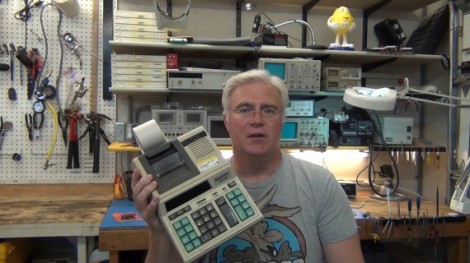
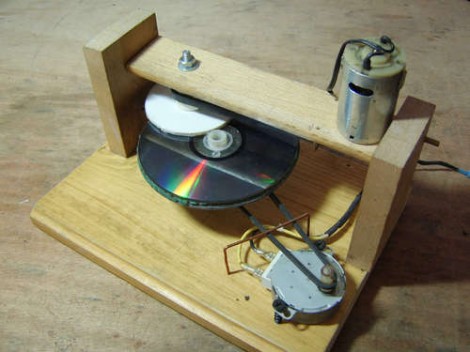
[Bill Porter] continues finding ways to help out at the local museum. This time he’s plying his skills to fix a twenty-year-old exhibit that has been broken for some time. It’s a laser spirograph which had some parts way past their life expectancy.

He started by removing all of the electronics from the cabinet for further study in his lair. He examined the signal generator which when scoped seemed to be putting out some very nice sine waves as it should. From there he moved on to the galvos which tested way off of spec and turned out to be the offending elements.

A bit of searching around the interwebs and [Bill] figured out an upgrade plan for the older parts. But since he was at it, why not add some features at the same time? He rolled in a port so that just a bit of additional circuitry added later will allow shapes and logos to be drawn on the screen. One of his inspirations for this functionality came from another DIY laser projector project.

Take a look at the results of the repair process in the clip after the break.

Continue reading “Laser Spirograph Exhibit Repair And Upgrade”

Repair A Misbehaving Motor Controller Board

It can be a real drag to fix a circuit board which has stopped working as intended, especially if you don’t have any reference material for the product. That’s the position that [Todd Harrison] found himself in when the controller for his mini-lathe gave up the ghost. He undertook and hefty repair process and eventually mapped out and repaired the driver board.

First off, we’re happy to report his success at the end of a year-long troubleshooting process; the entirety of which occupies six different posts. The link at the top is the conclusion, and you’ll find his final test video after the break. But as you can see from the image above, he was met with a lot of problems along the way. The first two segments show him reverse engineering the PCB, with a giant schematic coming out of the process. In part 3 he then started probing the board while it was live, with the smell of hot electronics causing him to disconnect the power every thirty seconds. One time he took too long and blew a resistor with the pictured results.

In the end it was a shorted PWM chip to blame. He tested a couple of different replacement options, dropped in the new part, and is now back in business. Continue reading “Repair A Misbehaving Motor Controller Board”

The Fukushima Robot Diaries

After the terrible tragedy in Fukushima, the cleanup and damage assessment has begun. A robot operator, known only as [S.H.] has decided to write a blog about their efforts.  As pictured above, they are using iRobot models, including the [510 Packbot], and the [710 Warrior].

Since cleanup efforts started, [S.H.] was posting on his or her blog daily.  After word of this blog started getting out via various social media outlets, the blog was mysteriously taken down. The blog was at times critical of elements of the cleanup effort, but it’s unknown why the disappearance happened. Efforts to reach [S.H.] were unsuccessfull according to [IEEE].

Fortunately, before the takedown, [IEEE]’s [Erico Guizzo] decided to make a copy of the posts. These have been translated into English and portions are now available at the link listed above. Be sure to check out robot training video after the break. Continue reading “The Fukushima Robot Diaries”

Simple Machining Process Repairs Broken Control Knob

[Francisco] is helping his mother with a repair to the headlight knob on her Ford Ranger. Above you can see the broken knob on the left, and what it is supposed to look like on the right (taken from [Francisco’s] own vehicle for reference). We’ve encountered split shafts on plastic knobs before and decided it was not something that could be fixed. But he didn’t give up so easily. He mentions that you can purchase a replacement for a few bucks, but he has the means to repair the knob by machining a metal bushing.

The idea is that you mill a metal ring whose inner diameter matches what the outer diameter of the plastic shaft should be. By inserting the broken knob in the ring, the plastic is held tightly together as if it had never broken. In the video after the break [Francisco] uses a metal pencil body from his junk box and a mini-lathe to cut the bushing to length, and mill the inner diameter to his specifications.

He talks about the difficulty of getting replacement parts in Chile, where he lives. But we think this kind of thrift is a great example for all hackers. If you’ve got the tools why not use them? And if you don’t have them, here’s a great excuse to procure them!

Continue reading “Simple Machining Process Repairs Broken Control Knob”

Fix Broken Buttons On Your ASUS Computer Monitors

One of the perks of writing for Hackaday is that we often find hacks that we’ve been meaning to do ourselves. Here’s one that will let us fix our borked ASUS computer monitor buttons. [Silviu] has the same monitor we do, an ASUS VW202, and had the same problem of stuck buttons. We already cracked ours open and realized that the buttons are not easily replaced (you’ve got to source the right one). We just unstuck the offender and vowed not to press that button again, but [Silviu] actually figured out how to disassemble and repair the PCB mount switches.

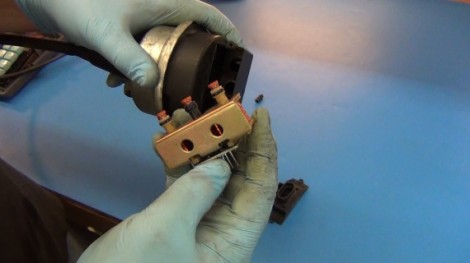
As with most consumer electronics these days the worst part of the process is getting the monitor’s case apart. The plastic bezel has little spring tabs all around it that must be gently pried apart. Once the PCB which hosts the buttons was removed, he took the metal housing off of the broken switch. Inside he found that a bit of metal particulate (leftovers from manufacturing?) were causing the problem. A quick cleaning with a cotton swab removed the debris and got the tactile switch working again.

Tutorial: Replacing Bad Capacitors

[glytch] sent in a tutorial on replacing dying capacitors on a motherboard, and we honestly can’t think of a better subject for an introductory tutorial. There’s nothing like having your friends think you’re a wizard for bringing broken electronics back from the grave.

For the repair a dead motherboard was [glytch]’s quarry. After taking a look at the board, he found a few bulging caps that were ready to burst. After ordering a few caps with the same voltage, capacitance, and dimensions (trust us, you want the same size cap), [glytch] took an iron and desoldering braid to the board and replaced a few caps.

Sooner or later, all capacitors are going to go break down. This isn’t always a bad thing – we picked up quite a few “broken LCD monitors” in the years after the capacitor plague and repaired them with a few dollars worth of caps. A lot of the caps in our late 80s computers have been replaced, and these machines are still chugging along.

Replacing An Overheating Tablet Power Supply

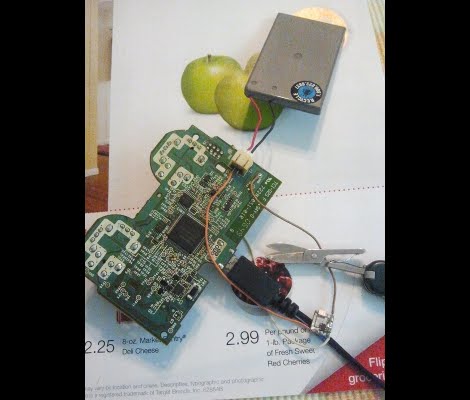
[Dave] has an ASUS tablet PC with a little problem. The device is charged via the docking connector’s USB cable when plugged into a special wall transformer. The problem is that the wall unit tends to overheat, and is shut down by a thermister inside to avoid permanent damage. The word on the Internet is to drop it in a zipper bag and chill it in the freezer for a bit. Although this works, it’s not the permanent solution that he was looking for. Instead, he hit the parts bin and built his own power supply replacement without buying anything.

The device is simply looking for 12V on the power pin (pin 1) of the USB cable. [Dave] dug through his mountain of unused AC adapters and found one that fit the voltage and current specs of the stock unit. He also grabbed a dusty old motherboard and plucked the USB ports off of the back. A bit of protoboard makes for a good base to connect the AC adapter wires to the ports, which was then covered with one big shrink tube. The result is seen above, and demonstrated in the clip after the break.

Continue reading “Replacing An Overheating Tablet Power Supply”