Victorian Nixie Tube Clock


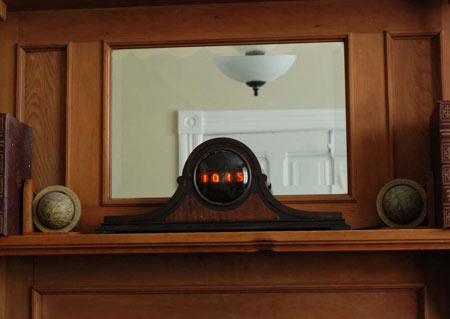
[John Clarke Mills] has pieced together this tastefully done Victorian style Nixie tube clock. He picked up a kit from nixietube.com and an old clock off of eBay. A little bit of elbow grease and solder later, he has this very nice mantle piece. Well done.

For those unfamiliar, a Nixie tube is used for displaying numbers or letters. They are a glass tube, filled with a gas (usually neon). There are metal structures inside that glow when electricity is applied. First widely used in the early sixties, Nixies were pretty much replaced when LED technology got cheap.

We noticed that nixietube.com was down, so you might also check TubeClock.com and neonixie.com for kits.

If you’re looking for more inspiration, read about the Nixie counter clock, Russian vfd, and the 6502 driven Nixie clock all previously on Hack a Day.

[via Retro Thing]

How-To: Binary Clock Using A Freeduino SB 2.1


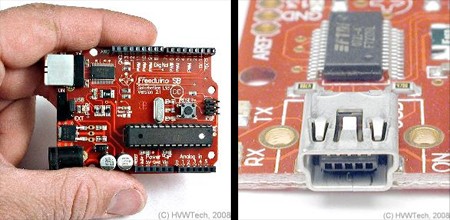
Solarbotics recently released its own version of the Arduino microcontroller development board. They based their board on the Freeduino design. We thought this would be a good opportunity to review the new board as well as present a How-To about building a simple binary clock. Along the way we’ll cover some basics on attaching LEDs and switches to a microcontroller.

Continue reading “How-To: Binary Clock Using A Freeduino SB 2.1”

Stroboscope LED Fan Clock


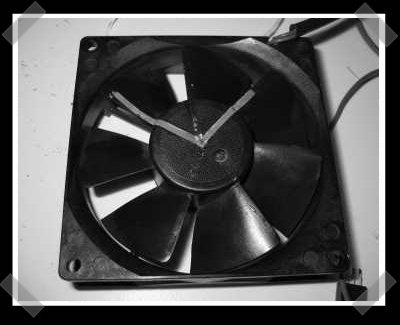
[sprite_tm] sent in one of his latest little adventures – and I love it. To create his stroboscope fan clock, he put a couple of red and green clock hands onto a standard PC fan(I love Panaflo fans), then he built a circuit to strobe a RGB LED to create a set of virtual clock hands on the spinning fan. An ATTiny2313 does all the work, with the help of some transistors to drive the LEDs.