Putting A MiSTer Marquee On A Better Display

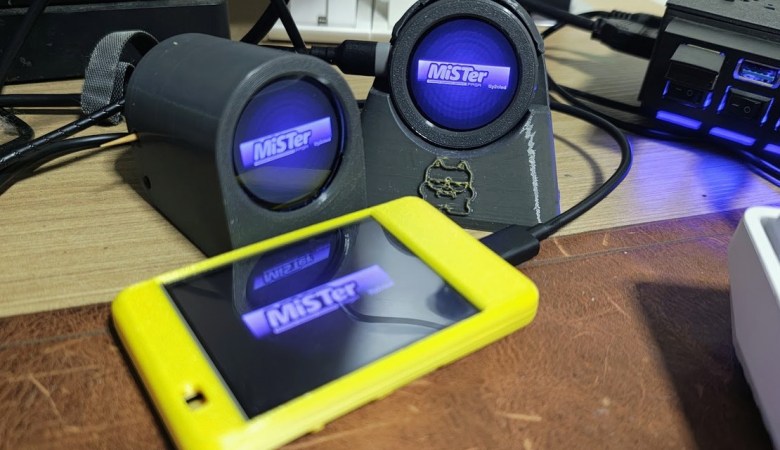
Some MiSTer users put a small secondary “marquee” display on the FPGA board that can show information about the system such as the currently loaded core and what game it happens to be running. Generally these take the form of a small monochrome OLED display, likely the one most of us have sitting in a parts bin somewhere.

But [Erico Mendonca] wanted a something with a bit more style, so he’s come up with a firmware for the ESP32-C3 that connects to MiSTer’s existing secondary display protocol but works with slightly more visually impressive panels such as the round GC9A01 that so many hackers have been playing with as of late. If the whole circular display thing isn’t your…thing, you can even run the firmware on the Cheap Yellow Display for a turn-key rectangular experience.
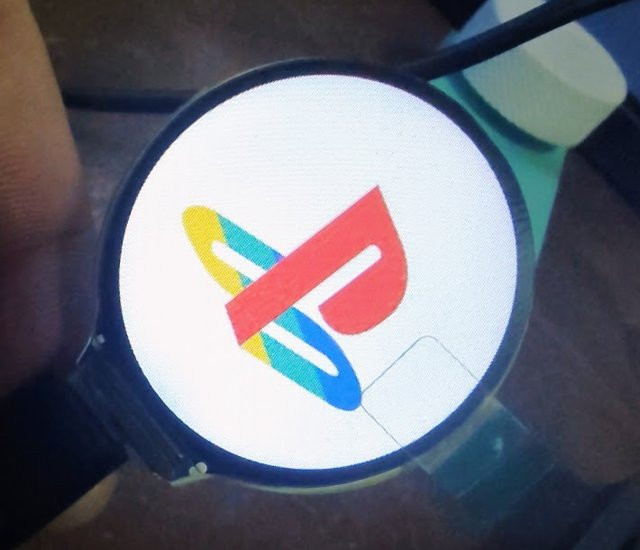
Because [Erico] didn’t want to fiddle with anything on the MiSTer side of the equation, his firmware has to do the heavy lifting when it comes to the art that shows on the display. So there’s a web-based editor that lets you put together your own artwork to show on the marquee based on what command the MiSTer has actually sent out. Flashing the firmware on the ESP32 can be done through the browser as well, as is becoming increasingly common these days, making it relatively easy to get this project up and running.

With this project it’s also possible to control multiple client displays over WiFi from one system, just in case you wanted to show off what console you were booting up in multiple places.

We’re fans of the round display here at Hackaday, so it’s been great to see more folks putting them to use as of late.

Continue reading “Putting A MiSTer Marquee On A Better Display” →

Spool Roller Gets Touch Screen

If you have a desktop 3D printer, you probably want something to hang filament spools on. [LVTRC] has a spool roller that fits the bill. It also incorporates a scale and a round touch screen. (Google Translate)

We’ve seen those round screens before, and now we wonder why we didn’t think of this. The GC9A01 display shows a progress ring and lets you save settings or calibrations to EEPROM. An Arduino Nano provides the brain, and the load cell connects to an HX711. The project is made to fit a specific printer, but it should be little trouble to adapt it to a different printer or to mount it in an external mount.

One of the calibration steps, of course, is to program the weight of an empty spool to subtract from the total weight. The device can store up to five specific profiles.

Not the biggest spool holder we’ve seen. We keep thinking that we don’t know why we want a circular screen, and then someone always drops in to show us another thing we didn’t think about.

Better Faux-Analog VU Meters

One of the coolest things about old hi-fi hardware is that it often came with flickety needles that danced with the audio level. You can still buy these if you want, or you can simulate the same look on a screen, as [mircemk] demonstrates.

It isn’t [mircemk]’s first rodeo in this regard. An earlier project involved creating simulated VU meters on round displays, but they were somewhat limited. Using the Adafruit GFX library on an ESP32 netted a working setup, but it was jerky and very jagged and digital-looking. It was more akin to a fake needle display running on an 8-bit computer than something that looked like a real vintage VU meter.

Continue reading “Better Faux-Analog VU Meters” →