
Printed Sleeve Gives Keys Some Grip

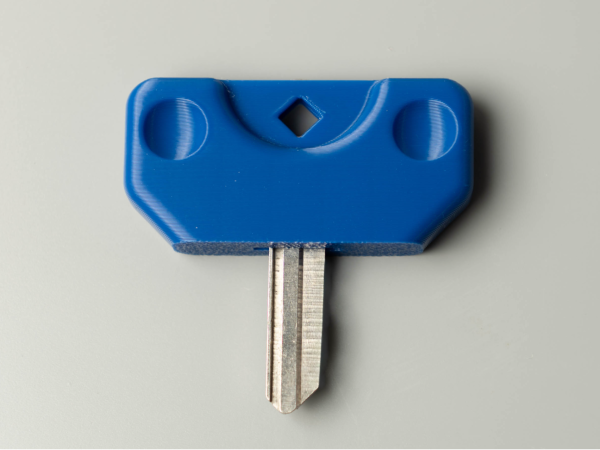
[Enginerd]’s chonky key handle is a beautiful use of 3D printing that helps people help themselves. The large wings, indented faces, and beefed-up grip make a typical house key much easier for someone with arthritis or difficulty gripping those brass slivers. Bright filaments in different colors can also help someone with vision limitations. The thing that will not improve is the space in your pocket or purse.

The design only requires a tiny bit of plastic, prints without supports, and what sets it apart from similar models is that you do not need any double-sided tape or bolts, only a keyring, so someone may have to assemble it for the user. The author is clever enough to use an uncut blank in the project photo so that no one will be decoding and copying their house key. We would wager they have read Hackaday if they are so prepared.

Some of the people who purchased early consumer 3D printers already need these kinds of builds, and there is no shortage of intelligent people creating remarkable open-source designs.

Continue reading “Printed Sleeve Gives Keys Some Grip”

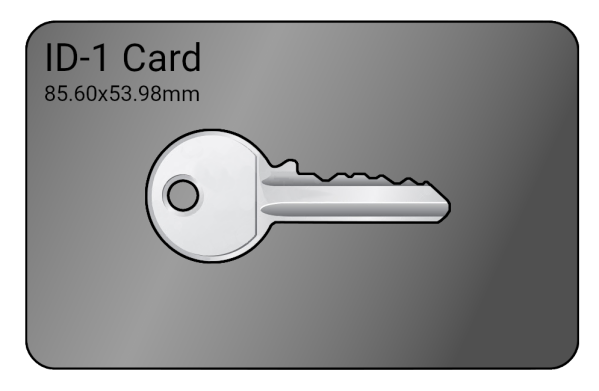
An illustration of a key sitting on an ID card. The key is light grey and the ID card is a darker grey gradient. The ID card says ID-1 Card 85.60 by 53.98 mm

All Your Keys Are Belong To KeyDecoder

Physical security is often considered simpler than digital security since safes are heavy and physical keys take more effort to duplicate than those of the digital persuasion. [Maxime Beasse and Quentin Clement] have developed a smartphone app that can duplicate a key from a photo making key copying much easier.

KeyDecoder is an open source Android app that can generate all the necessary bitting info to duplicate a key from just an image. Luckily for the paranoid among us, the image must be taken with the key laying flat without a keyring on an ISO/CEI 7810 ID-1 ID or credit card. A passerby can’t just snap a photo of your keys across the room and go liberate your home furnishings, but it still would be wise to keep a closer eye on your keys now that this particular cat hack is out of the bag.

The project’s GitHub page is awash in warnings that this tool is designed solely for “pentesters and security enthusiasts” to warn their friends and clients about the dangers of leaving their keys exposed. After learning about this tool, we wouldn’t be surprised if some in the audience start rethinking how they carry and store their physical keys from now on.

If you want to see some more hacks to duplicate keys, checkout Copying High Security Keys With OpenSCAD And Light and Methods Of Copying High Security Keys.







