Laser Spirograph

laser-spirograph

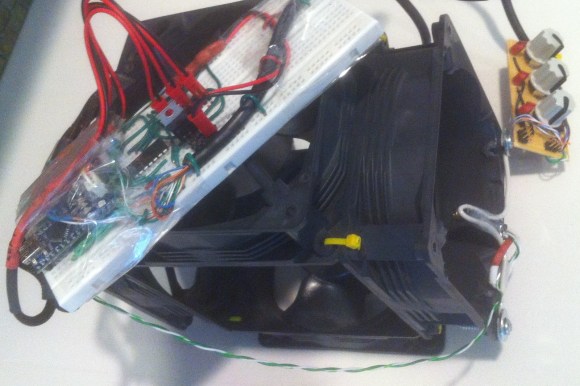
Here’s a weekend junk bin project if we’ve ever seen one. [Pat] used a quartet of computer fans to make his laser Spirograph. Deciding to try this simple build for yourself will run you through a lot of basics when it comes to interfacing hardware with a microcontroller. In this case it’s the Arduino Nano.

The Spirograph works by bouncing a laser off of mirrors which are attached to the PC fans. When the fans spin the slight alignment changes cause the laser dot to bob and weave in visually pleasing ways. You can catch twenty minutes of the light show in the clip after the break.

Three of the fans have mirrors attached, the housing of the fourth is used to host the laser diode and make assembly easier. A TC4469 motor driver is used to connect the fans to the Arduino. The light show can be manually controlled by turning the trio of potentiometers which are read using the Arduino’s ADC.

If you manage your way through this build perhaps you’ll move on to a setup that throws laser light all over the room.

Continue reading “Laser Spirograph”

Improved Hourglass Entropy

improved-hour-glass-entropy

[Wardy] built himself a high quality entropy source with parts he had lying around. It’s based on the hourglass entropy project we saw in a links post earlier this month. Just like that project, he is bouncing a laser off of the falling sand and reading the result. But he brings a few innovations to the party, and has test results to back up his work.

The first change is an obvious one; motorize the hourglass so that you don’t need to flip it by hand. We thought this might mess with the laser alignment but the clip after the break proved us wrong. He changed up the sensor, using an LED connected to the base of an NPN transistor. The next change was to mount the light sensor at an angle to the laser rather than straight on. This picks up reflections of the laser and not the direct beam itself, resulting in a wider range of readings.

He used an Ethernet shield to get the system on the network. It’s pushing 420k random numbers per second and was tested with the DieHarder suite. It didn’t get a very high score, but it did pass the test.

Continue reading “Improved Hourglass Entropy”

Hackaday Links: January 5, 2013

Do not aim laser at remaining eye

laser

Over on the reddits, [CarbonGod] thought he had a slightly overpowered laser pointer. His red laser pointer had a label that said it outputs less than 5 mW. The only problem is it melted black plastic and heated a thermocouple up to 140°F. [CarbonGod] is begging, borrowing, or stealing a power meter from an engineer friend, but until then we’ve got measurements from [The_Sourgrapes]. His lasers put out 105 mW (red), 56 mW (blue), and 53 mW (green).

While <5 mW lasers are fairly safe, these lasers that are labeled as having < 5 mW of output are not. Now if we only knew where to buy these overpowered lasers…

 It’s impossible to find this video in HD
rickroll

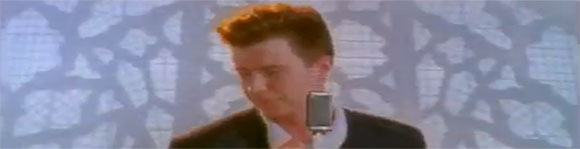
[Zach] created a physical rickroll device. It’s an Arduino and an MP3 shield hooked up to an ultrasonic sensor. When someone walks within six feet of the device, the Arduino starts playing Never Gonna Give You Up. When that person walks away, the song is paused only to start again when something else is detected by the ultrasonic sensor. There’s a hilarious video of [Zach] triggering his physical rickroll device, or you can check it out on the build page.

Hey, you! Write some code!

react

[William] wrote in to tell us about a project called ReactOS. The goal of the project is to create a free and open source operating system that is binary comparable with Windows XP. Yes, this project has been around for a very long time, but with Microsoft dropping support for XP, the ReactOS team could really use a few devs to get a beta out soon. If you know a bunch of low-level Windows stuff but haven’t ever contributed to an open source project, check out the developer’s wiki.

I’m [Johnny Knoxville] and this is electrostatic discharge
ouch

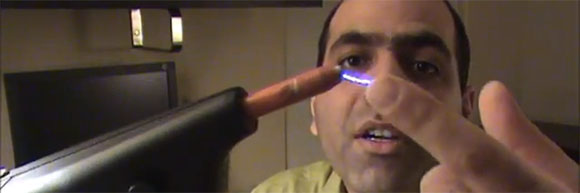
It looks like [Mehdi] is making a few instructional videos for EEs and those tinkering around with electricity. So far he has tutorials for making proper wiring connections, what not to do with ESD, how to take capacitors for granted, and demonstrating how electricity can kill you.

Penitent man shall pass…. Penitent man shall pass…

[youtube=http://www.youtube.com/watch?v=Cj8wXlSXGk0&w=470]

If gift giving were a contest, [Bradley] would win. His sister’s favorite movie is Indiana Jones and the Last Crusade, so when he needed to wrap a gift (a coffee cup, fittingly), he went all out. All the challenges required to obtain the Holy Grail are present in this present including the breath of God (needs more circular saws), the name of God (why was the letter ‘J’ even in the movie?), and the Leap of Faith (sand included).

Coming up for his sister’s birthday, a face-melting hair dryer.

Design A Gingerbread House In CAD, Then Cut Pieces With A Laser

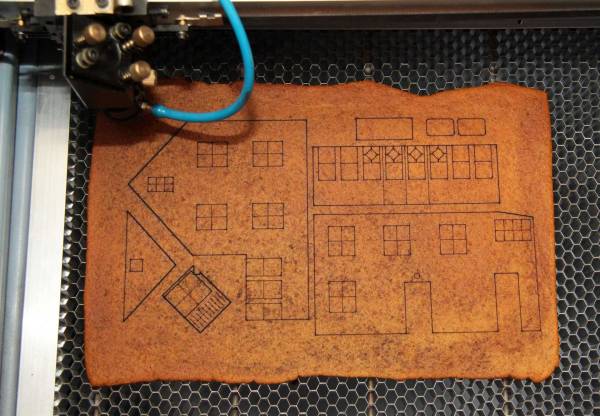
This is one of those ideas that’s so simple we can’t believe we haven’t heard of it before now. [Johan von Konow] is upping his holiday decorating game this year by designing his Gingerbread House in CAD and cutting it out on a laser cutter. If designed well this will easily allow you to increase the complexity of your design by orders of magnitude.

We remember making Gingerbread Houses with mom when we were little. She would bake a sheet of gingerbread, then pull out stencils she had made from file folders to carefully cut the walls and roof of the houses. But these were the homesteading equivalent of candy construction — one room consisting of four walls and two roof pieces. [Johan’s] design uses roofs with multiple pitches, dormers, and an entryway off the front of the main building. Quite impressive!

He mentions a few things to keep in mind. The gingerbread should be an even thickness for best results. You’re also going to want to plan for ventilation during cutting and give up the idea that you might eat the house when the holidays are over. The cutting process creates quite a stink and leaves a horribly burnt taste in the baked goods. Of course you could always cut out templates and use a knife when working with food.

Electronically Augmented Foosball Brings Competition To The Office

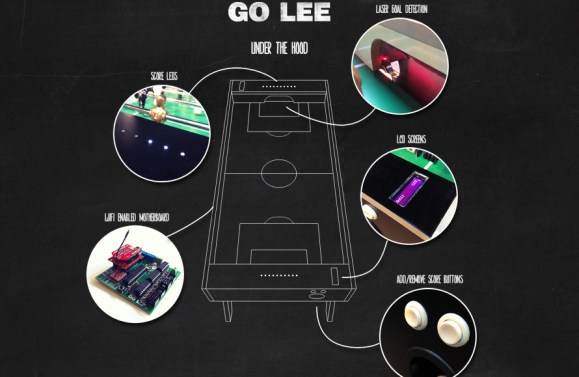
This office has a Foosball league that automatically tallies and posts the standings for each employee. This is thanks to all of the extra electronics that were added to the Foosball table in the break room.

The system is connected to the internet via WiFi. This allows it to store the final results of each game for use on the leader board. Player first identify themselves to the system using the RFID tag embedded in their employee badge (normally used to open doors in the building). From there the game play proceeds much like you’d expect, but the scoring is handled automatically. Each goal has a laser pointed across it which is broken when the ball passes through. But there are a pair of arcade buttons in case of a scoring error.

Standings are listed at the webpage linked above. There’s even functionality for new employees to registers through this page. Don’t miss a glimpse of the build in the clip after the break.

Continue reading “Electronically Augmented Foosball Brings Competition To The Office”

Laser Charged Glowing Display

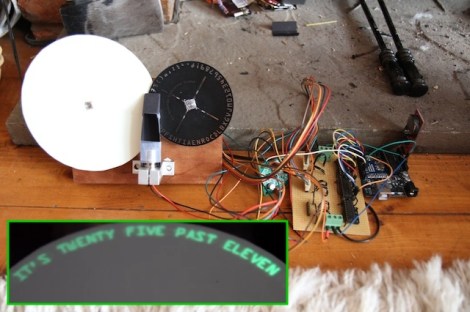
Here’s one of the best takes on a glowing display that we’ve ever seen. Currently [H] is using his creation as a fuzzy clock, but it is certainly capable of displaying just about any messages.

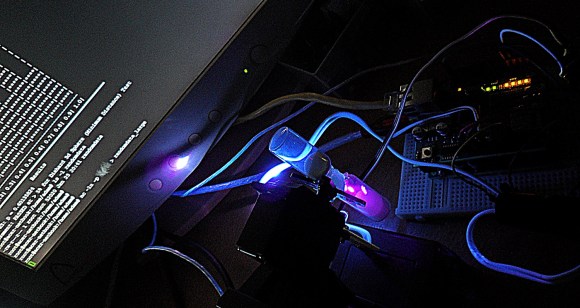
The project uses a wheel of luminous paper as the display surface. This has a glow-in-the-dark quality to it which can be charged up using a bright light source. In this case a UV laser diode was used. This is perhaps the best possible source as its intensity will allow for very quick charging. The innovation here is the use of a second disk as a stencil. Look closely in the image above and you will see that the laser diode is mounted perpendicular to the display surface itself. A mirror reflects — and we believe slightly spreads — the laser dot. It then passes through a cut-out on the black wheel which is shaped as the desired character. As you can see in the video after the break, this results in a crisp and clear glowing letter.

Compare this project to the one that moves the diode itself like a plotter and we think you’ll agree this is a simpler implementation which still looks great!

Continue reading “Laser Charged Glowing Display”

Laser Power System Keeps UAVs Flying Indefinitely

Drone technology is driving the aerospace industry as companies trip over each other trying to develop the next big thing. Here’s a good example of what we’re talking about. Lasers can no be used to keep a UAV in the air indefinitely. The trick is to add an array of photovoltaic cells specifically tuned to an IR laser’s wavelength. A ground system then directs a high-intensity laser beam onto the aircraft’s cell array to transfer energy while in flight.

After the break you can catch a video from a trade show where a Lockheed Martin employee describes the successful testing of such a system. But there’s a lot more information available in the white paper (PDF) which Laser Motive has released. They’re the folks behind the technology who have teamed up with LM to implement the system. The laser unit on the ground can track a UAV visually, but there is also a method of using GPS coordinates to do so in the case of overcast skies.

Continue reading “Laser Power System Keeps UAVs Flying Indefinitely”