
Why Is Textile Work Not Taught To Engineers?

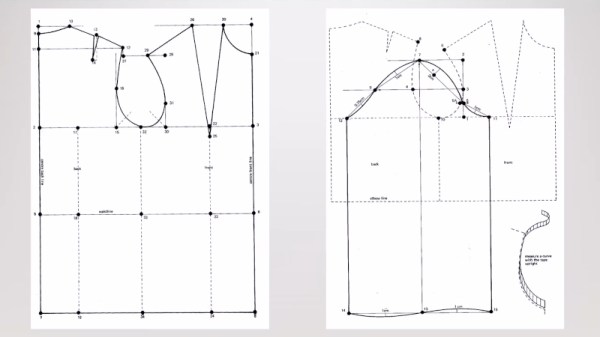
A talk from the recent Electromagnetic Field event in the UK caught our eye, in which [Amy Jeskins] looked at the overlooked engineering skill of pattern cutting. She takes us through the mechanics of creating a pattern for a piece of clothing, and asks why it is not a skill taught to engineers.

She’s a specialist in theatrical costume, and the talk takes us through some examples of her work before looking at the history of tailoring and pattern making. She explores flat cutting and draping a pattern on a form before coming into the present day with CAD packages designed for clothing work. It’s the social aspect of the talk that’s perhaps the most interesting, looking at how it has become a gendered skill and thus not something considered where it should belong, as engineering. We’re reminded of one of the most important additions for a healthy hackerspace, a textile room, as we’ve seen people there bridge this divide from both directions.

If you have never made a piece of clothing then we’d suggest giving this talk a watch, and maybe taking up a sewing machine to give it a try. In the past we’ve taken you through some of the prerequisites for a textile bench. The full talk is below the break.

Continue reading “Why Is Textile Work Not Taught To Engineers?”
Not Just Your Average DIY Spot Welder

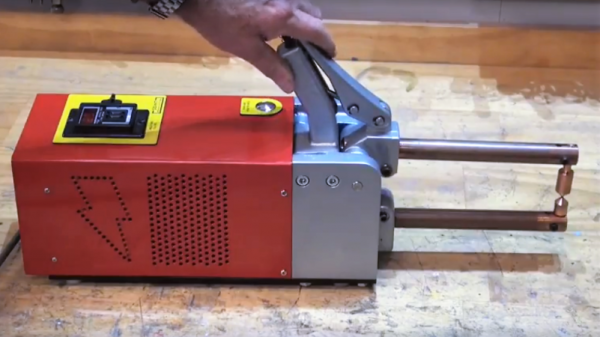
Microwave oven transformer spot welder builds are about as common as Nixie tube clocks around here. But this spot welder is anything but common, and it has some great lessons about manufacturing techniques and how to achieve a next level look.

Far warning that [Mark Presling] has devoted no fewer than five videos to this build. You can find a playlist on his YouTube channel, and every one of them is well worth the time. The videos covering the meat of what went into this thing of beauty are below. The guts are pretty much what you expect from a spot welder — rewound MOT and a pulse timer — but the real treat is the metalwork. All the very robust parts for the jaws of the welder were sand cast in aluminum using 3D-printed patterns, machined to final dimensions, and powder coated. [Mark] gives an excellent primer on creating patterns in CAD, including how to compensate for shrinkage and make allowance for draft. There are tons of tips to glean from these videos, and plenty of inspiration for anyone looking to achieve a professional fit and finish.

In the category of Best Appearing Spot Welder, we’ll give this one the nod. Runners-up from recent years include this plastic case model and this free-standing semi-lethal unit.

Continue reading “Not Just Your Average DIY Spot Welder”









