Why Is Textile Work Not Taught To Engineers?

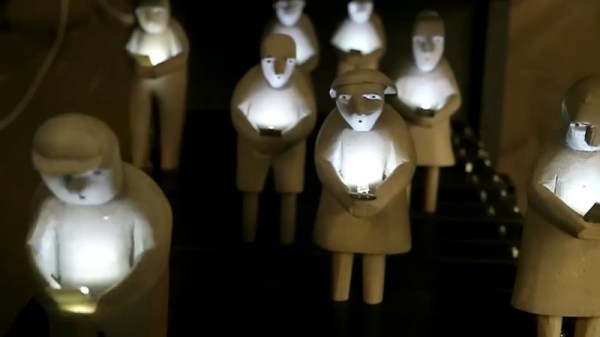
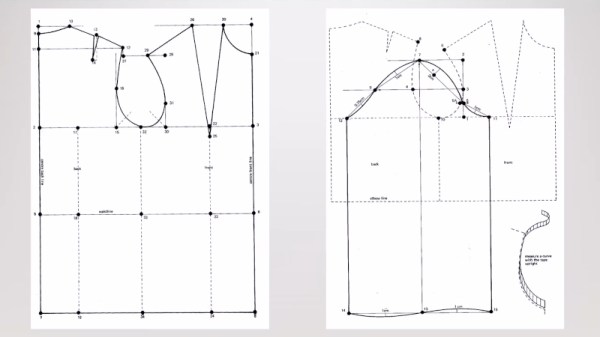
A talk from the recent Electromagnetic Field event in the UK caught our eye, in which [Amy Jeskins] looked at the overlooked engineering skill of pattern cutting. She takes us through the mechanics of creating a pattern for a piece of clothing, and asks why it is not a skill taught to engineers.

She’s a specialist in theatrical costume, and the talk takes us through some examples of her work before looking at the history of tailoring and pattern making. She explores flat cutting and draping a pattern on a form before coming into the present day with CAD packages designed for clothing work. It’s the social aspect of the talk that’s perhaps the most interesting, looking at how it has become a gendered skill and thus not something considered where it should belong, as engineering. We’re reminded of one of the most important additions for a healthy hackerspace, a textile room, as we’ve seen people there bridge this divide from both directions.

If you have never made a piece of clothing then we’d suggest giving this talk a watch, and maybe taking up a sewing machine to give it a try. In the past we’ve taken you through some of the prerequisites for a textile bench. The full talk is below the break.

Continue reading “Why Is Textile Work Not Taught To Engineers?”

The Orphaned Sources At The Hacker Camp: What Happened Next

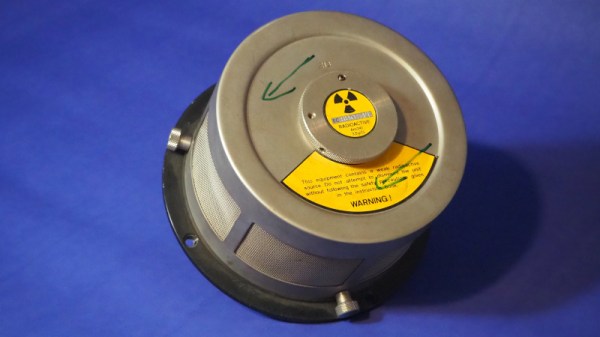
At the 2024 Electromagnetic Field event in the UK, some awkward items turned up at the swap meet: radioactive sources. Fortunately there was [Tryst] at hand, who works in the nuclear industry, so they were safely collected. At this year’s EMF he was back, with a talk about what happened next.

It seems they were an industrial version of the smoke detectors we’ll all be familiar with, containing the same Americium alpha emitters, but in greater quantity. Their path from industry to hacker camp is purposefully shrouded in mystery to avoid future incidents happening because people are scared to come forward, but it seems that but for a bit of post-Brexit regulatory chaos they would normally have been taken back by their Danish manufacturer for disposal.

We’re treated to a fascinating deep dive into radioactive source regulation and just what these sources are. In short, they’re not too dangerous as they are, but what makes them a worry is that they can easily be dismantled and their contents released. Ingestion of alpha particle emitters is a particular worry, so they must be kept safe and accounted for. Which leaves [Tryst] with a set of radioactive sources that sit in a regulatory grey area and can’t easily be disposed of. He ends by asking for suggestions as to how they might be used, of which we favor a true random number generator.

Light-hearted interludes aside, this is a cautionary tale for all of us who delight in digging through technological junk, and we are lucky that our community includes people with the expertise to do something about items like these. The full talk is below the break.

Continue reading “The Orphaned Sources At The Hacker Camp: What Happened Next”

The 2026 EMF Badge Arrives, With An Add-On. As Expected, It’s Familiar

Two years ago the EMF hacker camp in the UK released a new kind of event badge. The Tildagon was designed to be a recurring event badge, useful for the next EMF rather than destined to be e-waste. With the 2026 event coming up there’s a new Tildagon called the Spaceagon, and as you might expect it’s very familiar indeed.

Tildagon owners can update their badge with the Spaceagon front panel (Update — The EMF badge team would like us to inform you that the final badge art will differ from the prototype badge shown), while those without one can buy the new badge. It has a few minor updates from its predecessor, including better buttons, LEDs, and display mounting, and there’s a compass, a joystick, and touch sensitive areas.

The Tildagon introduced its own add-on format, the Hexpansion. This year there’s the first official Hexpansion, a keyboard, using the same rubber moulding we see on quite a few maker projects. We like the Hexpansion idea because it uses an edge connector rather than a set of pins on the device, but at the cost of more expensive badge parts.

If you’re going to EMF you should be able to order yourself a Spaceagon, or an upgrade kit if you already own a Tildagon. Meanwhile we covered the 2024 version back when it arrived, and surprisingly this isn’t the first keyboard add-on for it either.

Illustrated Kristina with an IBM Model M keyboard floating between her hands.

Keebin’ With Kristina: The One With The H.R. Giger Keyboard

I had to bust out Brain Salad Surgery to write this one, folks. It was that, or put on some Ministry or something. Just look at all the industrial-ness dripping from [heinn_dev]’s creation.

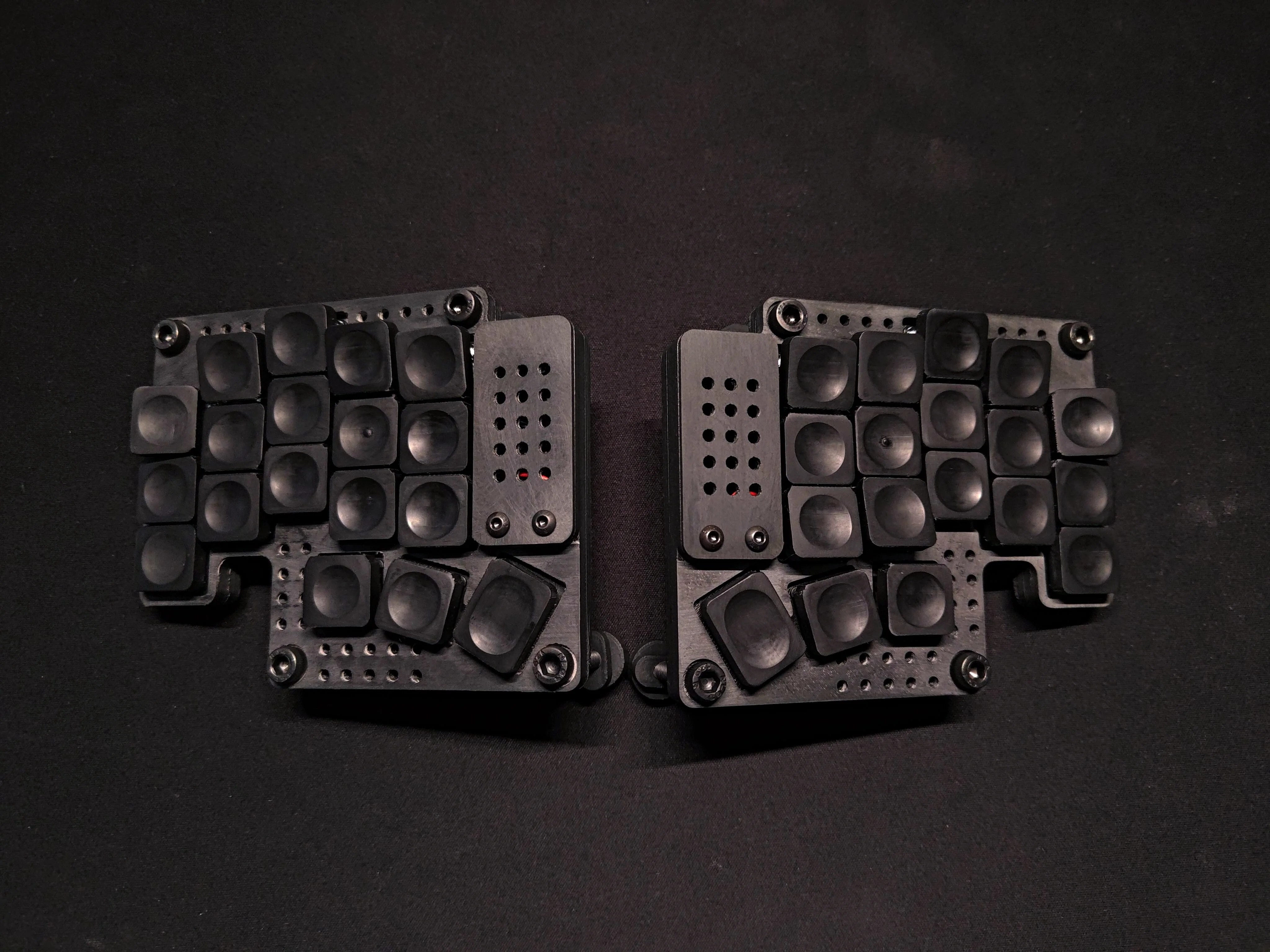
An incredibly industrial-looking split keyboard. Like, almost H.R. Geiger-esque.
Image by [heinn_dev] via reddit
Apparently [heinn_dev] wasn’t completely satisfied with his Chocofi case, and instead of requesting a full refund, just went ahead and made a prettier one. It took a lot of printing and even more sanding, but here we are. And it looks fantastic.

The only downside, if you can call it one, is that adjusting the tenting is a slow operatiJKon. But then again that’s one of those things that you usually set and forget.

Oh, and those keycaps are printed, too. As one commenter said, those homing nipples look painful, but I think it’s part of the charm. I just hope that hand grime doesn’t end up clogging the holes under the palm area. Clean your keyboards, people. Continue reading “Keebin’ With Kristina: The One With The H.R. Giger Keyboard”

A Treasure Trove In An English Field

This is being written in a tent in a field in Herefordshire, one of the English counties that borders Wales. It’s the site of Electromagnetic Field, this year’s large European hacker camp, and outside my tent the sky is lit by a laser light show to the sound of electronic music. I’m home.

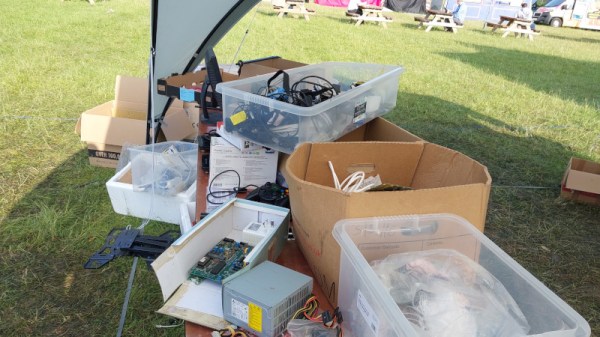
One of the many fun parts of EMF is its swap table. A gazebo to which you can bring your junk, and from which you can take away other people’s junk. It’s an irresistible destination which turns a casual walk into half an hour pawing through the mess in search of treasure, and along the way it provides an interesting insight into technological progress. What is considered junk in 2024?

Something for everyone

As always, the items on offer range from universal treasures of the I-can’t-believe-they-put that-there variety, through this-is-treasure-to-someone-I’m-sure items, to absolute junk. Some things pass around the camp like legends; I wasn’t there when someone dropped off a box of LED panels for example, but I’ve heard the story relayed in hushed tones several times since, and even seen some of the precious haul. A friend snagged a still-current AMD processor and some Noctua server fans as another example, and I’m told that amazingly someone deposited a Playstation 5. But these are the exceptions, in most cases the junk is either very specific to something, or much more mundane. I saw someone snag an audio effects unit that may or may not work, and there are PC expansion cards and outdated memory modules aplenty.

Finally, there is the absolute junk, which some might even call e-waste but I’ll be a little more charitable about. Mains cables, VGA cables, and outdated computer books. Need to learn about some 1990s web technology? We’ve got you covered. Continue reading “A Treasure Trove In An English Field”

This Mobile Hackerspace Can Be Yours

Wandering round the field at EMF Camp, our eye was caught by an unusual sight, at least to European eyes. The type of campervan body which sits on the back of a pickup truck is not particularly common on this side of the Atlantic, but there one was, fitted out as a mobile makerspace. If that wasn’t enough, this one is for sale.

Here at Hackaday we’re neither estate agents or in the want-ads business, so we’re unaccustomed to property promotion. We’re still not immune to the attraction of a portable makerspace to take to events though, and this one provides a very practical basis. It started life as what Brits call a Luton van body, a box van, and inside it’s gained a small kitchen, benches and shelves either side, and up in the space over the cab, a double bed. Sadly the laser cutter and 3D printers aren’t included.

If you live in Southern England and you want to be the envy of everyone at your next hacker camp, an email to richjmaynard at gmail dot com with a sensible offer might secure it. We would be first in the queue if we had the space, because what Wrencher scribe wouldn’t want an office like this!

Hands-On With The Electromagnetic Field 2024 Badge

With every large event in our circles comes a badge, and Electromagnetic Field 2024 is no exception. We’ve told you about the Tildagon when it was announced, it’s a hexagonal badge designed with provision for user-created “Hexpansions”, which can be picked up at future camps. The idea of this badge is to make something with a lifetime beyond the one camp, and we’re interested to have received our badge. It’s unusual for a hacker camp badge in that it costs a little extra rather than just coming with the ticket. Continue reading “Hands-On With The Electromagnetic Field 2024 Badge”