Building An Isolation Booth For Your Home Recording Studio

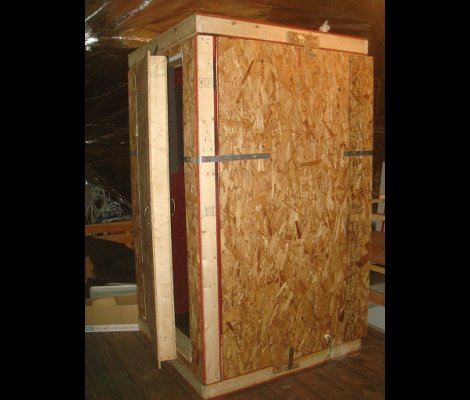
[Brattonwvu] wanted to lay down some tracks with as high an audio quality as possible. To help get rid of the noise pollution of the everyday world he built this isolation booth in his attic.

The project started off with a trip to the home store for some 2×4 stock and OSB to use as sheathing. The framing is as you would expect, but to help deaden the sound he went with a surprising material. He’s filled the cavities between each 2×4 with stuffed animals and old clothes. The same is done in the walls and the inside surfaces are all covered in fabric to prevent echoing. The door has a lip and we can just make out what looks like weather stripping to provide a seal. There is just one opening in the box, where a PVC pipe allows electrical and microphone cables to pass through. [Brattonwvu] reports that you can hear your heartbeat in your ears when standing inside the sealed booth.
Build A Tetrahedral Ambisonic Microphone

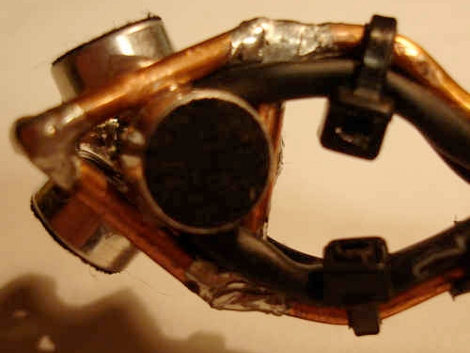
[Dan Hemingson’s] been refining a design for building a tetrahedral ambisonic recording system. This is a set of four microphones used to record audio that can later be mixed down for a three-dimensional listening experience. His goal is an easy and inexpensive build while maintaining the highest fidelity standards possible. Lucky for us he’s made a set of extremely detailed build instructions you can use to make your own. In addition to the mounting bracket seen above he has also developed a pre-amp module that connects to the four mics; it’s part of the build instructions with schematic and board layout files available as well.

[Thanks Isaac]

World’s Oldest Computer Music Unveiled


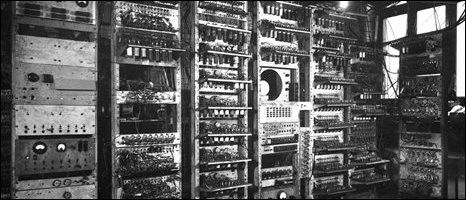
Fans of music made with obsolete technology are in for a treat: recordings of a Ferranti Mark 1 computer playing Baa Baa Black Sheep and In the Mood were recently released, and they are thought to be the oldest recordings of computer generated music in existence.

The Ferranti Mark 1 is a commercial version of Manchester University’s SSEM computer (aka Baby), which preceded several more well known computers like UNIVAC and EDVAC. It was one of the first computers that didn’t require a great deal of hardware rewiring to perform different tasks, making it ideal for this sort of purpose. It is not known whether the program was written to play these songs only or for more diverse composition and playback, but the author, [Chris Strachey] was known to be a friend of the legendary [Alan Turing]. The recording was released as part of the Manchester SSEM’s 60th anniversary celebration.

Gotthard: Intelligent Furniture


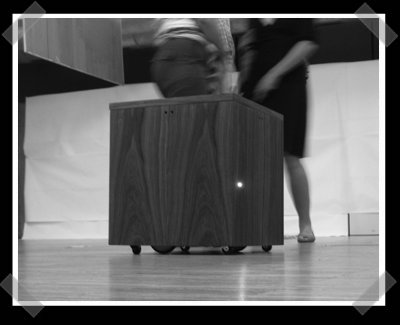
[Gloria] sent in Gottard. (English translation). This little box is designed to act as a stool – that happens to follow people around, record their conversations and play them back to other visitors as a form of interaction. A set of rotating casters provide seating support, while a pair of gutted cordless drills move things around. An Aurdino handles the robotic functions., and an iBook handles recording and playback. Ultrasonic sensors guide the movement, and a set of LEDs roughly show how full the recording drive is.