Valve Releases Hardware And CAD Reference For New VR Headset

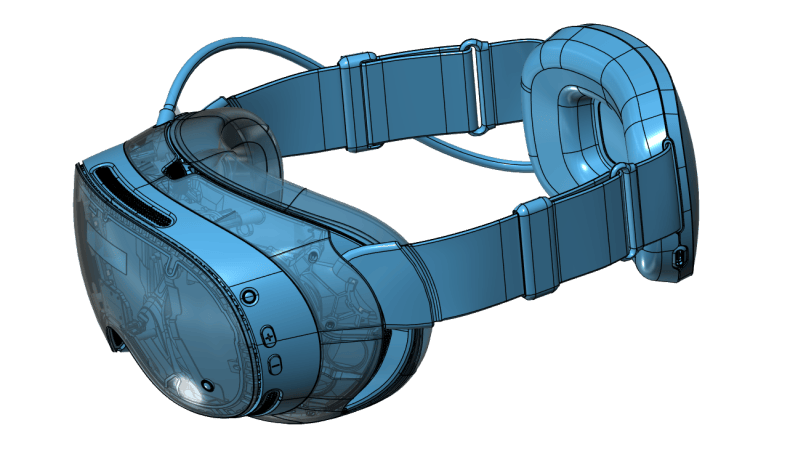
Valve recently began shipping its long-awaited VR headset, the Steam Frame. Now, there is a hardware reference repository that includes everything a budding modder might need, and then some.

No need to 3D scan or break out the calipers if one wants to design their own add-ons.

Want to design and 3D print some add-ons, or a carrying case, or some other doodad? There’s no need to break out the calipers or 3D scan the hardware. The repository contains STEP format models of the VR core module, head strap, and controllers, so it’s as easy as possible to design things that’ll fit. The location of the IR tracking LEDs embedded in the controllers is also documented, so one can ensure their design doesn’t occlude them.

That’s not all. The Frame has a user-accessible hardware expansion port at its front. This port exposes two interfaces: high-speed MIPI camera and PCI Express. This expansion port is documented in the repository, and even has a simple reference design built in both KiCad and Altium.

We’re glad to see Valve maintain their hacker-friendly hardware design with the Steam Frame. Demand for The Frame outstrips supply so far, so if you’re on the waitlist, you might want to browse the repository and get an early start on whatever customizations you have in mind while you wait for your confirmation. And when you get something working, drop us a note on the tips line!
Arduino Polygraph Shows How It’s Done

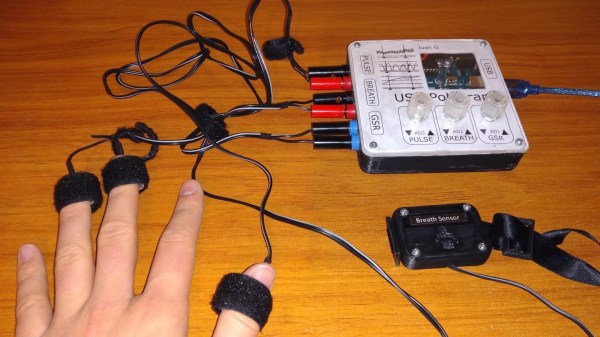
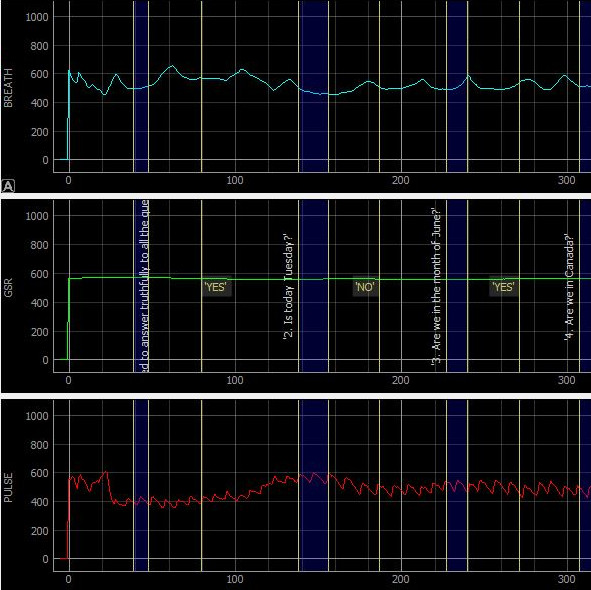
Sometimes, a project comes along that makes a good reference design for anyone doing similar work. In this particular case, it’s a DIY USB polygraph-like machine by [Juangg] using an Arduino and sensors on the hardware side, and a Python front end for data visualization. It’s even complete with 3D printed enclosure and sensor elements.

[Juangg] designed it to use three sensors: a pulse sensor, a breath sensor, and one to measure Galvanic Skin Response (GSR). The pulse sensor uses a piezo element pressed against a fingertip to detect changes in pressure resulting from blood flow. It can be picky about placement, but finding sweet spot can yield remarkably good readings. The breath sensor works on a similar principle but uses a 3D printed fixture to hold the sensor between a strap and the subject’s chest, so that breathing in and out can be detected. The GSR sensor is a voltage divider used to measure small changes in skin conductivity. How well does it all work? That depends on what one is looking to get out of it, but the documentation and design files are available from the project page and the GitHub repository if anyone wants a reference for similar work.

The polygraph may have a mixed reputation, but it makes a good project that demonstrates just how messy biometrics can be from an engineering perspective. And in case you missed it, here’s a reminder that Wonder Woman and the polygraph have much more in common than you might realize.

Crowdsourcing Reference Designs From Github

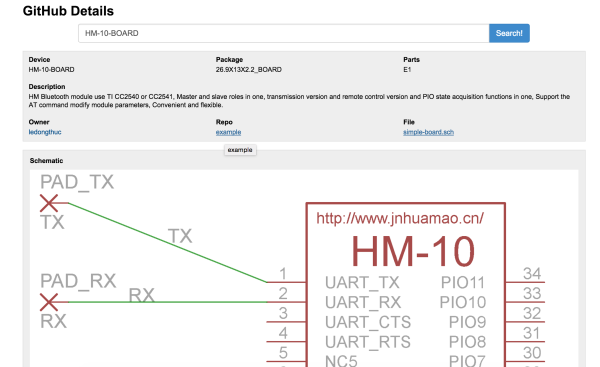
A ton of open source hardware projects make their way onto Github, and Eagle is one of the most popular tools for these designs. [TomKeddie] came up with the idea of searching Github for Eagle files containing specific parts at Hacker Camp Shenzhen, and a method of scraping useful ones.

The folks over at Dangerous Prototypes used this to build the Github Hardware Search tool. Simply enter a part number, like “ATmega328P”, and you’ll receive a list of the designs using that part. You can then study the design and use it as a reference for your own project. You can also snag library files for the parts.

Of course, there are some limitations to this. The most obvious one is the lack of quality control. There’s no guarantee that the design you find works, or has even been built. Also, it only works for Eagle 6+ files, since prior versions were not XML. You can read more about the design of the tool over on Dangerous Prototypes.