
If you were a child of the late 1980s or early 1990s, the chances are you’ll be in either the Super Nintendo or the Sega Genesis/Mega Drive camp. Other 16-bit games consoles existed, but these were the ones that mattered! The extra power of the Nintendo’s souped-up 16-bit 6502 derivative or the Sega’s 68000 delivered a gaming experience that, while it might not have been quite what you’d have found in arcades of the day, was at least close enough that you could pretend it was.
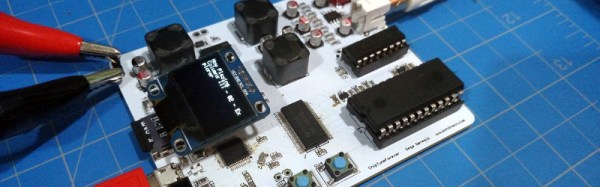
The distinctive sound of consoles from that era has gained a significant following in the chiptunes community, with an active scene composing fresh pieces, and creating projects working with them. One such project is [jarek319]’s Sega Genesis native hardware chiptune synthesiser, in which music stored as VGM files on a MicroSD card are parsed by an ATSAMD21G18 processor and sent to a YM2612 and an SN76489 as you’d have found in the original console. The audio output matches the original circuit to replicate the classic sound as closely as possible, and there is even some talk about adding MIDI functionality for this hardware.
The software is provided, though he admits there is still a little way to go on some functions. The MIDI support is not yet present, though he’s prepared to work on it if there was enough interest. You really should hare this in action, there is a video which we’ve placed below the break. Continue reading “Sega Genesis Chiptunes Player Uses Original Chips”
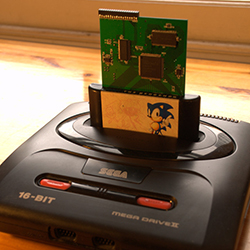 While most homebrew video game development has focused on the original NES, Atari consoles, and has produced a few SNES games, there is another console out there that hasn’t seen much love. Sega’s classic console, the Genesis or Mega Drive, depending on where you’re from, was an extremely capable machine with amazing capabilities for its time. [Chris] figured the Mega Drive would make a good target for an all-in-one development kit, and with a lot of work











