Launchpad serial Morse code transmitter

posted Feb 11th 2011 5:16am by
filed under: Microcontrollers, radio hacks

LaunchPad-Serial-Morse-Transmitter

LaunchPad dev boards from Texas Instruments are cheap and easy to program, making them a great Arduino alternative if you can do without some of the bells and whistles. [ech0s] put his to good use by constructing a Morse code transmitter with dual operating modes. The transmitter can not only encode and transmit messages entered in a terminal client, it also allows the user to send messages by manually operating the key switch. Inspired by the high altitude balloon transmitter we featured last summer, this project uses similar components for signal amplification and transmission. Text can be entered in a Putty terminal window, which then is encoded into Morse by the MCU before transmission. At the moment, the speed of the radio transmission is about 15 WPM, which is reasonably quick. Even though his system performs quite well [ech0s] has some improvements planned, including having a proper PCB built as well as some software tweaks to improve buffering and bandwidth. Be sure to check out his video of the transmitter in action after the jump.

Read the rest of this entry »

Building a window mounted antenna for your car

posted Apr 12th 2010 3:00pm by
filed under: wireless hacks

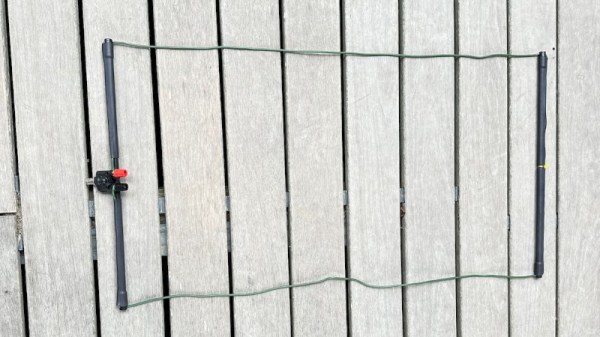
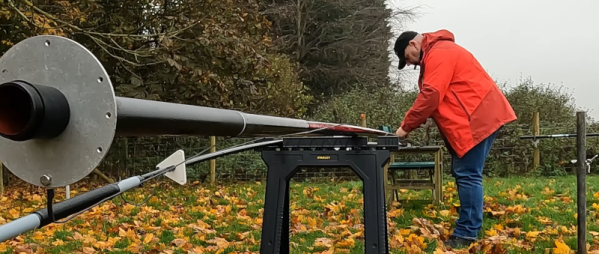
If you’re into ham radio and want it when you’re on the go give this antenna mount a try. [Cirictech] started with a design from the November 2009 issue of QST and added his own fabrication touches. Everything except the antenna itself is available from the hardware store for just a few bucks, and you should be able to complete this project in a flash. This makes us wonder what the antenna for the 47 GHz band radio setup would look like.


WSPRing across the Atlantic

posted May 7th 2009 3:29pm by
filed under: wireless hacks

wspr

Host of the Soldersmoke podcast, [Bill Meara], contributed this guest post.

WSPR is a new communications protocol written by radio amateur and Nobel Prize winner [Joe Taylor]. Like the very slow QRSS system described in a previous post, WSPR (Weak Signal Propagation Reporter) trades speed for bandwidth and allows for the reception of signals that are far below the level of radio noise. WSPR takes “low and slow” communications several important steps ahead, featuring strong error correction, high reliability, and (and this is really fun part) the automatic uploading (via the net) of reception reports — [Taylor]‘s WSPR web page constantly gathers reports and produces near real-time Google maps of showing who is hearing who. The WSPR mode is very hack-able: [Bill Meara] is running a 20 milliwatt homebrew transmitter from Rome, Italy that features an audio amplifier from a defunct computer speaker pictured below. This contraption recently crossed the Atlantic and was picked up by the Princeton, New Jersey receiving station of WSPR’s esteemed creator, [Joe Taylor]. Read the rest of this entry »

Morse code USB slide keyboard

posted Nov 18th 2007 10:29pm by
filed under: peripherals hacks


Today, I stumbled across this morse code keyboard. I couldn’t find any sign on the promised schematics or code, but I like the design. It’s not that hard to train yourself in Morse code, and it’s nearly impossible to send an erroneous code thanks to the unique slide=dash tap=dot physical interface.

DIY condensor microphone

posted Aug 9th 2007 11:21pm by
filed under: misc hacks


[wiesi] sent in his latest condenser mic. Rather than use pre-built components, he built from scratch (except the discrete components). He’s on his second iteration, and things look pretty good. This tends to be the sort of project that amateur radio guys go for… oh wait, I am one.


Hack a Day serves up fresh hacks each day, every day from around the web as well as hacking related news.

Send us your hacks


Hacks

Resources