
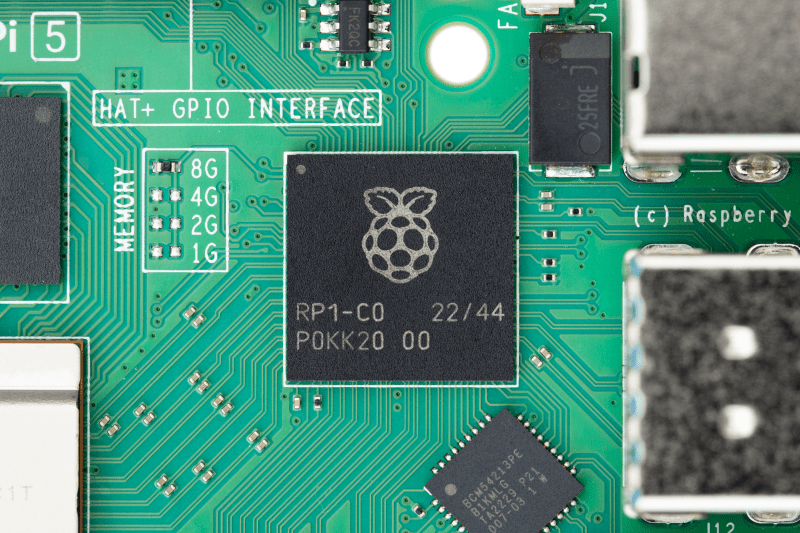
As announced by [André] on Bluesky, next month the much loved Rpilocator.com website will cease displaying the stock status and pricing of Raspberry Pi computers from various online retailers.
One of the main reasons is that the indexing bot used by the site has been blocked by most shopping sites. It’s not clear whether this blocking is on purpose or just another consequence of website owners protecting themselves from the onslaught of obnoxious ‘AI’ scraping bots. But in any event, the effort of finding workarounds that may only work for a few days or weeks was becoming too much.
According to [André] there are still about 11,000 users of the site each month, which even when accounting for the human-bot ratio is still a sizable number of visitors who’ll now have to get their fix somewhere else. He also indicates that he receives numerous emails from presumably real people about the site to point out small issues they have noticed.
Although the site may still be back in the future, it’s also important to recognize how much the single-board computer landscape and raison d’être for this tracking site have shifted since the 2020s Chip Crisis days. Currently it’s less about finding where these boards are in stock, and more about taking the hits to one’s wallet as memory prices continue to spiral out of control. Making what were once fun, cheap little hobby boards into luxury items that cut into your rent-food-and-gas budget.












I feel like irrelevant is a bad term, but as one of their biggest supporters, their SBCs have become largely irrelevant to me. Nearly anything they do, there’s a better way to do it now. A lot of this comes from them driving up the price trying to do more.
a $35 sbc that keeps getting a little better every few years, cool. Obviously that’s not the world we live in. Proxmox is a better choice for me for all the server-y things. Mini pcs are the better (and often cheaper) choice for the standalone things. By the time you factor in the PSU and Case that comes with the mini pc and real HDMI ports, they’re almost always a better choice.
Yep. I was a huge Pi fan, had every single version from 1-4, including all the 0’s and A models. The Pi 4 was a tough pill to swallow, and I couldn’t stomach a Pi 5 especially since they got rid of hw decoding.
Pi prioritizing business over hobbyists during COVID was also an irritation.
Thats not to say I don’t like the results though. I did buy a Uconsole years back which was $230 including the CM4. Reasonable for the kit/CM4/ and the formfactor. Likewise I did also back the Cardputer Zero using the CM0 more recently. Outside of specialized kits making use of the Pi’s I don’t see myself buying a plain one anymore
What sort of specialized kits do you think is missing beside cyberdecks, laptops, cardputer zero small form factory device?
100% this. I repurposed a small Dell Mini PC for all of my lab stuff. Like you I’m running Proxmox and it works great.
Worth pointing out the Pi 5 isn’t the Pi folks only offering you need less or just want cheaper the Zero’s and older models do still exist, are still perfectly functional, and are rather cheaper (though not necessarily great value given the huge performance uplift of the later models). The Pi 1 is supposed to remain in production for another 4 odd years!
Also when you consider inflation devaluing the currency $35 dollars of way back then isn’t $35 anymore – seems like it is more in the ballpark of $50, which makes the stated asking price for the base model Pi 5 actually still easily a ‘$35’ computer in 2012 terms (other than the fact most of us have got much poorer as wealth keeps concentrating at the top, especially in the USA from the numbers I’ve been reading).
Also even way back then you could always have had a thin client PC that was more potent for similar if not less money nothing has really changed there, but the credit card sized, low power, gpio computer that is readily available (mostly) for many years they are not. No way to know if you will be able to get the same/compatible model in even 6 months time… So for any project you may want to replicate a Pi is almost certainly your best choice, being both supported, available long term etc
Also the Pico seems like it will be magic if I ever get around to trying to use one,, and is very affordable for its rather unique nature.
“other than the fact most of us have got much poorer as wealth keeps concentrating at the top, especially in the USA”
It’s not a zero sum game. The rich get richer and the poor(er) mostly get richer too, in absolute terms. When the pie gets bigger, all the slices do as well.
Assuming the pieces stay the same size relative to each other, which they most certainly do not. Number-go-up sure looks nice on paper, if nice paper is all you’re looking at.
You’re assuming the pie got bigger. It’s universally understood that purchasing power (income related to costs) and disposable income have decreased over the past decade.
yea, but then you don’t sound like an edgy teenager who thinks being liberal is “cool.”
Eh, I don’t know of any that do camera-support and hardware video encoding/decoding better. Sure, there are plenty of options that can do hardware encoding, but they typically rely on buggy closed-source blobs and outdated kernels, so that’s not good, and any camera support they have is often even worse.
Every Raspberry Pi article’s comments section eventually attracts someone who proudly announces that mini PCs are better.
It’s a bit like turning up in a boating site’s comments section and explaining that cars are faster.
Yes, if your entire use case is “run Docker containers in a cupboard”, then a mini PC is often the better choice. Nobody serious is disputing that. But that comparison only works if you reduce the Pi to a cheap server, which was never the whole point.
Try strapping a mini PC to a drone. Or a robot. Or a telescope mount. Or a solar-powered weather station. Or anything involving GPIO, cameras, sensors, motor control, battery operation, or physical computing.
A Raspberry Pi isn’t competing with a mini PC any more than an Arduino is competing with a gaming PC. One is a general-purpose computer you build into things; the other is something you bolt onto a desk and plug peripherals into.
And on pricing: it also isn’t just a simple case of “better hardware = higher price”. The Pi has moved with the wider economics of silicon — memory, packaging, and supply chain costs all fluctuate — and it’s shifted upmarket as capability increased. That changes the value proposition, not the category.
By all means buy the mini PC if you want a cheap server. But declaring the Raspberry Pi irrelevant because mini PCs exist is like declaring motorcycles obsolete because vans carry more cargo.
😏
I agree with the sentiment completely, but the Pico line has supplanted many of the gpio/microcontroller use cases that the pi once covered, and was probably overkill for even in its heyday. The pi is now stuck in this weird middle ground between be Pico and a Mini PC, where it’s not quite suitable for either one.
I’d argue that middle ground is still a great place to be, especially with the computing grunt the Pi 4 and 5 models have being rather decent – being able to process video, sound, sensor data onboard and directly drive whatever response the project is supposed to have, which may be compression to transmit over some networking etc all from the one SOC credit card sized computer is superb for many needs.
The Pico is it seems a ‘real time’ magic box if you have the skills to make use of it, and a decent micro otherwise. However you’ll need either networking infrastructure or a ‘real’ computer buddy to do the heavy lifting compute wise in a great many projects – which may well be a small SBC or a full on workstation – flexible but only really worth it over the all in one Pi in some situations. Then considering the other way around your real workstation PC is doubtless able to do huge amounts more heavy lifting number crunching wise, but can’t drive any real world reaction to that output without the Pico/Pi type smaller edge ‘compute’ to follow instructions – again selecting the micro or the baby computer based on edge needs. As the Pico isn’t going to really drive say the 4K worth of pixels HUD projector’s display, but a Pi can.
You’d argue the right way to skin a seal with a eskimo.
I would say the pi is pretty much where it needs to be, although better performance or extra features are always wanted. I suppose it is SBCs in general are still there to fill the gap which still exists between microcontrollers and mini PCs. That gap is mainly in portability and interfacing, it is much easier to power a pi or other SBC from a robot than it is a mini PC, it takes up less space and can talk directly to other components without needing usb adapters.
If you want more intelligent control and processing than an MCU can handle then you are either using the MCU to send data or video to a server and then receive commands or you are sticking in an SBC to handle it on board.
Yes you can do that. Mini PCs are indeed mini!
But I’ll usually reach for an ESP32 or RP2040/2350 for almost all of those things now. They did not exist back in 2011 when the Raspberry Pi was released. They also boot faster and use less power than a Pi, and have more IO. If I need more compute, I can offload it to my main server. If I need more compute than that, it’s not too often that I have a task that only needs a Pi and not something more powerful.
Yeah, N100 minipcs have descended from above to crowd out the pi, and ESP32s have ascended from below to crowd out the pi.
The “regular” Pis are in a rapidly disappearing middle ground between the two.
The Pi organization was smart to get into the RP2xxx arena where they have a very competitive product – basically a better solution for 90% of the “legacy Pi” use cases that aren’t better served by a minipc.
THIS is correct. I still use zeros all the time for video my cga->hdmi project and things like that. For $10, they’re brilliant. It’s the full fat 4/5 that tried to cram more horsepower for more cost that got squeezed out. Even the drone example…guessing they’re using a zero.
Why would you put a Pi on a drone? They need a ton of battery and a microcontroller is more suited.
Also this isn’t the Pi article, this is HaD, so of course hobbysts will discuss alternatives for what most people use Pi’s for
Your micro controller can’t handle the video processing or navigation/mapping calculations perhaps? They are no micro in power consumption, but they actually have decent computing horsepower for the power consumed and tiny weight they add.
Lots of reasons you might wish to use a SBC over, or more likely co-habiting with a micro on a drone – the most basic stuff to make the drone fly is a ‘real time’ task that would be better handled by a dedicated microprocessor so higher level tasks never mess with the PID or the PID doesn’t prevent the higher complexity tasks from ever finishing.
I’m pretty happy that less people are abusing Pi’s by trying to use them as servers, freeing up availability for projects that actually benefit from an embedded Linux board with really good software support.
I appreciate that I can make an system image generation pipeline that works across several generations of a commodity board. You can’t really get that from any of RPi’s competitors in the SBC space.
Indeed, while I admit I did use one as a NAS/server for years that was only really because it was there in my parts bin while a handy similarly low power alternative was not. Still occasionally a time a Pi probably makes sense as a server, as the power draw to performance across real world use (so lots of idle time no doubt) and the small size to have really separate nodes rather than relying on virtualisation is good but on the whole it was never what they are best for.
The Pi shop usually has stock of everything (and sometimes on special offer too).
Every Raspberry Pi article’s comments section eventually attracts someone who proudly announces that mini PCs are better.
It’s a bit like turning up in a boating site’s comments section and explaining that cars are faster.
Yes, if your entire use case is “run Docker containers in a cupboard”, then a mini PC is often the better choice. Nobody serious is disputing that. But that comparison only works if you reduce the Pi to a cheap server, which was never the whole point.
Try strapping a mini PC to a drone. Or a robot. Or a telescope mount. Or a solar-powered weather station. Or anything involving GPIO, cameras, sensors, motor control, battery operation, or physical computing.
A Raspberry Pi isn’t competing with a mini PC any more than an Arduino is competing with a gaming PC. One is a general-purpose computer you build into things; the other is something you bolt onto a desk and plug peripherals into.
And on pricing: it also isn’t just a simple case of “better hardware = higher price”. The Pi has moved with the wider economics of silicon — memory, packaging, and supply chain costs all fluctuate — and it’s shifted upmarket as capability increased. That changes the value proposition, not the category.
By all means buy the mini PC if you want a cheap server. But declaring the Raspberry Pi irrelevant because mini PCs exist is like declaring motorcycles obsolete because vans carry more cargo.
I think the DIY market is moving on.
If your requirement is purely compute then better and cheaper ways now exist.
If your into linking compute to hardware the PI is still probably the best bet due to the amount of support it has.
I wouldn’t as an example setup a pihole on a pi but I might use one with a shield for CAN.
This is also the curse as it’s become pretty standard in industrial applications so hobby are competing with companies where a few more $ means nothing when the saving over more traditional methods is huge.
Hardware costs have gone up and as far as I’m aware they are still being made in the UK but Sony(?) so competing on a purely manufacturing basis with the china clones is almost impossible.
I wish them luck and hope they can continue to find a way through these crazy times.
Sad to see the pricing an AI Hype kills the raspi slowly :(
André here.
While some sellers were onboard with rpilocator and provided me with a private feed to check stock, the vast majority of sellers either don’t have the technical knowledge to do something like that or don’t care.
Some of the sellers have blocked rpilocator’s bot on purpose and some by mistake when they implemented other security measures on their website.
I’d love to keep this going but it has become too much of a hassle to rely on scrapping to keep the listings up to date.
Thank you so much for keeping the site up so long; it was an invaluable tool for much of that time, and I’m hopeful it has created some good memories and connections for you to take forward!
Oh do we really need an agreement +1 button sometimes – nothing else useful to say but I can agree with Jeff.
Thank you so much for the work you’ve put into the project! In the past it’s helped me find the exact Pi my project required so much better! ♥️
Thanks for the work, I appreciated it
I was really irked back in the chip shortages trying to fight restocking emails and what I assume was scalpers buying up all of the rpi availability, and then seeing all of the homelab folks and youtube folks preaching the virtues of arm computing and leading people to go and buy 2/4/10 of them to run their applications.
I hope that the environment has shifted enough that there will be an easier time for people like me who really just want a nice way to connect GPIO to the network…
…and all of the software and hosting people go and realize that they should be looking at mini pcs and thin clients instead; they draw mere watts, come with cases and power supplies and better ‘pc-focused’ expandability, for far less than the weird niche rpi solutions.
Or into fully software solutions, running containers or VMs on the same machine. The Pi and its brethren (through no real fault of its own) engendered a model where people were buying and dedicating a Pi-like platform for each new project they started, even if the project was something as dumb as “serve my MP3 collection to the local net” that absolutely does not need dedicated hardware.
This has long been one of my biggest complaints about the DIY community in a PRPI world (Post-rpi) is absolutely EVERY SINGLE THING needs a new raspberry pi… I found pihole and thought that would be useful, but if it dies for whatever reason, I won’t have internet access, so figured that’d be better lived on a more resilient piece of hardware like the router. Home assistant, every other single dockerized based homelab project…. buy a new pi, buy a new pi, buy a new pi, buy a new pi…….
I am of the same opinion. Software can live anywhere, so I want it on a commodity solution I could replace in an hour with something sitting in my closet.
The off-lease business PCs or x86 thin clients can still be the most cost effective for software.
At least it does seem like there is a bit more awareness now and virtualization solutions are becoming more and more commonplace, and I have been happy with ESP32 solutions with ethernet to handle bridging things like LoRa and Zwave and bluetooth into my network for projects.
Back during the shortage I really wanted to get a few low-end CM4 boards to start working with IEEE1588 (PTP) once the driver stack issues were resolved, but it was a months long fight to just get the one, and I moved on to other solutions at the expense of my sanity, though I keep looking back to see how it is developing.
“I hope that the environment has shifted enough that there will be an easier time for people like me who really just want a nice way to connect GPIO to the network…” – ESP32 is eating the “legacy” Pis (not RP2xxx) for lunch in this market segment.
Even just GPIO to the network seems to lose out to the bevy of wireless (and sometimes wired) MCUs that are available.
Plus you have the issue of Pis, IIRC, still not having a proper way to put them in a low power sleep. So they just burn power that not only an MCU would barely support but the MCU likely can actually sleep.
Well I guess 4 people are disappointed this service is going down lol. As others have stated many times above, the Pi lost relevance. The line between SBC and uC grows thinner all the time ;)
I’ve been an enthusiast Pi user when the 1,2 and 3 and 4 came out, but the whole Zero thing when everyone and their dog advertised it at $/€ 5 but almost nobody actually sold it at that price encouraged me to look elsewhere, and now I use Orange/Nano/Olimex/whatever boards for everything, except small microcontrollers where I found the RPi Pico to be their only truly interesting product today.
I don’t quite understand the long running debate of RPI vs Mini computer that persists. Yes there was a time when a Pi could nicely serve as a low power draw server. But to me unique Pi value proposition has always been GPIO pins. For some reason that rarely factors into the debate.