
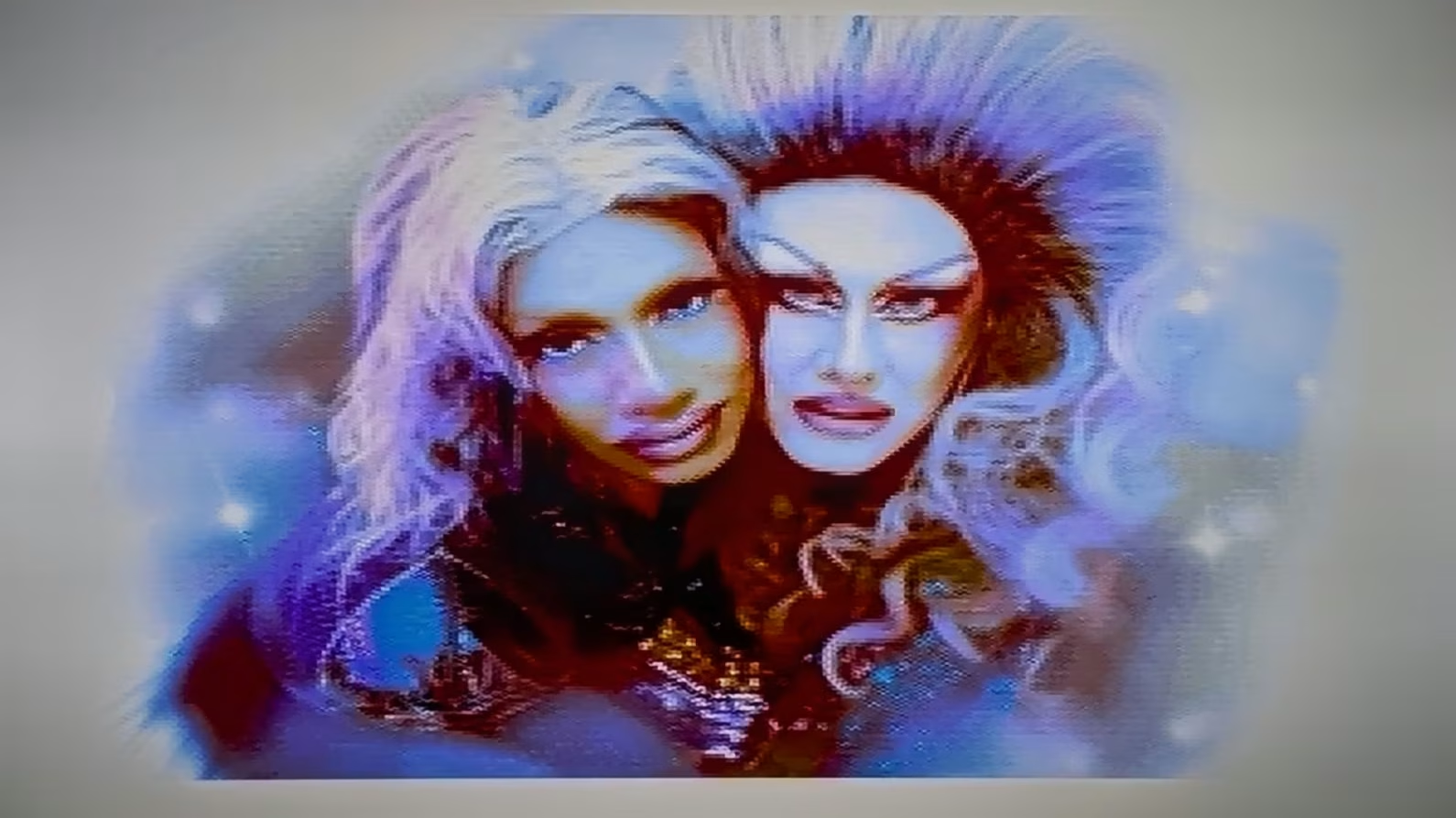
Audio CDs were the ubiquitous audio format of the 1990s. Lesser known were the extensions to the format that packaged all kinds of interesting additional data into a musical release. Now, a new record from [Aizysse Baga] has brought back some of the most quirky and obscure CD features that time and industry long forgot.
[Aizysse Baga] worked with [Adelaide] on the Divacore record, which was to be released on a mini-CD. The original plan was to include additional CD+G data, featuring artwork to go with the music. CD+G, or CD+Graphics, was often used to display synchronized lyrics for karaoke releases, and stored data in formerly-unused subcodes next to the track start, track number, and running time data. This format allowed storing a slideshow of images with a resolution of 288 x 192 with a 16 color palette.

The duo got handy with art and some smart dithering to get great 16-bit artwork packed in to the audio CD release, with the aid of a custom Python encoder. CD-TEXT metadata was thrown in for good measure. Then, the existence of the more advanced CD+EG became apparent. This was a 256-color extension to the CD+G format that was backwards compatible to boot. It was a format that was barely ever implemented on any commercial releases, and very little hardware could even display it. Naturally, Divacore had to have it. Much work was done to understand the Red Book documentation on the standard and figure out how to implement even higher quality artwork for the record.
After so much work to understand and implement the CD+G and CD+EG data, the question was whether it would survive the CD reproduction process for the final release. Thankfully, the final discs came out perfectly, and the full 256-color CD+EG artwork can be seen in all its glory if you happen to play Divacore on a Sega Saturn or a super-obscure Victor VS-G2 or VS-G3. Throw it in a less-sophisticated karaoke machine or something like an Amiga CD32, and you’ll still get to see the 16-color versions for your trouble.
We love to see ancient formats brought back to life, particularly those that never got their time in the sun. If you’re working hard to resurrect something the mainstream media world has forgotten, let us know on the tipsline.











There might be a typo: “great 16-bit artwork”, isnt it supposed ot be “16-colors”?
Impressive! Now how I’d buy this album? I’d like to see if my Pioneer Laseractive would decode the CD+EG pictures.
I think there’s a link somewhere on the OG page. DO Laseractive decodes CD+EG though?
Click the link in the story!
https://adelaide.casa/divacore/
chose “buy it now”. $25 CAD including international shipping.
Thanks to both of you, either I was blind yesterday and I skipped the link to straight up read the wonderful nerdy details on this tour-de-force or the link wasn’t there. Either way I ordered a copy!
The little monochrome-CRT karaoke machine I got from Goodwill to turn into a Joustmania box is going to LOVE this.
I’m quite impressed by how LITTLE difference I can see between those 16 color and 256 color images. Nice work!
If I remember correctly, Musicmatch Jukebox could read the CD+G, maybe even the CD+EG. It was my go to CD ripper for a while because it was very simple to use and could handle all the nice extras that went into later revisions of the MP3 format.
From those small preview images, you can’t.
Right click the image and open the image in a new tab. Then you can see the dithering artifacts on the face on the 16-color version and much less on the 256 color version.
Neither on a built-in display of that time. Maybe that’s why CD+EG is so obscure.