Hackaday Europe 2026: Is Your Blood Pressure Monitor Lying To You?

Blood pressure is one of the so-called “vital signs” that medical practitioners use to determine the basic state of a patient in any given moment. It’s exactly what it sounds like—a measurement of the pressure of the blood flowing through the body, with some complications to account for the pulsatile nature of human blood flow.

You might think measuring blood pressure is a solved concern, and it mostly is. With that said, some blood pressure monitors out there aren’t quite doing their job properly, and [Milos Rasic] came to Hackaday Europe 2026 to spell out the problem.

Continue reading “Hackaday Europe 2026: Is Your Blood Pressure Monitor Lying To You?”
Gluing 8192 MCUs Together To Make A GPU

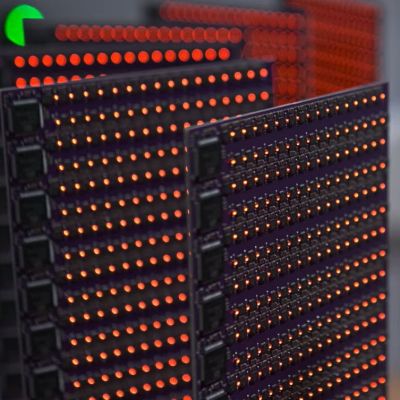
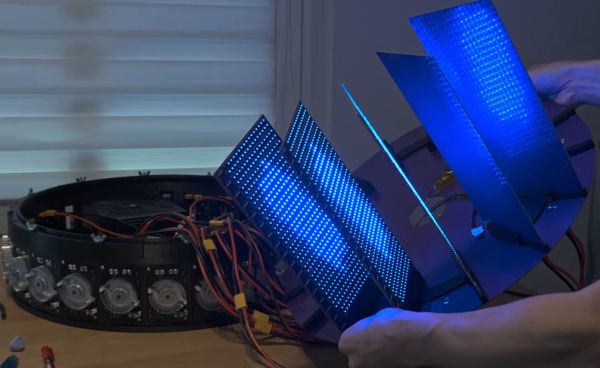
What do you get when you take 8,192 CH570 MCUs, put them on custom PCBs, and write firmware for this interconnected gaggle of cores? In the case of [bitluni]’s project, you get something that’s decidedly cluster-shaped.
These cheap MCUs feature a QingKe 32-bit RISC-V core that’s clocked at a maximum of 100 MHz, with an RV32IMBC instruction set. This means that they support integers, integer multiplication and division, bit manipulation, and compressed instructions, but no atomic, vector, or floating-point instructions.

The basic concept was to use a single MCU per pixel, but once you start scaling up a measly 10 mA and ~$0.10 per MCU to literally tens of thousands of them, you’re suddenly talking about thousands of dollars in hardware as well as a cool 655.36A at 3.3V – or 2 kW –  for something close to QVGA resolution at 320×200. Clearly this would be a rather crazy project to implement, which is why each MCU also got its own RGB LED to immediately create the pixel.

Continue reading “Gluing 8192 MCUs Together To Make A GPU”

He Comes To Bury Segmented Memory, Not To Praise It

[BillPg] has been designing a fantasy 1980s-era home computer. As part of the exercise, he’s reevaluating all the assumptions that have grown organically over time in the small computer landscape. Hindsight is, so they say, 20/20, but sometimes hindsight can also be colored by modern thinking. Sometimes an idea that seems stupid today made sense in the context of its time. In particular, [Bill] has thoughts on the much-maligned 8086 memory segments.

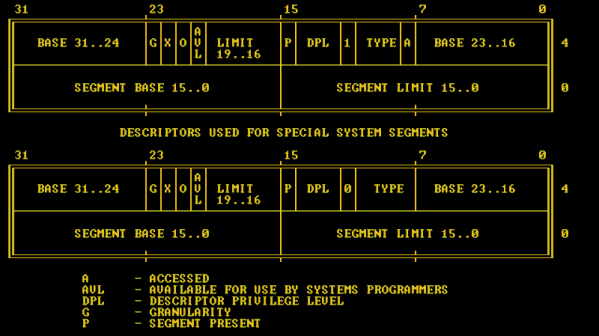
If you haven’t run into it before, the 8086/8088 had a problem. It wanted to be more or less conceptually software compatible with the 8080 and Z80 computers, which had 16-bit addresses, leading to a limit of 64K of memory. When Intel was designing the next generation of chips, it knew that 64K had to go, but telling developers that code would require huge reengineering was a non-starter. So the idea was to provide multiple 64K spaces broken up into segments.

Continue reading “He Comes To Bury Segmented Memory, Not To Praise It”