
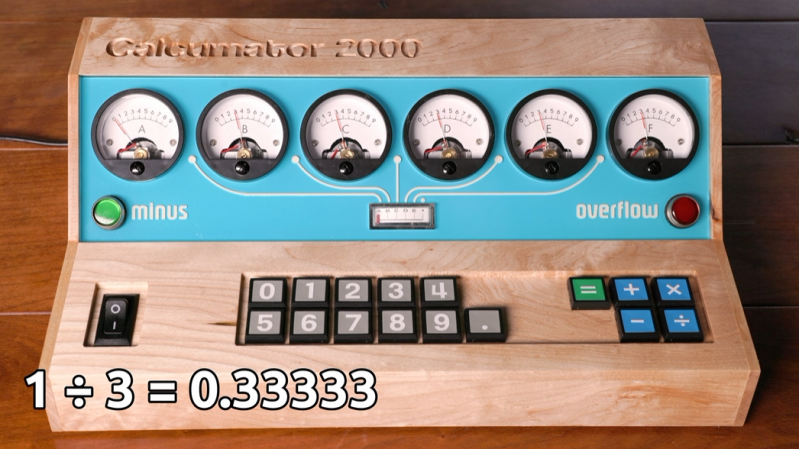
[lcamtuf] is not just a calculator superfan, but also a skilled builder. That much is evident in the fabulous design of Calcumator 2000, an electromechanical calculator that uses voltmeter readouts as digits (plus one at the bottom to represent decimal place). There are plenty of high-quality build images, so give it a look!
Calcumator 2000 is a bit of a love letter to a time when display technology hadn’t quite yet produced anything suitable for calculator use. This resulted in calculator designs that are generally unrecognizable compared to the 7-segment display based devices we see today. The Calcumator 2000, in all its electromechanical glory, would have fit right in that era.
The Calcumator 2000 has all the usual buttons one would expect from a simple calculator and drives a total of seven readouts, one of which acts as the decimal point. The idea of using voltmeters as digit displays came from [lcamtuf]’s voltmeter clock, an earlier work with a similar attention to detail in its design and assembly.
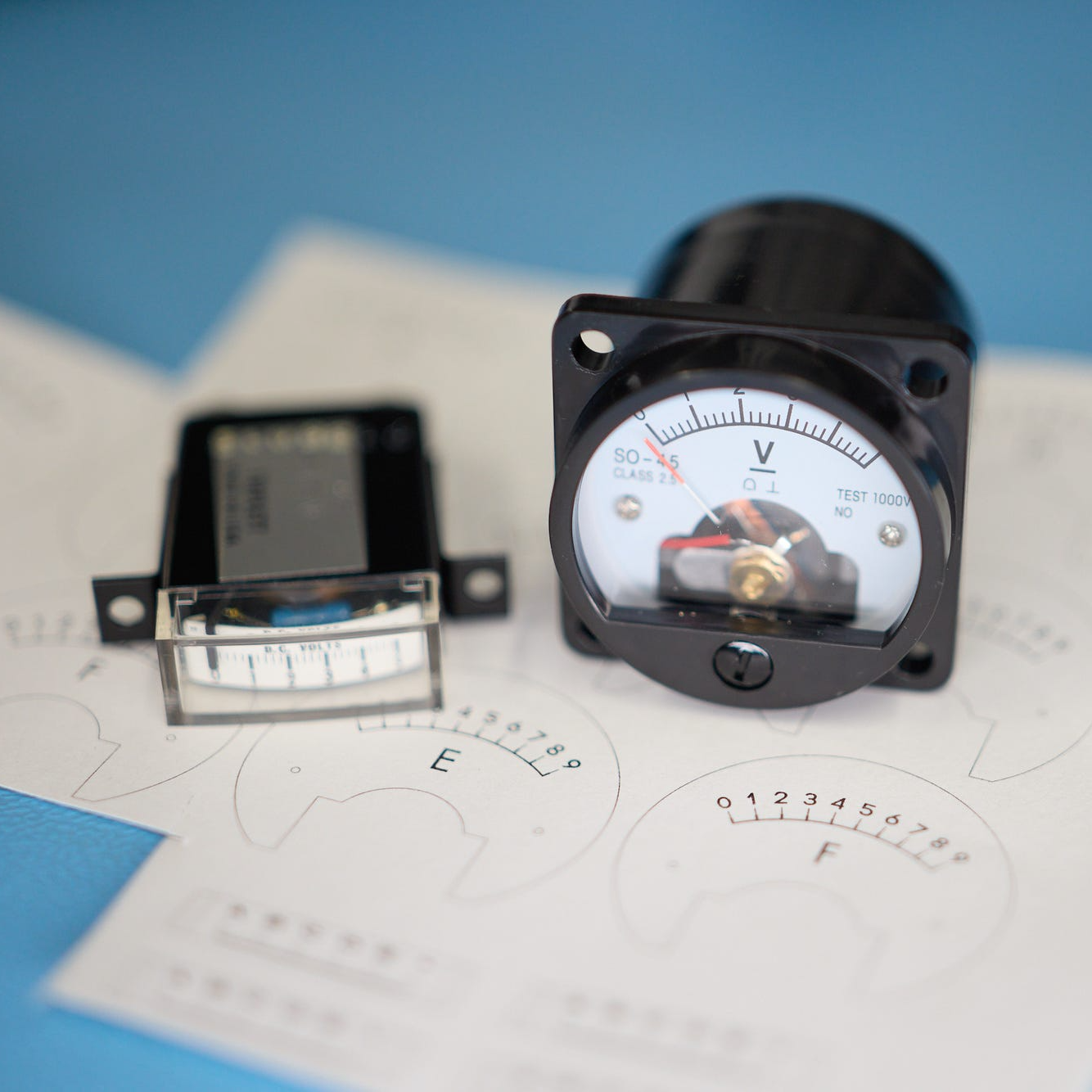
We want to take a moment to admire how clean the blue panel is. [lcamtuf] made it by painting one side of an acrylic panel, cutting the letters and design out on a CNC mill, then filling with white paint. The depth of the cuts gives the white elements a nifty multi-layer effect that really complements the design.
Want to see it work? Oh yes, you do. Check out the video, embedded just below.












Looks neat, but I’m a bit disappointed that it’s not an analog calculator. It uses a MCU under the hood.
Sounds like you have a new project. Make it happen.
It’s easy to critisize. Show some of your projects first.
I’m the person who made the calculator, so just for posterity, this isn’t me. Hackaday allows anyone to leave comments without registration, and there’s a person here who has a pretty long history of using my distinctive nickname to post inane or rude comments. I’m sure it makes sense in their head.
As for the original comment: I address this in the article, but basically, it would be very difficult to do analog calculation with a modern input scheme. You could have knobs, but if you’re taking that route, you’d be much better off building a mechanical calculator – it’s actually less complicated and a lot cooler. I have some examples here:
https://lcamtuf.substack.com/p/a-brief-history-of-counting-stuff
This (the link above) is one of the best pages I’ve seen on the topic!
Local flea markets occasionally dredge up such things from real estate sales. I remember seeing the Lighting Adding Machine, should have bought it.
Slide rules, yes, I own a few, mostly nostalgia, the “pocket kind”, ie, the kinds that supposedly were carried around by NASA engineers.
Yeah, Hackaday could do a “this username is already taken” check despite no login, not like you have to use your real name.
That link in AWESOME, thanks for putting it together and for sharing it here.
Excellent project, thank you for sharing!
My first thought was “it fits well somewhere between abacus and slide rule”. Actually, now that I think of it, it is probably sort of a fork of a slide rule more than being upgrade of abacus, while still retaining the visibility of abacus.
Something like that.
As a side note, was thinking in similar vein, just going analog all the way, using op-amps.
Almost a polyphonic voltage tracking for eurorack synthesizer modules! Or a step sequencer, cool idea!
Part of what makes this a beautiful build is the non-cheaping out with handwritten labels on notebook paper and taped on.
Well, now I want to make a vernier display with a couple of analog meters. Essentially this project, but with meters that look like a magnifier on a vernier scale. If you’ve used a height gauge with a vernier and magnifier you know what I’m looking for.
This launched me into another good thought/fork to ponder. Vertical calculator, ie, topmost indicator is the highest denominator, etc.
Hm? But it does display the content fine.
Whoah, that link got handled wrong.
thanks a lot of information greatfull