Bladerunners And The Mother Of Invention

There are plenty of stories about inventors who see a problem and decide they can do better. But Van Phillips had a little more motivation than most. The problem was his own leg. In 1976, Phillips was a 21-year-old college student when a water-skiing accident cost him his left leg below the knee. If that wasn’t bad enough, the prosthetic leg he received afterward wasn’t exactly a technological marvel. Prosthetic limbs of the era were generally designed to look and act something like a biological leg and foot, but “act” might be giving them too much credit. They were passive structures that provided something to stand on and roll over while walking.

Phillips wanted to do more than walk. There was just one problem: he wasn’t an engineer. Before the accident, he had been studying business. So, if he was going to build a better leg, first he was going to have to learn how.

Back To School
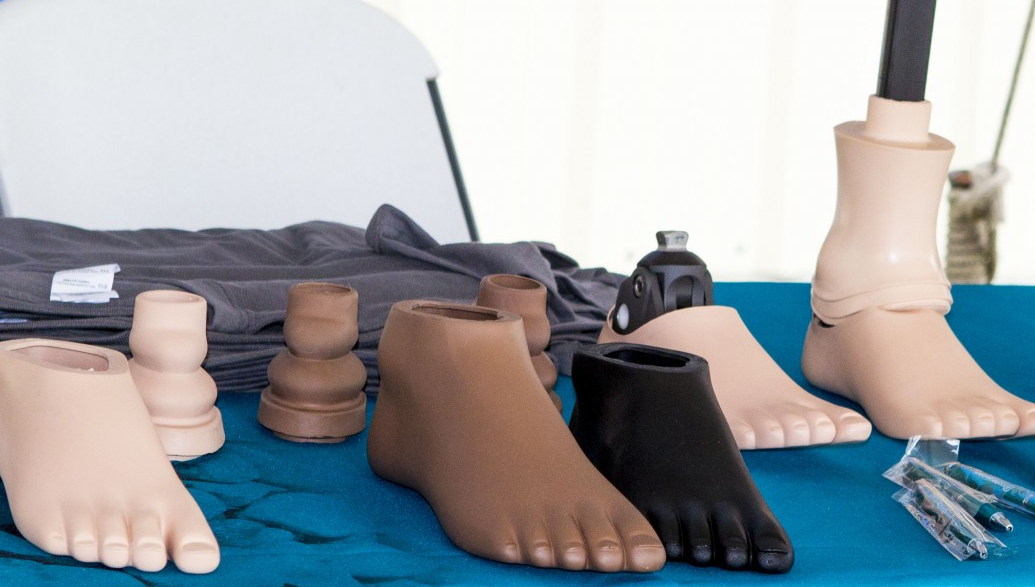
Traditional prosthetic feet (public domain)

Phillips became fascinated with prosthetics and eventually studied prosthetic design at Northwestern University’s Prosthetic-Orthotic Center. He also worked at the University of Utah’s prosthetics laboratory, where he had access to both the people and equipment he needed to experiment.

The conventional wisdom was that a prosthetic foot should imitate a human foot. That seems perfectly reasonable — evolution has had quite a long time to work on the design. But there’s a problem with simply copying the shape. A real foot isn’t just a foot-shaped object attached to the bottom of your leg. Muscles, tendons, and ligaments store and release energy as you walk or run. Your Achilles tendon, in particular, acts very much like a spring. A conventional prosthetic foot might look right, but it didn’t have anything corresponding to that spring.

Phillips eventually stopped worrying so much about making something that looked like a foot. Instead, he decided to make something that worked like one.
Continue reading “Bladerunners And The Mother Of Invention”

Hacking Fiber To The Home

When we think about security threats, we generally imagine them coming from far away across the wider internet. But what if the connection between you and your ISP was the target? [Rithwik Jayasimha] and [Rithvik Vibhu] have explored how fiber to the home connections may not be as secure as you would hope.

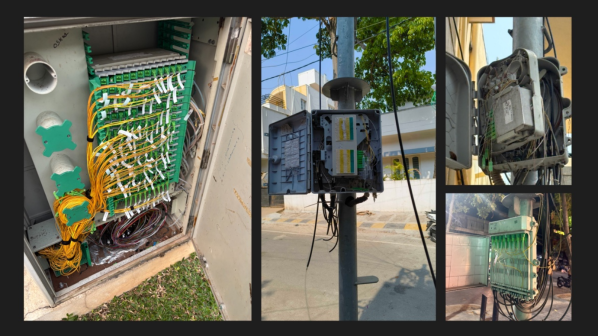
The hack centers around fiber-to-the-home connections, of which many deployments rely on Gigabit Passive Optical Network (GPON) standards. The key there is the “passive” part—these networks don’t rely on active components to switch signals. ISPs run central trunk lines out to optical line terminals (OLT), with passive splitters installed in neighborhoods to serve a number of downstream subscribers. Each subscriber then has something called an Optical Network Unit (ONU) in their home, which filters out the traffic intended for that specific subscriber.

Therein lies the flaw, though. Light (and thus, data) for many subscribers flows into the home, and it’s only the ONU that is filtering that out. Hack the ONU, or replace it… and you have access to downstream traffic from your neighbors that you shouldn’t be able to access.

The duo were able to hack an ONU to forward every single frame it receives, revealing downstream data intended for other homes in their immediate neighborhood. A great deal of traffic is encrypted these days, which provides a layer of safety, but it is by no means an ideal situation that such a hack is possible at all. They also explored other threats, such as installing splitters in publicly-accessible infrastructure, and compromising an upstream OLT and using it to flash firmware to other subscriber’s ONUs on the network. All this was presented in a talk at DEF CON, too, which can be viewed online.

It’s a concerning look at an often unconsidered link in the network chain. Few of us expect our data to be snooped upon in between us and the ISP, after all.

Continue reading “Hacking Fiber To The Home”

The Chernobyl NPP And Forty Years Of Robots For High Radiation Environments

With the massive steam explosion that shredded the #4 RBMK reactor at the Chernobyl Nuclear Power Plant in 1986 it suddenly made robots that could survive a high ionizing radiation environment into the hottest item on the planet. Over the course of forty years many generations of such robots were developed, tested, improved upon or discarded, all to explore and handle hazardous waste throughout the depths of the #4 reactor’s remains.

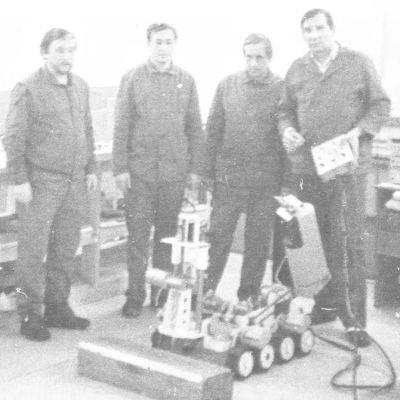
Researchers of the ISP NPP next to one of the TR robots. (Credit: ISP NPP)

Even if the entire development and decisions here would easily fit a couple of feature length movies, the recent documentary by the [Chornobyl Family] provides a solid overview of the engineering challenges, the issues encountered along the way and the forced evolution of initially very basic designs into the robotics that today trundle and wriggle around inside reactor #4, as well as their cousins over at the couple of stricken reactors at Japan’s Fukushima Daiichi power station.

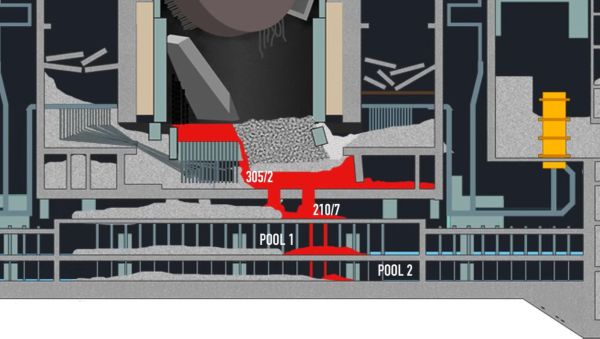
Unlike the other robots developed from 1986 onwards to provide general clean-up of scattered core material outside of the core, these robots had to venture deep inside, where radiation levels were the highest and correspondingly the challenges much more severe. This was such a problem that initially it were humans who did the exploration, as robots proved to be too fragile and too prone to getting stuck.

Until the 1990s exploration of the ruined core was quite limited, also because of a lack of urgency. While the outside clean-up and construction of the sarcophagus had to be done as quickly as possible, the core exploration was more slow and methodical, based around trying to establish its condition, what core material remained inside and try to take samples of interesting objects like the well-known ‘elephant’s foot’.

Continue reading “The Chernobyl NPP And Forty Years Of Robots For High Radiation Environments”