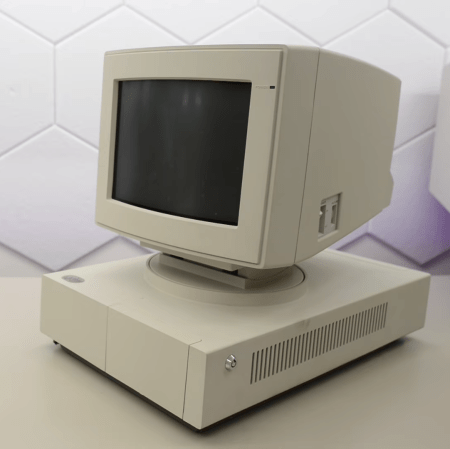
[Epictronics] happens to have a rather special machine in his possession. It’s a rare IBM PC prototype or concept machine from the late 1980s known as the IBM 7496 Executive Workstation. It’s a striking thing, with a rather enticing case design that has the monitor permanently attached on a nifty swivel mount. Only… the machine wasn’t working, so some repairs were in order!
The video is essentially teardown that gives a wonderful look at the internals of this oddball machine, which differs rather a bit from more mainstream IBM product of the era. The video is also about repairs and upgrades, too. The real work begins with pulling out the 720K double-density floppy drive, which has a number of faults preventing it from working reliably. Running a machine off floppies alone is as frustrating today as it was back then, so [Epictronics] goes further by adding in an XT-IDE card to allow the machine to interface with a hard drive. An AdLib clone soundcard completes the upgrades to make this unique unit as capable as you’d want it to be given those industrially good looks. The machine has the obscure, shortlived MCGA graphics subsystem, which really fits its oddball nature, but it will nevertheless play a fair few games of its era if such is demanded of it.
If you’re a fan of the early days of the IBM PC, or you just like watching retro computers pulled apart and delicately put back together, this is a great video to watch over lunch or dinner. If your tastes are more Commoderian, we’ve got some content more to your tastes as well. Video after the break.