An Early History Of Space Stations: The Brick Moon Made Real

People have lived in space stations for decades now, but something is wrong with them. Where are the big rotating wheels? You know the ones. They show up in old paintings of the future and, perhaps most memorably, in 2001: A Space Odyssey. Spin a great wheel in space, and people can stroll around inside with something that feels suspiciously like gravity. It seems like an obvious idea.

It is also an old idea. Much older than actual spaceflight, in fact. But to find the beginning of the space station, we have to go back to a time when powered aircraft were still several decades in the future.

A Moon Made of Bricks

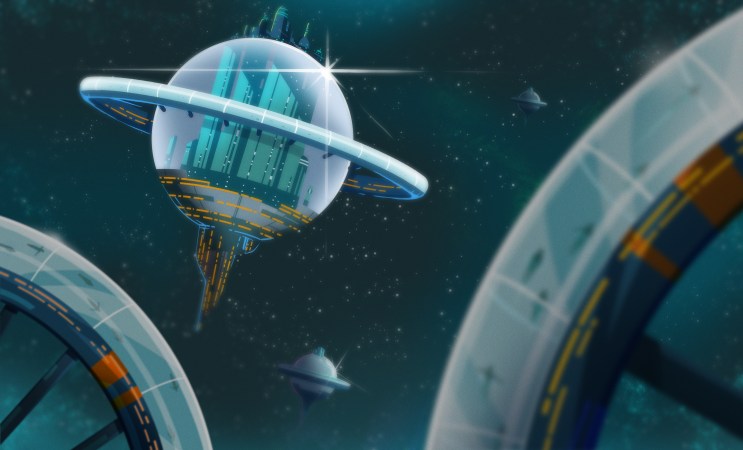
In 1869, Edward Everett Hale published The Brick Moon in The Atlantic Monthly. The moon in question wasn’t natural. Hale imagined building a 200-foot-diameter sphere made from bricks and putting it into orbit as a navigation aid. Sailors could sight it and use its known orbit to determine their longitude. There was only one small problem: the thing was accidentally launched with people aboard.

That makes The Brick Moon generally regarded as not only the first fictional artificial satellite, but also the first fictional space station. Hale followed it in 1870 with Life on the Brick Moon, describing how the accidental colonists got along up there.

Hale didn’t have rockets. He proposed flinging the thing into the sky with giant flywheels, but, then again, it was 1869, so we’re inclined to cut him some slack. As the 19th century turned into the 20th, however, people started doing the math.

Konstantin Tsiolkovsky is best remembered for putting rocket flight on a sound theoretical footing. The Russian schoolteacher wrote extensively about orbital flight and space habitation, envisioning people living in orbit long before anyone had demonstrated that a liquid-fueled rocket actually worked. His ideas included rotating habitats to provide artificial gravity.

Hermann Oberth’s 1923 book Die Rakete zu den Planetenräumen — The Rocket into Planetary Space — Oberth went beyond fiction and seriously considered a permanently inhabited station. He envisioned it being periodically supplied by smaller rockets, serving as an observation and communications platform, and even acting as a jumping-off point for trips farther into space. He also suggested spinning the station to give the crew artificial gravity.

Continue reading “An Early History Of Space Stations: The Brick Moon Made Real”
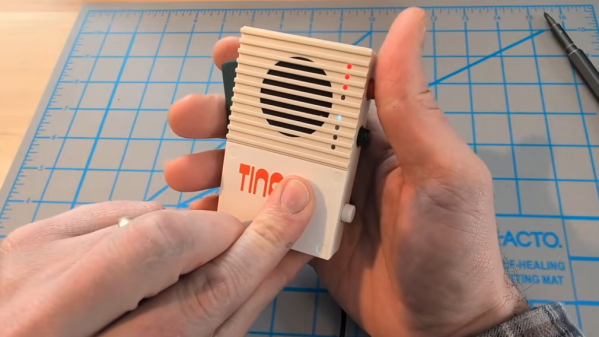
Teardown Shows Low-Fi Microphone Is Surprisingly Sophisticated

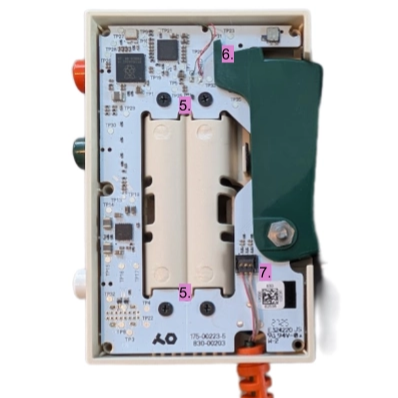
The Ting FX EP-2350 by Teenage Engineering is a standalone microphone with a few extras, including samples and built-in effect presets that can be modified by the user. It also has a distinctive design, and [Sam Holland] does an in-depth teardown that offers some insights that are worth keeping in one’s back pocket. The large, side-mounted lever in particular is an interesting bit, but more about that in a moment.

Inside the device is a single PCB, which has a cutout in the middle for a pair of AAA cells. A Raspberry Pi 2350 drives the device’s functions, supported by various components which [Sam] identifies, although he mostly looks at everything from the perspective of a mechanical engineer as he critiques the design. It’s a clean-looking, intentionally low-fi design that belies how complex the device really is.

The multi-function, chunky, spring-loaded side lever is of particular interest. It has three sensors: two switches and a potentiometer. One switch detects when the lever is at rest, or depressed by any amount at all. The potentiometer mates with the pivot point of the lever, allowing the device to directly sense how far the lever is pushed. The last switch triggers when the lever is pushed all the way in. Together, it forms an intuitive input that combines powering on (the device wakes up from sleep mode as soon as the lever is pressed) with the ability to adjust effects in proportion with how far the lever is pressed, while also bottoming out with a distinct click that itself acts as an input signal.

One other interesting bit is the light pipes that carry light from multiple indicator LEDs to the outside of the device. A textured surface acts as a diffuser and helps the lit surface look smooth, while a coating of silver paint prevents light bleed and (probably) maximizes light transmission through the plastic. Hot glue makes a pretty good light pipe material but if DIY light pipes end up in your next project, sanding the exit surface and giving the rest a coating of silver paint just might be worth a shot. Continue reading “Teardown Shows Low-Fi Microphone Is Surprisingly Sophisticated”

Reading Isn’t Rocket Science… But In This Case…

While Hackaday’s bread and butter is, of course, hacks, we sometimes cover things that most of us are interested in that are probably out of reach for the typical hacker. Space, for example, is undeniably cool, even though your chances of putting yourself or even your own rover on the Moon aren’t very good at the moment (but, of course, give it time). If you are looking for something to put on your e-reader and you are also interested in space, save your money and get some downloadable books directly from NASA.

There’s something for everyone on the site. The site has four main categories: aeronautics, Hubble, science, and NASA history. Aeronautics has two volumes of “NASA’s Contributions to Aeronautics,” a book on the X-15, and a book about aviation pressure suits. Want to know more about the giant wind tunnel at Langley?

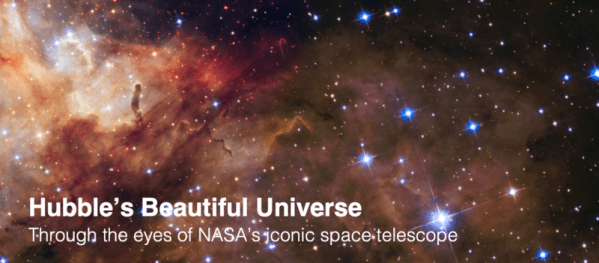
For the Hubble, you’ll find titles that have great images, of course, but also a book with an overview of the telescope or, if you prefer, about gravitational lensing.

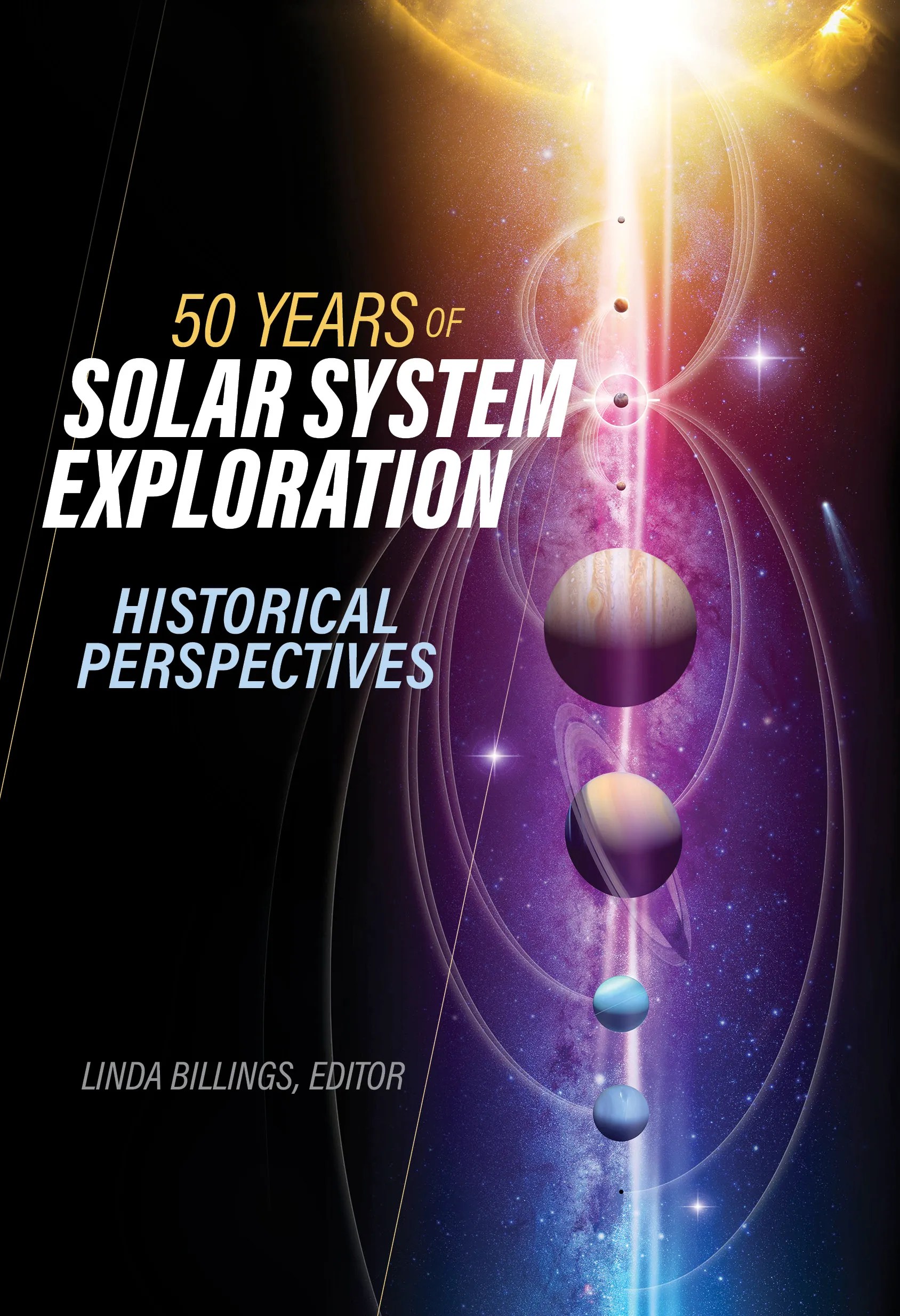
The science titles go really deep with books on black holes, Landsat, the Cassini mission, and the Spitzer telescope. If you prefer history, there’s everything from a history of near-Earth object research to lessons from the Columbia tragedy for engineers, managers, and leaders. We were also interested in the book “Archaeology, Anthropology, and Interstellar Communication.”

The books are typically available in EPUB or PDF, and they are all free. Just what you need for your next plane trip or to round out your Calibre library.

We do love free books, we just can’t get enough.