
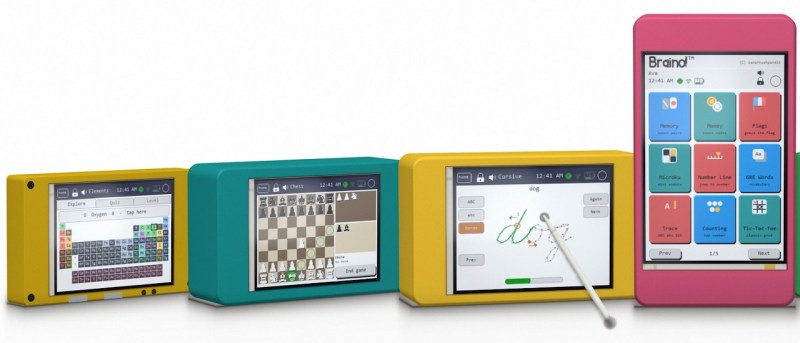
These days, it’s common to give even very young children a mobile device loaded up with educational software that aims to improve everything from basic motor skills to reading and arithmetic. But even the cheapest phone or tablet isn’t the kind of thing most parents would like to see get destroyed, and there’s always a concern about giving children a device that’s capable of connecting to the Internet.
Which is where Braino! from [Ankush Pandit] comes in. This suite of applications can be easily flashed to a common Cheap Yellow Display to turn it into a legitimate educational tool. Combined with a 3D printed case, the total cost of the build is low enough that you don’t have to feel bad about handing it off to even the roughest of youngsters.
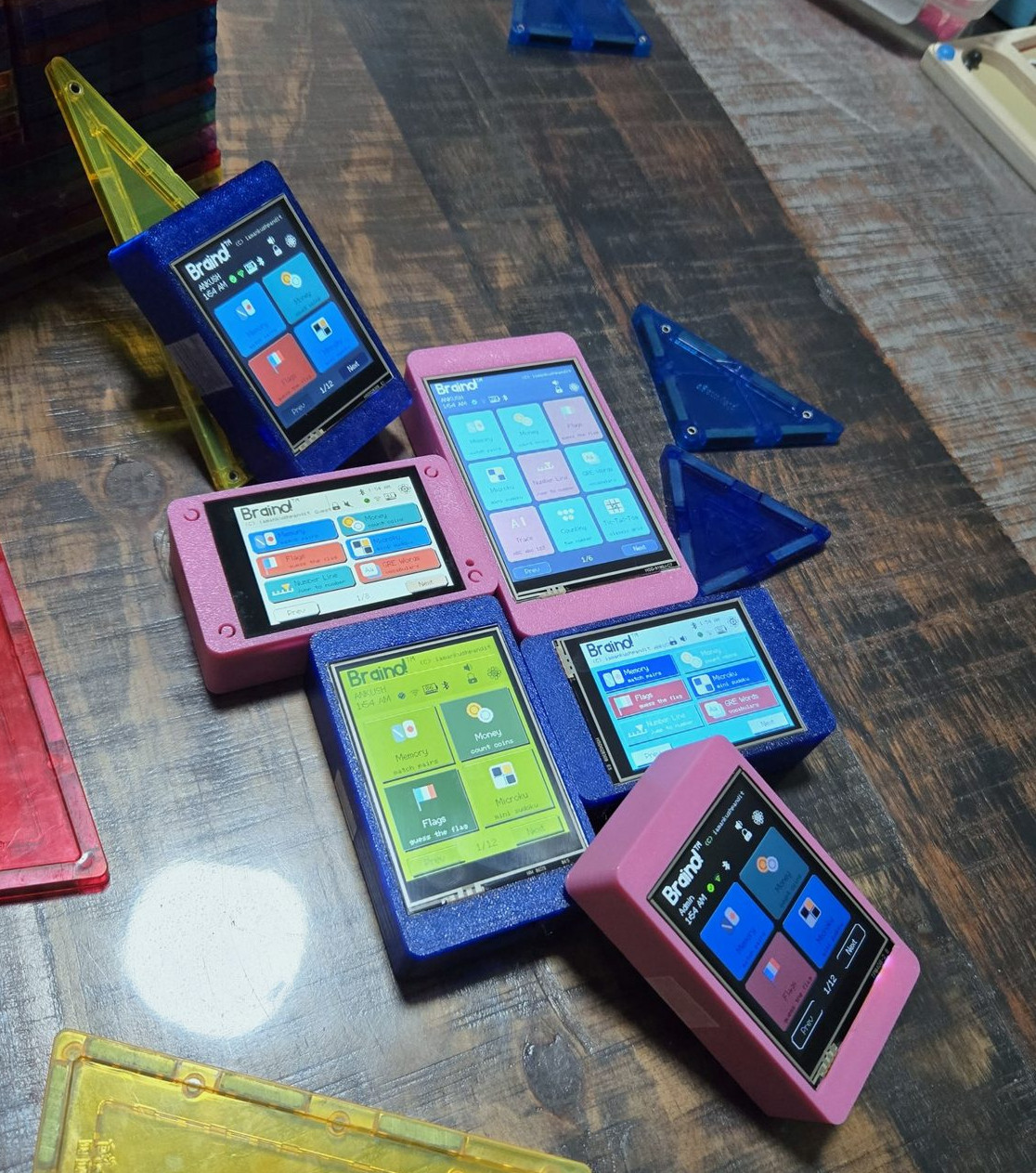 [Ankush] makes it clear that this project isn’t trying to sell you anything. You’re responsible for picking up a compatible CYD and installing Braino via the web flashing application. The software is released under the GPLv3 license, and it contains no ads, user accounts, or cloud connectivity. We know not everyone is thrilled with how much time young kids spend staring at screens these days, but opinions on modern parenting aside, it’s hard to find fault with the way things have been implemented here.
When the parent sets up Braino they can pick which of the 40 games can be accessed, allowing the experience to be tailored to the individual child’s age and ability. Should you decide to enable Bluetooth, some of the games even support wireless multiplayer between devices. We also like the beacon function which lets
The commonality of the Cheap Yellow Display is one of its best features, and Braino does an excellent job of showing why that’s so important. Trying to develop a project like this without a standardized platform of some type would be a non-starter, but when anyone can get a CYD sent to their house from Amazon and flash it right from the browser, it’s makes the whole thing far more accessible.












RE: “you don’t have to feel bad about handing it off to even the roughest of youngsters.”
This reminds me of my childhood and how, even from an extremely young age, how precious every toy or gadget was, since if I broke it, I either no longer had it or had to fix it myself, since I either bought it myself or it was one of the very few gifts my parents gave me (only on birthdays or at Christmas). Not to be an old man yelling at the sky, but parents who just buy crap for their kids are teaching them bad lessons about where things come from and what it means to take care of something.
For parents who want to thread the needle between neglect (what my childhood probably was) and spoilage, how about a device with an accelerometer in it that automatically ceases to function for a set period of time or until certain actions that emulate “care” are taken? That might teach a bratty kid not to immediately throw their iPad into the toilet and start crying for a replacement.
Like a meta-Tamagotchi.
i think at the age of two, i famously tossed my father’s pocket watch into the water tank of a humidifier, since i had yet to learn the value of things. later at the age of four i found that no-longer-working pocket watch while nosing around through my parents’ stuff and secretly took it apart because that is in my nature. at that point my father had already grieved the loss of his watch, so there were no further repercussions, though i think i kept that disassembled watch hidden for months.
also during this time, me and my little friend Jenny Mothershead (unfindable on social media!) would go into the one remaining block of forest behind our suburban house and pluck springs out of a typewriter we’d found back there.
Having few toys was a blessing, developed my imagination in unimaginable ways !
Just image how blessed cavemen were 10’s of thousand years ago. Life was wonderful back then. I remember when one of the stone age dads that told his kid not to fool around with those pebbles, because back in the day he had no pebbles to play with either. I clearly remember him saying: “GRMMMBLBLAAWER… ARGHH” which comes down to: “Those pebbles ruin your imagination, throw them away”. Somehow the little kid did not feel happy about this “blessing”.
That’s nice, but why not just have an Android application compatible with old Android as an alternative to the firmware?
I checked their site and cheapest recommended screen was $16 and checking a (in)famous 2nd hand electronics store I can find in stock a (crappy) old Android phone for less (e.g. Samsung Galaxy Fame, Motorola Moto G). That’s before you even throw in the recommended battery ($9), case, speaker, and of course ESP32.
My point is if you really want something dirt cheap that you don’t mind breaking, a crappy old Android phone is cheaper.
I suppose what you can do with the Braino is make the whole project educative, i.e. give your kid a $30 budget, let them build the bill of material, and make it a project to build it with mommy/daddy help.