Your CYD Is Now A Telly

The Cheap Yellow Display is an all-in-one ESP32 board with a touchscreen, that’s as the name suggests, cheap. It’s appeared in a great many projects since it emerged from the depths of AliExpress, and today thanks to [Nickm324] it takes the turn of becoming a mini TV.

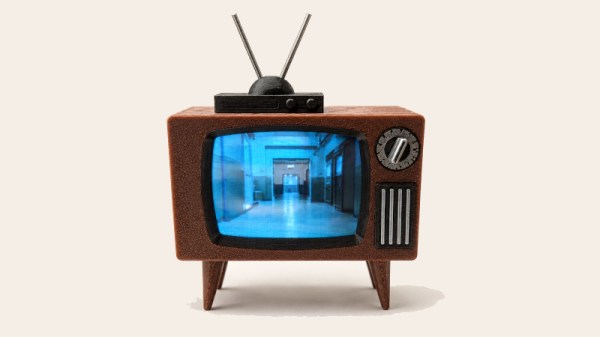
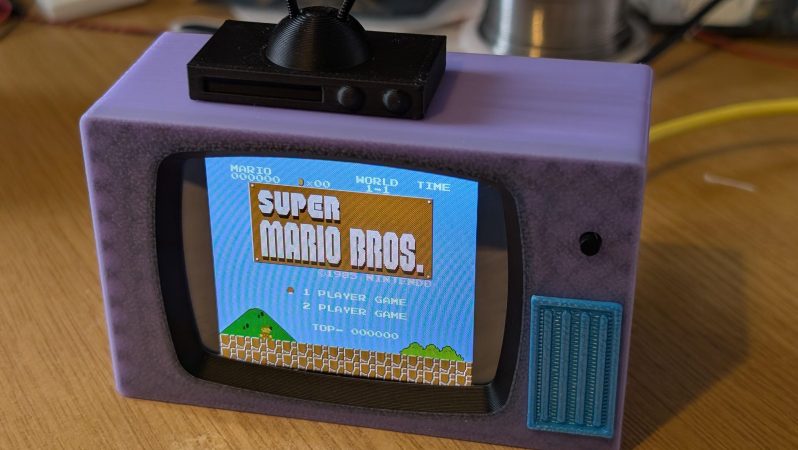
The tiny TV project world is one of successive developers building on previous works to deliver their own refinements on the idea, so this one borrows heavily from an earlier ESP32 project. Its twist on the idea is a single button interface using the CYD’s BOOT button. It supports a range of “channels” of which each one is a different piece of media played from the SD card. As far as we can see it’s only able to play synchronised .mjpeg and audio files, probably a shortcoming of the older ESP32 found on the CYD. The photo features a rather cutesy retro 3D printed TV case which annoyingly isn’t linked from the repository at the time of writing.

It’s a nice idea, and the CYD makes it as easy as possible with minimal wiring. Yes it’s a novelty, but we’re guessing there could be many non-novelty applications for it too. It’s certainly not the first such project we’ve seen, here’s an earlier one.

Wikipedia On A Cheap Yellow Display

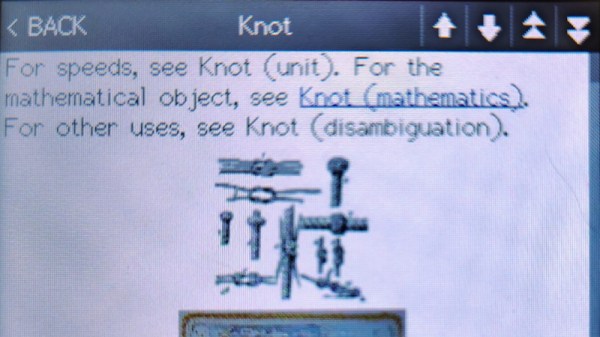
The Cheap Yellow Display (CYD) is a board carrying a slightly older ESP32 variant, a display with a resistive touchscreen, an SD card, and not much else. It’s often used for straightforward microcontroller applications that need a user interface, but that’s not the limit of its possibilities. [Alun Morris] has a CYD on which you can brows an entire offline Wikipedia.

The trick is to take the offline Wikipedia builds from the Kiwix project, and process them further into a custom format suited for a browser firmware on the ESP32. A modern SD card can hold so much data that a full Wikipedia is well within its abilities even with images included.

We like this idea, because it takes the knowledge away from the center of the network to its edge. We expect to see it gaining a following among enthusiasts for offline living, because all that knowledge without a network can only be useful. If you recognize [Alun]’s work, it might be because of his ESP32 web browser.

A Standalone YouTube Streaming Rig

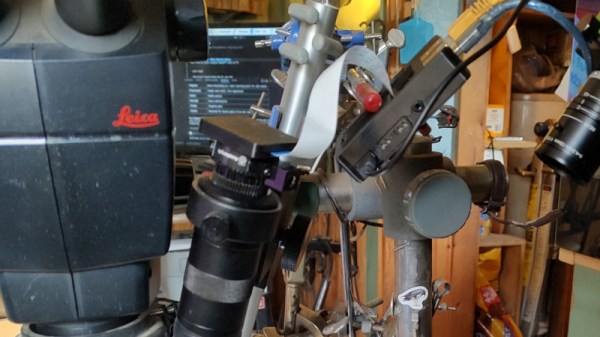
YouTube streaming typically involves a camera with an HDMI output, a USB3 HDMI digitiser, and a suitably beefy PC to run it all. It’s quite a process, and for [Coreymillia], more complex than it needs to be. He’s come up with something simpler, a dedicated self-contained streaming rig using a Raspberry Pi 4.

As you might expect it uses the Raspberry Pi HQ camera at the optical end, but it’s the software surrounding it that transforms it from a mere camera into a streaming rig. There’s a web based user interface, but perhaps more interesting are the companion dashboard peripherals. A Raspberry Pi or an ESP32 Cheap Yellow Display can both serve as a small in-view dashboard and controller.

We know from experience that a stream can be a difficult thing to get right even with high-end hardware, and we’re interested to see this standalone device allowing , we hope, an easier way to do it. If you’re a streamer we’re guessing you’ll be taking a closer look. Even so, this is surprisingly, not the simplest Raspberry Pi based streaming device we’ve seen.

Cheap Yellow Display With Boosted PSRAM Turned Snazzy Emulator Station

The ‘Cheap Yellow Display’, or CYD, is becoming a staple in these circles, and with good reason: just like the name says, it’s cheap, it has a display, and of course an ESP32 microcontroller to give it lots of brainpower. What it doesn’t come with is a lot of RAM, which was a problem for [DynaMite]’s project. What was there to do but solder on more PSRAM so the CYD could become a mini TV for retrogaming?

Depending what you want to play, you might not need the extra memory. In [DynaMite]’s case, he wanted to run Retro-Go, which opens up a lot more than just the standard NES emulator you can run on an unmodified CYD — including 16-bit systems like the SNES and Sega Genesis/MegaDrive or even DOOM. Adding the PSRAM is just a matter of getting the little chip onto an unpopulated footprint on the board, cutting some traces, and adding a bodge wire. It’s not nothing, but it’s not impossible.

Continue reading “Cheap Yellow Display With Boosted PSRAM Turned Snazzy Emulator Station”

Adorable ASCII Aquarium Lives On Your Desk

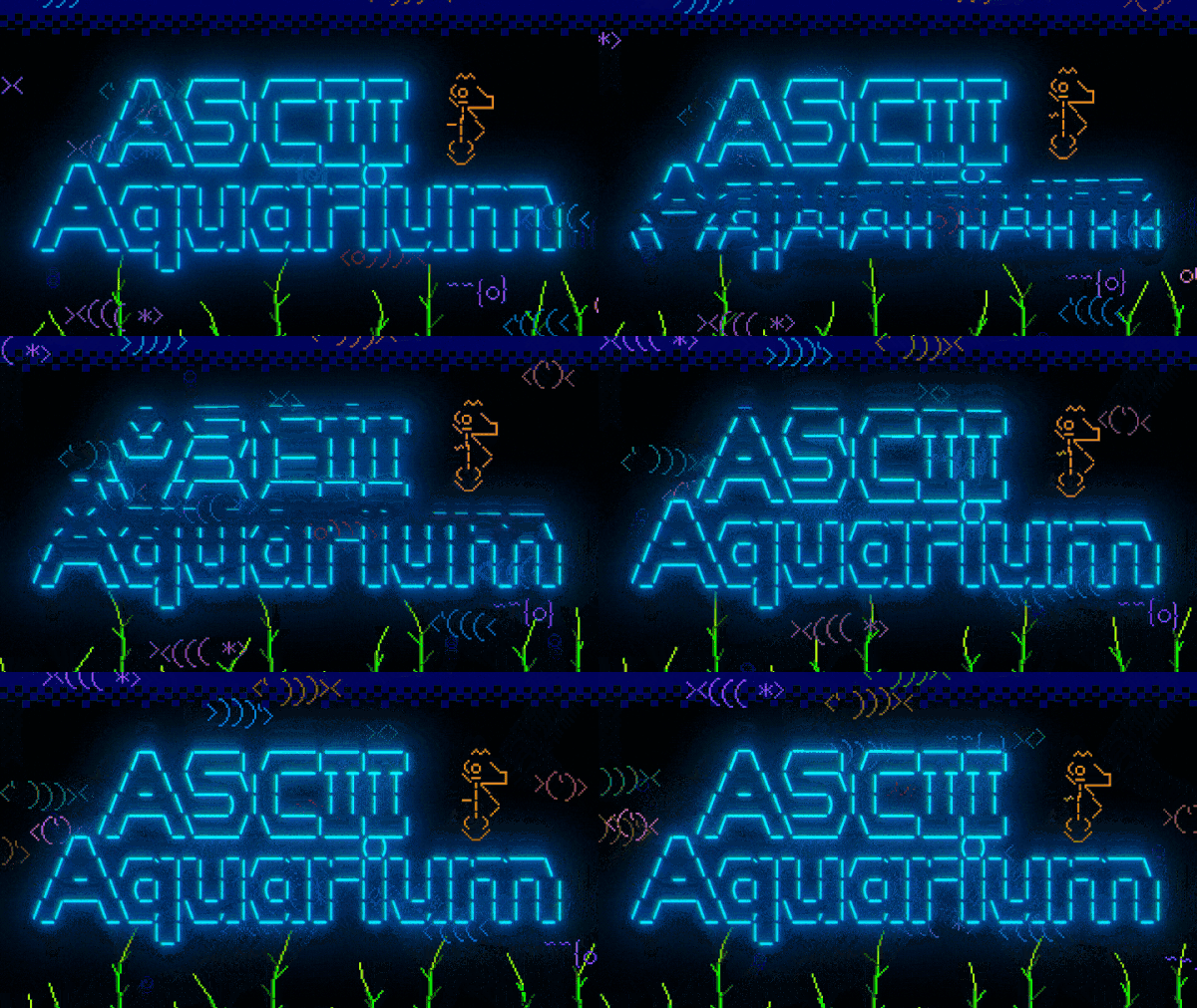
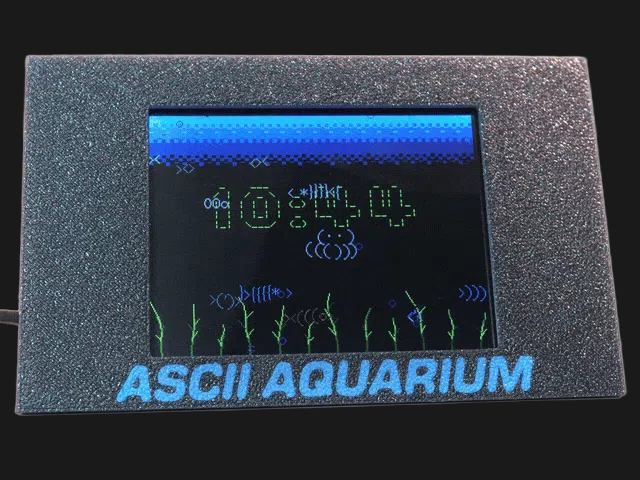
[Kert Gartner]’s ASCII Aquarium turns a cheap yellow display (CYD) into a tiny simulated aquarium, complete with ASCII sea creatures each with their own behaviors. There’s all kinds of options and even timekeeping functionality, so the miniature water world can also pull its weight as a desk clock.

The fish and other animal movements are not a series of canned animations; each creature has its own behaviors and responses to things like feeding, which is accomplished by tapping on the screen. A hidden menu offers a wide range of configuration and display options, and there’s even an option to export screen contents as bitmaps.

Add a 3D-printed enclosure and the whole thing looks like a pretty nice weekend project. There’s even a display flip mode, just in case you have a spare 50 mm beamsplitter kicking around.

It’s a very clever use of a CYD that shows how good color and graphics can look when one designs with the hardware’s capabilities (and limitations) in mind.

The CYD is an ESP32-based development board with integrated touchscreen display, and is known for its affordable price and wide availability. This one would look great next to a CYD electric jellyfish.

Stream Deck Radio Controller Built With Cheap Yellow Display

Stream decks are pretty useful in all kinds of contexts, but commercial models can feel a bit pricy for what is effectively a bunch of buttons. [WhiskeyTangoHotel] has whipped up one of their own on the cheap using some readily available parts.

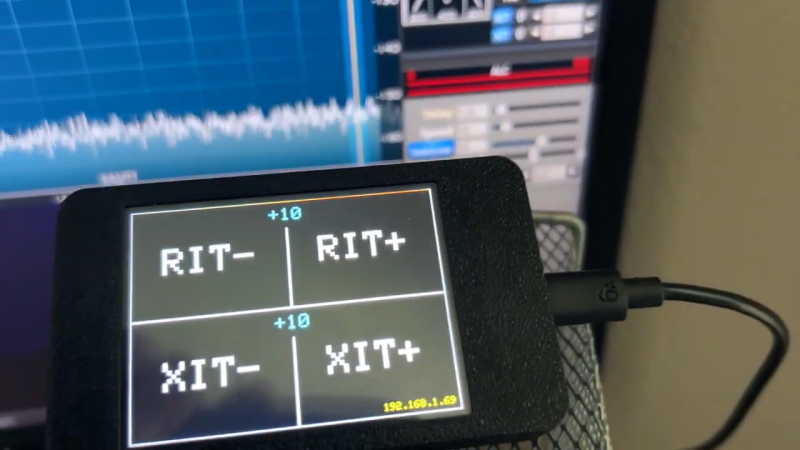
The build came about due to the use of Stream Decks as a common way to control the Flex-6400 software-defined radio. [WhiskeyTangoHotel] figured that using a full-priced Elgato Stream Deck was overkill for this purpose, and that a cheaper interface could be put together for less. Enter the Cheap Yellow Display—a combination of the ESP32 microcontroller with a 2.8-inch touchscreen LCD. It was simple enough to code the device such that it had four big touch buttons to control RIT-, RIT+, XIT-, and XIT+ on the Flex-6400. Plus, with the ESP32 having WiFi onboard, it’s able to control the radio wirelessly—you just need to feed the unit 5 volts, and you’re up and running.

Continue reading “Stream Deck Radio Controller Built With Cheap Yellow Display”

An Electric Jellyfish For Androids

We have to admit, we didn’t know that we wanted a desktop electric jellyfish until seeing [likeablob]’s Denki-Kurage, but it’s one of those projects that just fills a need so perfectly. The need being, of course, to have a Bladerunner-inspired electric animal on your desk, as well as having a great simple application for that Cheap Yellow Display (CYD) that you impulse purchased two years ago.

Maybe we’re projecting a little bit, but you should absolutely check this project out if you’re interested in doing anything with one of the CYDs. They are a perfect little experimentation platform, with a touchscreen, an ESP32, USB, and an SD card socket: everything you need to build a fun desktop control panel project that speaks either Bluetooth or WiFi.

We love [likeablob]’s aesthetic here. The wireframe graphics, the retro-cyber fonts in the configuration mode, and even the ability to change the strength of the current that the electric jellyfish is swimming against make this look so cool. And the build couldn’t be much simpler either. Flash the code using an online web flasher, 3D print out the understated frame, screw the CYD in, et voila! Here’s a direct GitHub link if you’re interested in the wireframe graphics routines.

We’ve seen a bunch of other projects with the CYD, mostly of the obvious control-panel variety. But while we’re all for functionality, it’s nice to see some frivolity as well. Have you made a CYD project lately? Let us know!