Skid Steer Robot Chassis Takes A Beating

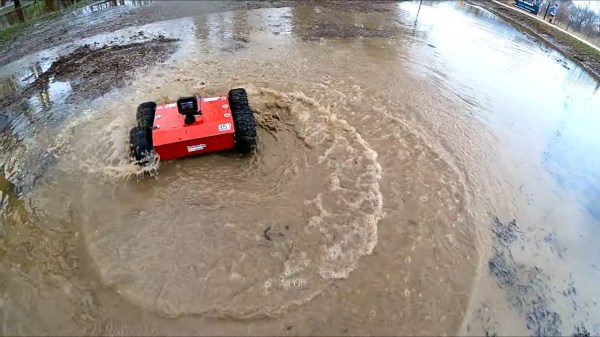
[Engineering After Hours] wanted a highly maneuverable robot chassis with a tight turning radius. Skid steering seemed to be the perfect solution, but the available commercial options didn’t take his fancy. Thus, a custom build was the answer – with impressive results.

The build packs two large RC motors, one for each side, with each driving two wheels through a belt drive. This reduces the electronics required to the bare minimum for skid steering. It’s all assembled within a plasma-cut metal chassis which is more than tough enough to take some hard knocks.

One of the primary goals on the build was to eliminate the risk of vibrations and shock damaging the motors and gearboxes. Many off-the-shelf designs couple the wheels directly to gearbox output shafts, potentially damaging the expensive components over time. In this design, a separate bearing assembly is used to take the load from the wheels instead.

It’s a great example of how an engineering-first approach can build a sturdy ‘bot with a minimum of fuss. Outfitted with some fat off-road tyres the performance is impressive, with the ‘bot having no trouble tearing it up in mud, snow, and water.

We’ve seen other great builds from [Engineering After Hours] before, like the active aero RC build. Video after the break.
Continue reading “Skid Steer Robot Chassis Takes A Beating”

Data Blaster Is A Hip RPi Cyberdeck

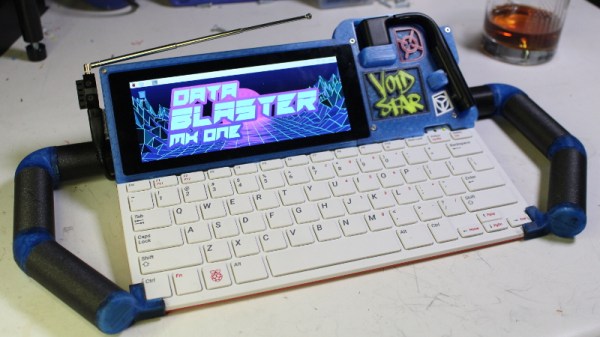
Cyberdecks were once a science fiction approximation of what computing might look like in the future. In the end, consumer devices took a very different path. No matter, though, because the maker community decided cyberdecks were too awesome to ignore and started making their own. After lusting after some of the amazing builds already out there, [Zach Freedman] decided it was time to start his own build, resulting in the Data Blaster.

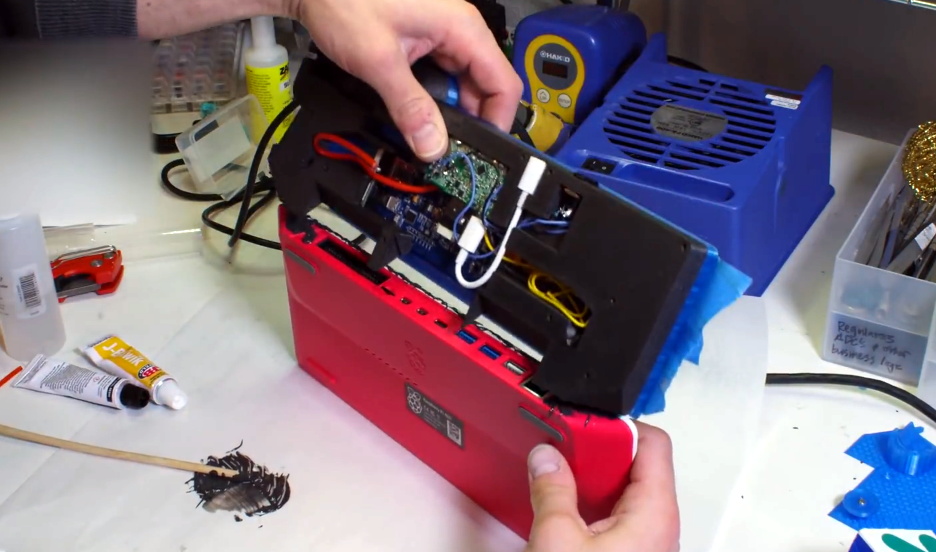
Epoxy holds the printed parts to the Pi 400

The Raspberry Pi has always been popular in the nascent cyberdeck scene, providing real Linux computing power in a compact, portable package. Now, we have the Raspberry Pi 400, which is exactly that, built into a shell that is, approximately, half of a cyberdeck. This formed the base of [Zach]’s build, coming in handy with its full-sized keyboard.

To that, he added a widescreen 1280×480 LCD, wearable display, and a USB powerbank, turning it into a true go-anywhere terminal. The 3D-printed handles are a particularly nice touch, making it easy to use the deck from a standing position, something that no laptop really does well. As a bonus, there’s even a tiny software defined radio on the side, complete with a collapsible antenna for that added cool factor. 

It’s a fun build, and a useful one too. We suspect the chunky plastics and grabbable design might actually make the Data Blaster preferable to a laptop in rugged field use versus a more traditional laptop. We’ve seen some other great work in this area, too. Video after the break.

Vibration Isolation Helps Improve FPV Video Feed

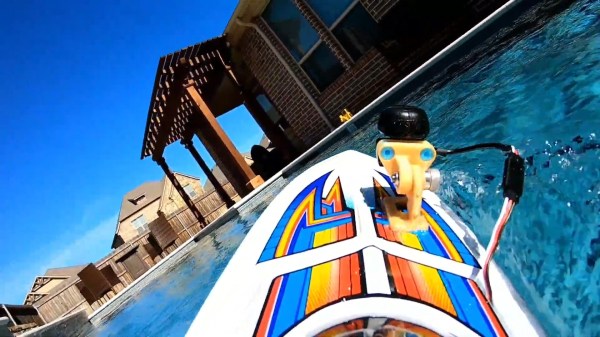
First-person view technology has become hugely popular in the RC community, letting the user get a vantage point as though they were actually within their tiny scale vehicle. It can be difficult to get a good, clean video feed though, particularly in models that have a lot of drivetrain vibration. [Engineering After Hours] decided to tackle this problem with a simple vibration isolator design. (Video, embedded below.)

The first step is to analyse the vibration to get an idea of the frequencies that are most important to target. WIth that done, a simple 3D printed camera mount is designed with three flexible joints between the camera and the base which is rigidly coupled to the RC boat or car’s body. The modal analysis tools in Fusion 360 were used to get a rough idea of the frequency response of the system, helping to get things in the ballpark with a minimum of fuss.

The final design does help cut down on vibrations, though it is unable to counteract heavy vibration from driving on extremely rough surfaces. In these cases, [Engineering After Hours] recommends the use of a gimbal instead. Proper damping can be a godsend in many applications; bricks can make a huge difference for your 3D printer, for example.

Continue reading “Vibration Isolation Helps Improve FPV Video Feed”

3D Printed Wobbly Wheels Put Through Their Paces

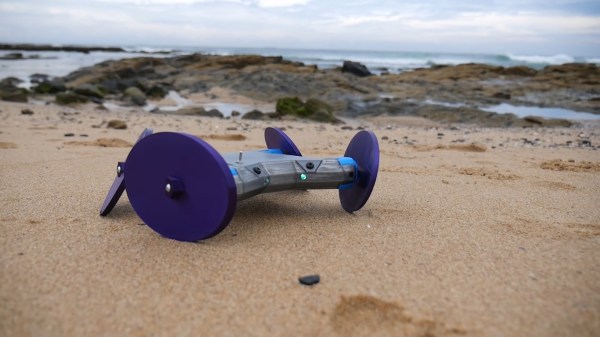
When we talk about wheels, the vast majority of the time we’re talking about ho-hum cylindrical rollers as seen on all manner of human conveyances. However, there are all manner of wild and wacky shapes that roll, and having had some experience with them, [Maker’s Muse] decided to take a shot at having a robot drive on them. (Video, embedded below.)

The benefit of a 3D printer is that it makes producing these parts with strange geometries a cinch. The video shows a variety of designs, from the wobbly “Nightshades” to the entertaining “Prongle” wheels being put through a variety of tests. In an attempt to equalise the playing field, each design was matched in its surface area so as not to artificially bias the results.

While the wobbly designs look strange, they also come with some benefits over simple disc wheels, providing extra traction on both carpet and sand. Particularly impressive was the performance of the 8-spoke wheels on the beach, though as this design mimics real-world sand tyres, we’re not surprised at the results. We’ve seen similar 3D printed parts do the job for driving on water, too.

Continue reading “3D Printed Wobbly Wheels Put Through Their Paces”

How The LIGO Observatory Detects Gravitational Waves

Gravity is one of the more obvious forces in the universe, generally regarded as easily noticeable by the way apples fall from trees. However, the underlying mechanisms behind gravity are inordinately complex, and the subject of much study to this day.

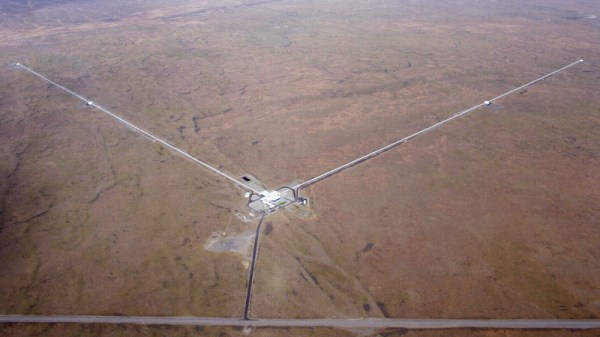
A major component of this study is around the concept of gravitational waves. First posited by Henri Poincaré in 1905, and later a major component of Einstein’s general theory of relativity, they’re a phenomena hunted for by generations of physicists ever since. For the team at the Laser Interferometer Gravitational-wave Observatory, or LIGO, finding direct evidence of gravitational waves is all in a day’s work.

Continue reading “How The LIGO Observatory Detects Gravitational Waves”

Traffic Jam In The Suez Canal; Container Ship Run Aground

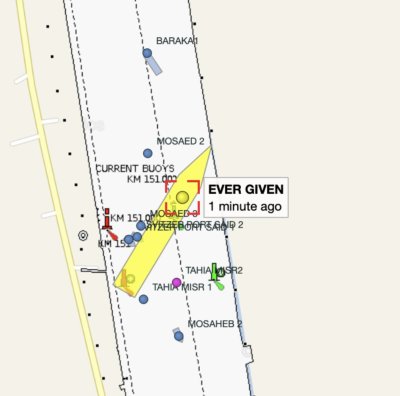
A vital shipping lane has been blocked in Egypt, as a 220,000 ton container ship, the MV Ever Given, became lodged sideways in the channel Tuesday morning local time. The Suez Canal, long a region of trading and strategic importance, has been blocked to travel in both directions as authorities make frantic efforts to free the ship.

Live tracking shows a flurry of activity around the stricken vessel. If you find yourself transiting the Suez Canal next week, don’t do this. Everyone’s patience is going to be pretty thin.

The Ever Given is carrying goods from China to Rotterdam, making a northward journey through the canal. The exact reason for grounding remains unclear, though such incidents are often due to mechanical malfunction or navigational errors in the tight confines of the channel. Like many important waterways, the Suez Canal requires transiting vessels to take on a pilot. This is to ensure that ships passing through the canal have someone onboard with experience of navigating the 673-foot wide passage. However, incidents still happen, as with huge container ships, there is minimal room for error.

A flotilla of tugboats dispatched to the area have begun working to free the ship, working in concert with excavators on the banks of the canal. This photo taken by [Julianne Cona] at the incident shows the sheer scale of the problem — with the excavator digging at the bow a tiny speck in the shadow of the gigantic ship.

We’re sure shipping firms and residents of the Netherlands are eager for a quick resolution, whether its to avoid costly delays or simply to get those online purchases sooner. If you live near the canal and want to keep an eye on what’s happening, you could always grab a software-defined radio and track things in real time. Alternatively, watch the progress on Vessel Finder. And, if you’ve got strong opinions on the proper procedure for navigating the Suez Canal, sound off in the comments!

3D Printed Vortex Cooled Rocket Needs To Stop Leaking

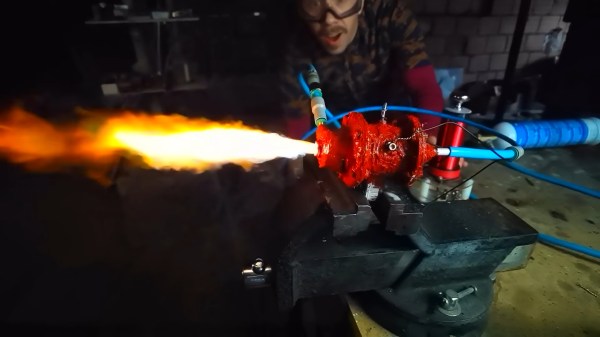
Rocket engines are known for one thing above all else, and that’s getting hot. It’s this very property that makes them such a challenge to build and run from a materials engineering standpoint. It’s hard enough to build one with advanced metal alloys, but [Integza] presses on with trying to make one on a 3D printer. Progress is being made, but success remains elusive.  (Video, embedded below.)

To try and mitigate the thermal effects of burning propellants in his engine design, [Integza] looked to vortex cooling. This is where oxygen is swirled around the outer edge of the combustion chamber in a vortex, acting as a buffer layer between the burning fuel and the chamber walls. With 3D printed chamber components, keeping temperatures as low as possible is key, after all. Unfortunately, despite using a special ceramic-laden resin for printing and lathering the rocket components in various refractory materials, it wasn’t possible to stop the chambers leaking. Solid combustion was possible for a few seconds at a time, but eventually each motor tested turned into a ball of flames as the walls broke down.

Thankfully, nobody was hurt in testing, and [Integza] has a clear idea of the problems that need to be fixed in the next iteration. We’ve featured other vortex cooled rockets before – the theory is sound. As always, the devil is in the implementation.

Continue reading “3D Printed Vortex Cooled Rocket Needs To Stop Leaking”