The Science Behind Making Buildings Comfortably Non-Combustible

Although the most fire-resistant building is likely a windowless, concrete bunker, this tends to be not the vibe that most home owners go for. This is why over the years construction of buildings in areas prone to bush- and wildfires – i.e. an uncontrolled fire in an area with combustible vegetation – has adapted to find a happy medium between a building that you’d enjoy living in and a building that will not instantly combust the moment an ember from a nearby wildfire gently touches down upon any part of it.

To achieve this feat, the primary means include keeping said combustible vegetation and similar away from the building, and to make the house as resistant to ember attacks as possible. That this approach is effective has been demonstrated over the course of multiple wildfires in California during the past years, whereby houses constructed more recently with these features had a much higher chance of making it through the event unscathed.

Naturally, the devil is in the details, which is why for example the Australian standard for construction in bushfire-prone areas (AS 3959, last updated in 2018, 2009 version PDF) is rather extensive and heavy on details, including multiple Bushfire Attack Level (BAL) ratings that define risk areas and legally required mitigation measures. So what does it take exactly to survive a firestorm bearing down on your abode?

Continue reading “The Science Behind Making Buildings Comfortably Non-Combustible”

Upgrading RAM On A Honda Infotainment System

Car infotainment systems somehow have become a staple in today’s automobiles, yet when it comes down to it they have all the elegance of a locked-down Android tablet. In the case of the Honda infotainment system that [dosdude1] got from a friend’s 2016/2017-era Honda Accord, it pretty much is just that. Powered by a dual-core Cortex-A15 SoC, it features a blazin’ 1 GB of RAM, 2 GB of storage and runs Android 4.2.2. It’s also well-known for crashing a lot, which is speculated to be caused by Out-of-RAM events, which is what the RAM upgrade is supposed to test.

After tearing down the unit and extracting the main board with the (Renesas) SoC and RAM, the SoC was identified as being an automotive part dating back to 2012. The 1 GB of RAM was split across two Micron-branded packages, leaving one of the memory channels on the SoC unused and not broken out. This left removing the original RAM chips to check what options the existing pads provided, specifically potential support for twin-die chips, but also address line 15 (A15). Unfortunately only the A15 line turned out to be connected.

This left double capacity (1 GB) chips as the sole option, meaning a total of 2 GB of RAM. After installation the infotainment system booted up, but only showed 1 GB installed. Cue hunting down the right RAM config bootstrap resistor, updating the boot flags and updating the firmware to work around the LINEOWarp hibernation image that retained the 1 GB configuration. Ultimately the upgrade seems to work, but until the unit is reinstalled in the car and tested it’s hard to say whether it fixes the stability issues.

Thanks to [Dylan] for the tip.

Continue reading “Upgrading RAM On A Honda Infotainment System”

Your Favorite Basic Oscilloscope Operation Guide?

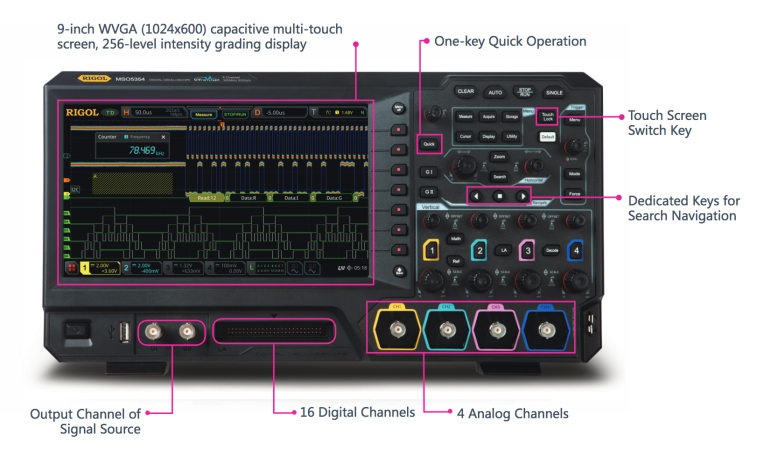
Like many pieces of lab equipment, oscilloscopes are both extremely useful and rather intimidating to a fledgling user. Unlike a digital multimeter with its point-and-measure functionality, digital storage oscilloscopes (DSOs) require fundamental knowledge before they can be used properly. Yet at the same time nobody likes reading manuals, so what is one to do? Try the Absolute Beginner’s Guide to DSOs  by [Arthur Pini]

[Pini’s] Cliff’s Notes version of your scope’s manual isn’t half bad. It covers the basic user interface and usage of a (stand-alone) DSO. Unfortunately, it focuses a bit too much on a fancy touch-screen Teledyne LeCroy MSO rather than something the average hobbyist is likely to have lying around.

We rather like the PSA-type videos such as the classic ‘“How not to blow up your oscilloscope” video by [Dave] over at EEVBlog. Many guides and introductions cover “what to do,” but covering common safety issues like improper grounding, isolation, or voltages might be a better place to start.

What tutorial or reference work would you hand to an oscilloscope newbie? We can endorse a hands-on approach with a suitable test board. We also enjoyed [Alan’s] video on the topic. Even if you are an old hand, do you know how to use all those strange trigger modes?

Continue reading “Your Favorite Basic Oscilloscope Operation Guide?”

Freed At Last From Patents, Does Anyone Still Care About MP3?

The MP3 file format was always encumbered with patents, but as of 2017, the last patent finally expired. Although the format became synonymous with the digital music revolution that started in the late 90s, as an audio compression format there is an argument to be made that it has long since been superseded by better formats and other changes. [Ibrahim Diallo] makes that very argument in a recent blog post. In a world with super fast Internet speeds and the abstracting away of music formats behind streaming services, few people still care about MP3.

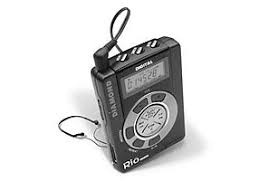
The last patents for the MP3 format expired in 2012 in the EU and  2017 in the US, ending many years of incessant legal sniping. For those of us learning of the wonders of MP3 back around ’98 through services like Napster or Limewire, MP3s meant downloading music on 56k dialup in a matter of minutes to hours rather than days to weeks with WAV, and with generally better quality than Microsoft’s WMA format at lower bitrates. When portable media players came onto the scene, they were called ‘MP3 players’, a name that stuck around.

But is MP3 really obsolete and best forgotten in the dustbin of history at this point? Would anyone care if computers dropped support  for MP3 tomorrow?

Continue reading “Freed At Last From Patents, Does Anyone Still Care About MP3?”

Growing A Gallium-Arsenide Laser Directly On Silicon

As great as silicon is for semiconductor applications, it has one weakness in that using it for lasers isn’t very practical. Never say never though, as it turns out that you can now grow lasers directly on the silicon material. The most optimal material for solid-state lasers in photonics is gallium-arsenide (GaAs), but due to the misalignment of the crystal lattice between the compound (group III-V) semiconductor and silicon (IV) generally separate dies would be produced and (very carefully) aligned or grafted onto the silicon die.

Naturally, it’s far easier and cheaper if a GaAs laser can be grown directly on the silicon die, which is what researchers from IMEC now have done (preprint). Using standard processes and materials, GaAs lasers were grown on industry-standard 300 mm silicon wafers. The trick was to accept the lattice mismatch and instead focus on confining the resulting flaws through a layer of silicon dioxide on top of the wafer. In this layer trenches are created (see top image), which means that when the GaAs is deposited it only contacts the Si inside these grooves, thus limiting the effect of the mismatch and confining it to within these trenches.

There are still a few issues to resolve before this technique can be prepared for mass-production, of course. The produced lasers work at 1,020 nm, which is a shorter wavelength than typically used, and there are still some durability issues due to the manufacturing process that have to be addressed.

Running Doom On An Apple Lightning To HDMI Adapter

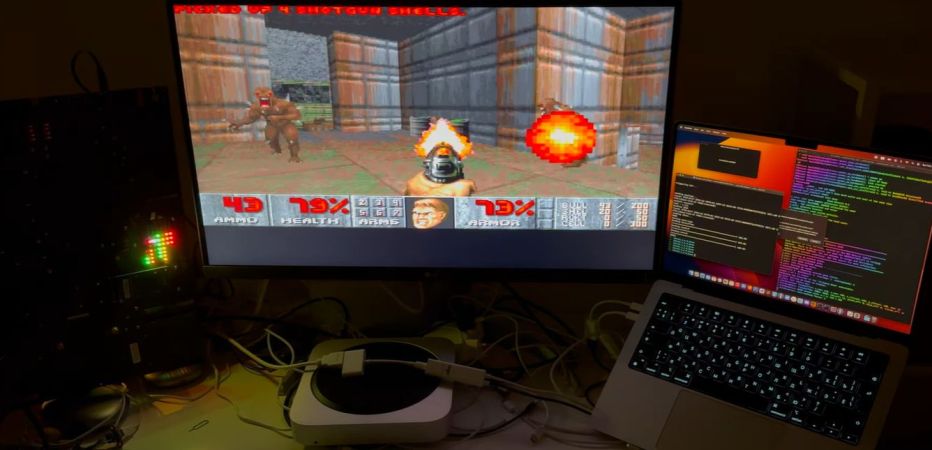
As a general rule of thumb, anything that has some kind of display output and a processor more beefy than an early 90s budget PC can run Doom just fine. As [John] AKA [Nyan Satan] demonstrates in a recent video, this includes running the original Doom on an Apple Lightning to HDMI Adapter. These adapters were required after Apple moved to Lightning from the old 30-pin connector which had dedicated pins for HDMI output.

As the USB 2.0 link used with Lightning does not have the bandwidth for 1080p HDMI, compression was used, requiring a pretty beefy processor in the adapter. Some enterprising people at the time took a hacksaw to one of these adapters to see what’s inside them and figure out the cause of the visual artifacts. Inside is a 400 MHz ARM SoC made by Samsung lovingly named the S5L8747. The 256 MB of RAM is mounted on top of the package, supporting the RAM disk that the firmware is loaded into.

Although designed to only run the Apple-blessed firmware, these adapters are susceptible to the same Checkm8 bootROM exploit, which enables the running of custom code. [John] adapted this exploit to target this adapter, allowing this PoC Doom session to be started. As the link with the connected PC (or Mac) is simply USB 2.0, this presumably means that sending keyboard input and the like is also possible, though the details are somewhat scarce on this aspect.

Continue reading “Running Doom On An Apple Lightning To HDMI Adapter”

Sleeping arctic fox (Alopex lagopus). (Credit: Rama, Wikimedia)

Investigating Why Animals Sleep: From Memory Sorting To Waste Disposal

What has puzzled researchers and philosophers for many centuries is the ‘why’ of sleep, along with the ‘how’. We human animals know from experience that we need to sleep, and that the longer we go without it, the worse we feel. Chronic sleep-deprivation is known to be even fatal. Yet exactly why do we need sleep? To rest our bodies, and our brains? To sort through a day’s worth of memories? To cleanse our brain of waste products that collect as neurons and supporting cells busily do their thing?

Within the kingdom of Animalia one constant is that its brain-enabled species need to give these brains a regular break and have a good sleep. Although what ‘sleep’ entails here can differ significantly between species, generally it means a period of physical inactivity where the animal’s brain patterns change significantly with slower brainwaves. The occurrence of so-called rapid eye movement (REM) phases is also common, with dreaming quite possibly also being a feature among many animals, though obviously hard to ascertain.

Most recently strong evidence has arisen for sleep being essential to remove waste products, in the form of so-called glymphatic clearance. This is akin to lymphatic waste removal in other tissues, while our brains curiously enough lack a lymphatic system. So is sleeping just to a way to scrub our brains clean of waste?

Continue reading “Investigating Why Animals Sleep: From Memory Sorting To Waste Disposal”