Pi Pico SDR On A Breadboard

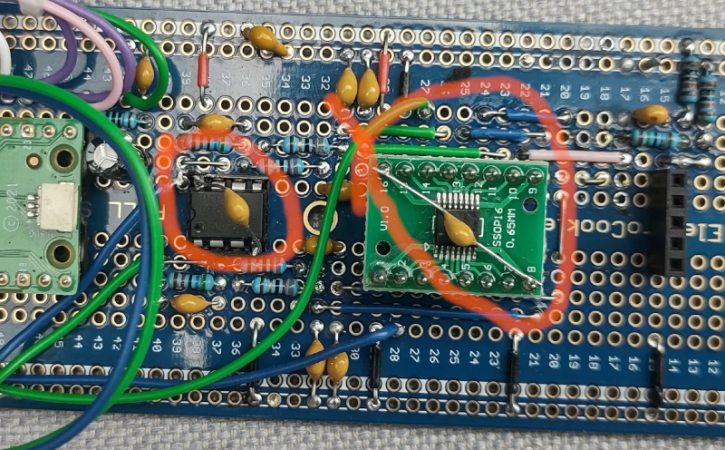
How hard is it to make a fully standalone SDR? [101 Things] shows you how to take a breadboard, a PI Pico, and two unremarkable chips to create a capable radio. You can see the whole thing in the video below.

The design uses a standard Tayloe demodulator. There’s also an encoder and an OLED display for a user interface. You might also want to include some PC speakers to get a bit more audio out of the device.

Continue reading “Pi Pico SDR On A Breadboard”

Inside The Mecanum Wheel

If you make anything that moves, like a robot, you quickly realize that turning can be a pain. That’s why there are a number of designs for wheels that can go in different directions. One of the most common is the Mecanum wheel. [Jeremy] explains how they work by filming them from below on a transparent table. You can see the enlightening video below.

If you haven’t done anything with omni wheels before, it is disconcerting to see wheels rotating one way causing the vehicle to move at a right angle to the rotation. But this is very useful when you build robots or — as he shows at the start of the video — a forklift.

Continue reading “Inside The Mecanum Wheel”

3D Printed Jet Engine Goes Turbo

Printing a model jet engine is quite an accomplishment. But it wasn’t enough for [linus3d]. He wanted to redesign it to have a turbojet, an afterburner, and a variable exhaust nozzle. You can see how it all goes together in the video below.

This took months of work and it shows. This probably won’t make a good rainy-day weekend project. You do need a few ball bearings and some M2 hardware, but it is mostly 3D printed.

Continue reading “3D Printed Jet Engine Goes Turbo”

What Is SystemVerilog, Really?

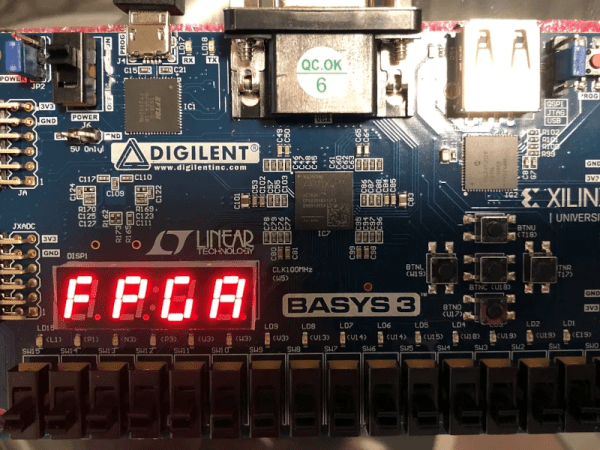
[Mark] starts a post from a bit ago with: “… maybe you have also heard that SystemVerilog is simply an extension of Verilog, focused on testing and verification.” This is both true and false, depending on how you look at it. [Mark] then explains what the differences are. It’s a good read if you are Verilog fluent, but just dip your toe into SystemVerilog.

Part of the confusion is that until 2009, there were two different things: Verilog and SystemVerilog. However, the SystemVerilog 2009 specification incorporates both languages, so modern Verilog is SystemVerilog and vice versa.

Continue reading “What Is SystemVerilog, Really?”

The Luminiferous Theremin

[Extreme Kits] asks the question: “What the hell is a luminiferous theremin?” We have to admit, we know what a thermin is, but that’s as far as we got. You’ve surely seen and heard a theremin, the musical instrument developed by Leon Theremin that makes swoopy music often associated with science fiction movies. The luminiferous variation is a similar instrument that uses modern time of flight sensors to pick up your hand positions.

The traditional instrument uses coils, and your hands alter the frequency of oscillators. Some versions use light sensors to avoid the problems associated with coils. While the time of flight sensors also use light, they are immune to many false readings caused by stray light.

Continue reading “The Luminiferous Theremin”

Hackaday Podcast Episode 283: Blinding Lasers, LEDs, And ETs

Hackaday Editors Elliot Williams and Al Williams reflect on the fact that, as humans, we have–at most–two eyes and no warp drives. While hacking might not be the world’s most dangerous hobby, you do get to work with dangerous voltages, temperatures, and frickin’ lasers. Light features prominently, as the guys talk about LED data interfaces, and detecting faster-than-light travel.

There’s also a USB sniffer, abusing hot glue, and some nostalgia topics ranging from CRT graphics to Apollo workstations (which have nothing directly to do with NASA). The can’t miss articles this week cover hacking you and how you make the red phone ring in the middle of a nuclear war.

Check out the links below if you want to follow along, and as always, tell us what you think about this episode in the comments!

As always, please download the file to archive in your doomsday bunker.

Continue reading “Hackaday Podcast Episode 283: Blinding Lasers, LEDs, And ETs”

Mouse Doesn’t Play Pong… It IS Pong!

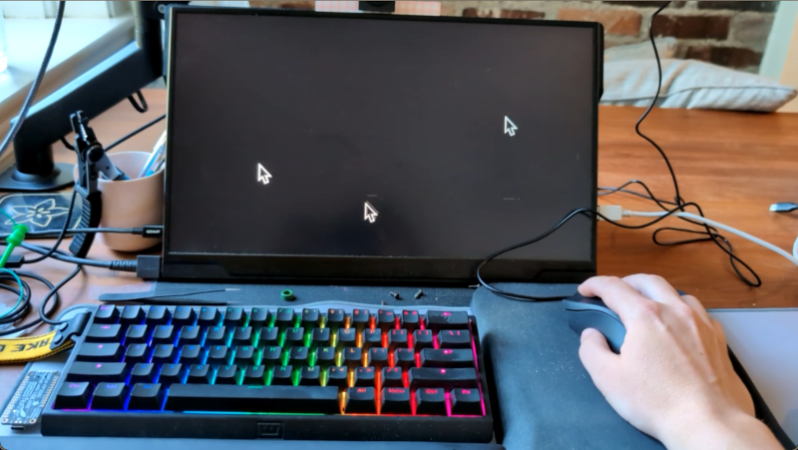
From the “why didn’t we think of that” department comes [dupontgu’s] pong mouse project. The mouse appears and acts like a normal computer mouse until you click the scroll wheel. When you do, the mouse rapidly moves the cursor on the connected computer to play pong. Obviously, though, the paddles and the ball all look like your cursor, whatever that happens to be. So, how do you tell the score? Well, when a score happens, the cursor shows between the two paddles. In the middle means the game is tied. Otherwise, the player closest to the score indicator is winning. Continue reading “Mouse Doesn’t Play Pong… It IS Pong!”