RISC-V Pushes 400 Million Forth Words Per Second

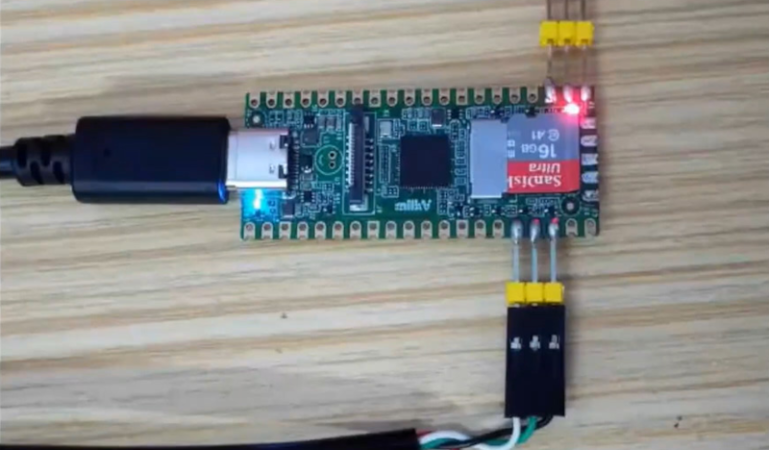
We’ll be honest. Measuring Forth words per second doesn’t seem like a great benchmark since a Forth word could be very simple or quite complex. But we think the real meaning is “up to 400 million words per second.” There was a time when that level of performance would take a huge computer. These days, a simple board that costs a few bucks can do the trick, according to [Peter Forth] in an online presentation.

The key is the use of the Milk V Duo and some similar boards. Some of these look similar to a Raspberry Pi Pico. However, this chip on board has two RISC V cores, an ARM core, and an 8051. There’s also an accelerator coprocessor for vector operations like AI or video applications.

Continue reading “RISC-V Pushes 400 Million Forth Words Per Second”
Building A Reproduction Apple I

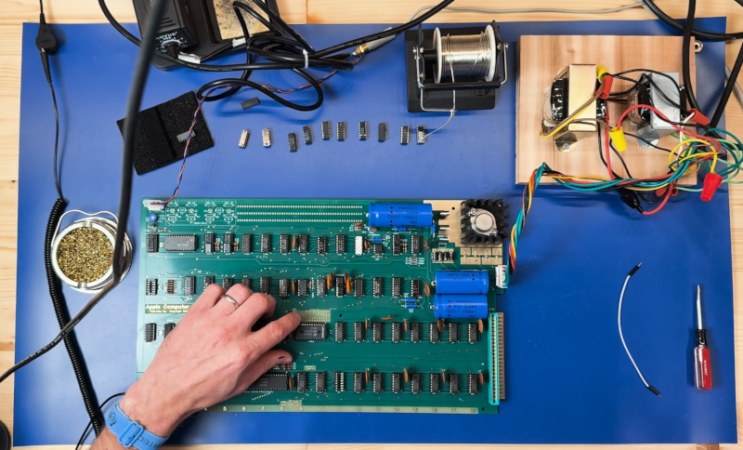
If you think of Apple today, you probably think of an iPhone or a Mac. But the original Apple I was a simple PC board and required a little effort to start up a working system. [Artem] has an Apple I reproduction PCB, and decided to build it on camera so we could watch.

For the Apple I, the user supplied a keyboard and some transformers, so [Artem] had to search for suitable components. He wisely checks the PCB to make sure there are no shorts in the traces. From there, you can watch him build the machine, but be warned: even with speed ups and editing, the video is over an hour long.

If you want to jump to the mostly working device, try around the 57-minute mark. The machine has a basic ROM monitor and, of course, needs a monitor. There was a small problem with memory, but he eventually worked it out by inhibiting some extra RAM on the board. Troubleshooting is half of the battle getting something like this.

Want to look inside the clock generator chip? Or skip the PCB and just use an FPGA.

Continue reading “Building A Reproduction Apple I”

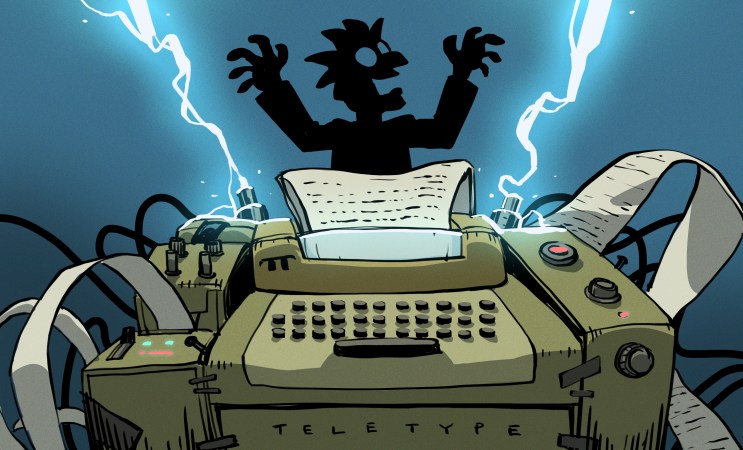
A Teletype By Any Other Name: The Early E-mail And Wordprocessor

Some brand names become the de facto name for the generic product. Xerox, for example. Or Velcro. Teletype was a trademark, but it has come to mean just about any teleprinter communicating with another teleprinter or a computer. The actual trademark belonged to The Teletype Corporation, part of Western Electric, which was, of course, part of AT&T. But there were many other companies that made teleprinters, some of which were very influential.

The teleprinter predates the computer by quite a bit. The original impetus for their development was to reduce the need for skilled telegraph operators. In addition, they found use as crude wordprocessors, although that term wouldn’t be used for quite some time.

Continue reading “A Teletype By Any Other Name: The Early E-mail And Wordprocessor”

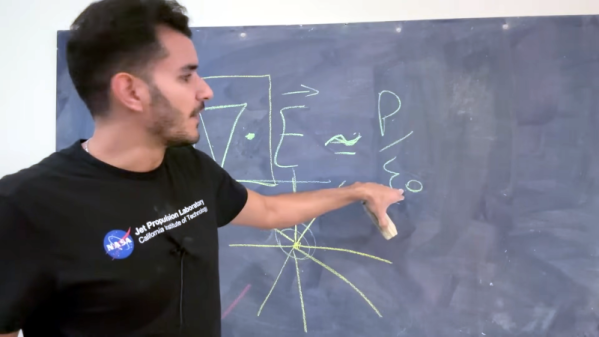
Intuition About Maxwell’s Equations

You don’t have to know how a car engine works to drive a car — but you can bet all the drivers in the Indy 500 have a better than average understanding of what’s going on under the hood. All of our understanding of electronics hinges on Maxwell’s equations, but not many people know them. Even fewer have an intuitive feel for the equations, and [Ali] wants to help you with that. Of course, Maxwell’s gets into some hairy math, but [Ali] covers each law in a very pragmatic way, as you can see in the video below.

While the video explains the math simply, you’ll get more out of it if you understand vectors and derivatives. But even if you don’t, the explanations provide a lot of practical understanding

Understanding the divergence and curl operators is one key to Maxwell’s equations. While this video does give a quick explanation, [3Blue1Brown] has a very detailed video on just that topic. It also touches on Maxwell’s equations if you want some reinforcement and pretty graphics.

Maxwell’s equations can be very artistic. This is one of those topics where math, science, art, and history all blend together.

Continue reading “Intuition About Maxwell’s Equations”

Teaching Computers To Read — Sort Of

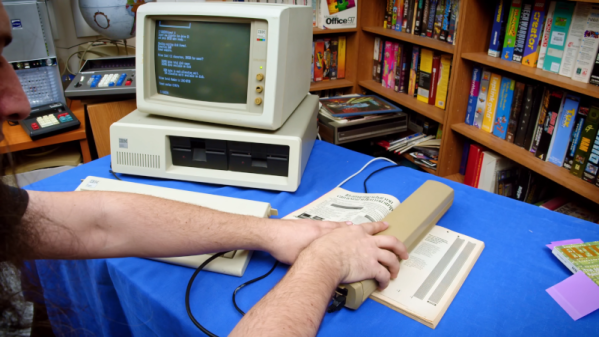
If you ask someone who grew up in the late 1970s or early 1980s what taught them a lot about programming, they’d probably tell you that typing in programs from magazines was very instructive. However, it was also very boring and error-prone. In fact, we’d say it was less instructional to do the typing than it was to do the debugging required to find all your mistakes. Magazines hated that and, as [Tech Tangents] shows us in a recent video, there were efforts to make devices that could scan barcodes from magazines or books to save readers from typing in the latest Star Trek game or Tiny Basic compiler.

The Cauzin Softstrip was a simple scanner that could read barcodes from a magazine or your printer if you wanted to do backups. As [Tech Tangents] points out, you may not have heard of it, but at the time, it seemed to be the future of software distribution.

Continue reading “Teaching Computers To Read — Sort Of”

Retrotechtacular: Color TV

We have often wondered if people dreamed in black and white before the advent of photography. While color pictures eventually became the norm, black and white TV was common for many years. After all, a TV set was a big investment, so people didn’t run out and buy the latest TV every year. Even if you did buy a new or used TV, a black and white model was much less expensive and, for many years, some shows were in black and white anyway. RCA, of course, wanted you to buy a color set. [PeriscopeFilm] has a 1963 promotional film from RCA extolling the virtues of a color set. The video also shows something about how the sets were made, as you can see below.

We aren’t sure we’d have led with the idea that color could save your life in this context, but we have to salute the melodrama. There is a good bit of footage of picture tube manufacturing, although the technical detail is — understandably — aimed at the general public.

Continue reading “Retrotechtacular: Color TV”

Z80 Testing The 80s Way

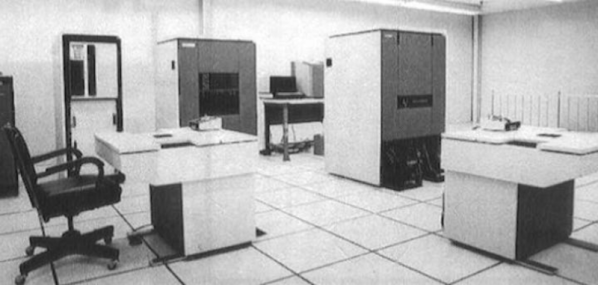
According to [MTSI], if you used a Z80 chip back in the 1980s, it almost certainly passed through the sole Fairchild Sentry 610 system that gave it the seal of approval.

The Sentry was big iron for its day. The CPU was a 24-bit device and ran at a blistering 250 kHz. Along with a tape drive and a specialized test bed, it could test Z80s, F8s, and other Mostek products of the day. There was a disk drive, too. The 26-inch platters stored under 10 kilobytes. Despite the relatively low speed of the CPU, the Sentry could test devices running up to 10 MHz, which was plenty for the CPUs it was testing. The actual test interface ran at 11 MHz and used an exotic divider to generate slower frequencies.

According to the post, an informal count of the number of chips in the device came up with around 60,000. That, as you might expect, took a huge power supply, too.

Continue reading “Z80 Testing The 80s Way”