Hack-A-Day Is Hiring!


It’s true, as much as [Will] and I like being a scrappy two person shop with a ‘never say die’ attitude, and penchant for fist pounding after successful compiles, we need more people (MOAR even). We’re looking for a few more contributors to help out with the daily posting, digging up the extra obscure, and especially the how-tos we’ve started to get back into.

This is a paid, freelancing position that requires professionalism, consistency, and reliability. We want to hear from people that are passionate about software/hardware hacking and growing Hack-A-Day. To apply, send the following to jobs@hackaday.com

  • A short bio about yourself
  • 3 example daily posts written in the style of Hack-A-Day
  • 3 how-to ideas you could personally execute. For examples of work we’ve done in the past, look here, here, here, and here.
  • A couple sentences on how you would improve the site either through features or content
  • Any additional reasons why you would make a good fit for Hack-A-Day

Please do not send any attachments, especially not pictures of your sweet ride. An aversion to capital letters is not required, but definitely encouraged.

[picture courtesy of fbz]
Thermal Testing Electronics For Outer Space


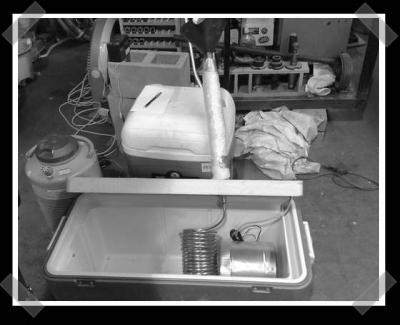
[3ricj] wrote up how to build your own low temperature test chamber to verify that electronics will function at the edge of the atmosphere/outerspace. He needs this for the edge of space project he’s working on. A large cooler serves as the test chamber. It’s cooled down to about 0c -42C with dry ice, then a supply of liquid nitrogen is fed into a copper heat exchanging coil to bring the chamber down to -70C.

Chumby Hacking By Bunnie


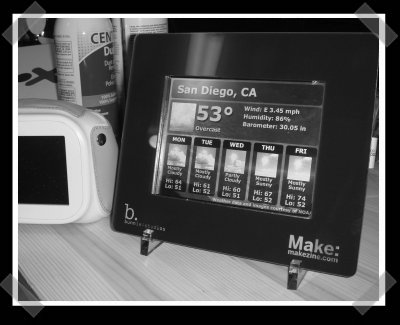
[bunnie] is one of the main people behind the Chumby, and even he can’t resist modding the things. He decided to outfit one with a larger LCD – using a stereo microscope to do the really fine pitch work – and a laser cutter to create a custom bezel for the finished piece. The new LCD is still a touchscreen and allows the Chumby to display 640×480 resolution over the stock 320×240. The mod requires a few parts, but the ultimate difficulty is caused by the surface mount connectors. If you’d rather have some software fun, you might want to check out [bunnie]’s Chumby wifi sniffer.

Notacon 2008: Dropping Humanity In Non-places


[Nate Graham] gave a presentation on what he considers ‘new media art’, the convergence of art and technology. He covered quite a few great examples of what new media art is from many categories: a mower that creates pixel art, Cory Arcangel’s famous Super Mario Clouds hack, a whale hunt whose photo capture rate depended on the participant’s heart rate, the bike based SMS printer for protests.

Continue reading “Notacon 2008: Dropping Humanity In Non-places”

Notacon 2008: Circuit Bending Will Get You Laid


[Pete Edwards] and [Fred Owsley] openly admitted that the title was the most thinly veiled audience-bait ever constructed. Nevertheless, they poured through a great talk covering the basics of circuit bending and some of the pieces they had built over the years. Fred said that what attracts him to circuit bending is the hands on approach to something very scientific i.e. he can figure out how to construct an interesting circuit by rubbing his finger along the back of the board. As far as where to start: always a battery powered device and use the toy store as a last resort. You’re going to tear the thing apart so why pay for it? Dumpster diving, garage sales, swap meets, and flea markets are all places to look. Parts don’t need to be anything better than grab bag either. They suggested an easy first step is dropping the operating voltage of your device and seeing how it reacts. Pete and Fred had several examples of devices they’ve modified: Speak & Spells, Casio SA keyboards, Barbi karaoke machines, and the voice changing gas mask pictured above.

The Bent Festival for circuit bending is coming up soon if you’d like to see more. You can also check out these links for more information on circuit bending.

Wii Nunchuck Arduino Pan And Tilt Camera

[youtube=http://www.youtube.com/watch?v=MD_-YnFZFP8&hl=en]
I found this while looking for a teardown of a Wii Nunchuck remote since they’re cheap and include a 3 axis accelerometer. I mentioned an interface board the other day, but the responsiveness of the interface in this video grabbed my attention. If you like it, you should check out this [via] Nunchuck Arduino RF controlled robot. You can find details on that bot here. The accelerometer itself only runs about $10, but it’s a pretty small SMD part.